

Commentary
As the U.S. stumbles in its war with Iran, we are likely to see an acceleration of its disengagement from the region.
Michael Young
{
  "authors": [
    "John Polcari"
  ],
  "type": "commentary",
  "blog": "Diwan",
  "centerAffiliationAll": "dc",
  "centers": [
    "Carnegie Endowment for International Peace",
    "Malcolm H. Kerr Carnegie Middle East Center"
  ],
  "collections": [
    "Three Question Time"
  ],
  "englishNewsletterAll": "menaTransitions",
  "nonEnglishNewsletterAll": "",
  "primaryCenter": "Carnegie Endowment for International Peace",
  "programAffiliation": "MEP",
  "programs": [
    "Middle East"
  ],
  "projects": [],
  "regions": [
    "Middle East",
    "Saudi Arabia",
    "Gulf"
  ],
  "topics": [
    "Political Reform"
  ]
}
Source: Getty
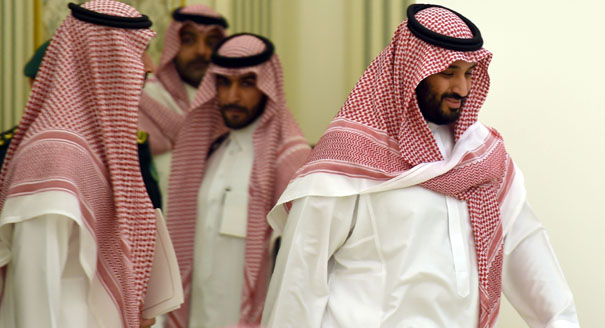
Nathan Brown discusses recent events in Saudi Arabia, and believes they may have a damaging effect.
The recent arrests of a number of Saudi princes and other officials have introduced a new element of uncertainty into the region. This was compounded by the unexpected resignation of Lebanese Prime Minister Saad al-Hariri in a speech from Riyadh, where he railed against malign Iranian influence in Lebanon and across the region. Emerging from this chaos is a clear message that the kingdom’s Crown Prince Mohammed bin Salman is consolidating power domestically and neutralizing those who might impede his rise to the throne.
To discuss these developments, Diwan spoke with Nathan Brown, a nonresident senior fellow in the Carnegie Middle East program. His research focuses on religious establishments and Arab law and constitutionalism. In a recent post for Diwan, he examined the uncertainty surrounding succession in many Gulf monarchies. In Saudi Arabia in particular the path to the throne is subject to both written and unwritten rules as well as the prevailing state of royal politics.
Brown’s most recent article for Carnegie, “The Remaking of the Saudi State,” examines the ongoing structural changes in the kingdom leading it toward more centralized governance, alongside a growing yet severely repressed public discourse on the trajectory of the country. He notes that taken together, these trends may have a deeply destabilizing effect.
John Polcari
Former Program Coordinator and Research Assistant, Middle East Program
Carnegie does not take institutional positions on public policy issues; the views represented herein are those of the author(s) and do not necessarily reflect the views of Carnegie, its staff, or its trustees.

As the U.S. stumbles in its war with Iran, we are likely to see an acceleration of its disengagement from the region.

Michael Young

Huawei pushed hard to enter the Egyptian data centers market, until the Americans made a better offer.

Angie Omar

Middle Eastern states should welcome an accelerated U.S. disengagement from their region.
Michael Young

The accord represents a pivotal moment in the region to avert a security vacuum in the Gulf.


Azeema Cheema, Mohanad Hage Ali

In an interview, Jason Burke discusses his sweeping account of the “revolutionists” who so shaped the 1970s and early 1980s.
Michael Young