

Commentary
Perry Cammack, Cassia Bardos
{
  "authors": [
    "Perry Cammack"
  ],
  "type": "commentary",
  "blog": "Diwan",
  "centerAffiliationAll": "dc",
  "centers": [
    "Carnegie Endowment for International Peace",
    "Malcolm H. Kerr Carnegie Middle East Center"
  ],
  "collections": [],
  "englishNewsletterAll": "menaTransitions",
  "nonEnglishNewsletterAll": "",
  "primaryCenter": "Carnegie Endowment for International Peace",
  "programAffiliation": "MEP",
  "programs": [
    "Middle East"
  ],
  "projects": [],
  "regions": [
    "Middle East",
    "Iraq",
    "Syria",
    "Levant"
  ],
  "topics": [
    "Political Reform"
  ]
}
Source: Getty
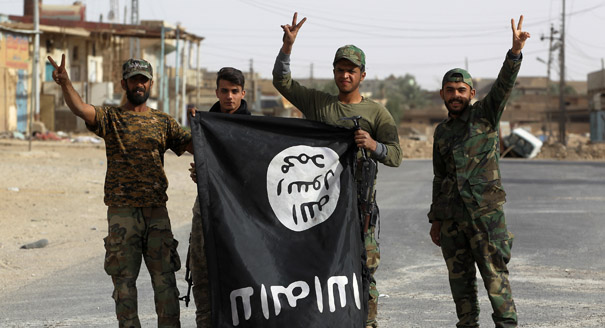
In a Diwan podcast, David Kilcullen talks about Al-Qa‘eda’s future after the setbacks of the Islamic State.
David Kilcullen, president and CEO of the research firm Cordillera and a senior fellow at New America, is a renowned counterinsurgency theorist and practitioner. He served for 24 years as a soldier, diplomat, and policy advisor to the Australian and United States governments in contexts spanning Afghanistan, Iraq, East Timor, and Papua New Guinea. He is the author of four books, The Accidental Guerrilla, Counterinsurgency, Out of the Mountains, and Blood Year. In 2009, he was selected as one of Foreign Policy magazine’s Top 100 Global Thinkers. In October, he spoke to Diwan about Al-Qaeda, the rise and fall of the Islamic State, and what can be done about the enduring global terrorism threat.
Former Nonresident Fellow, Middle East Program
Perry Cammack was a nonresident fellow in the Middle East Program at the Carnegie Endowment for International Peace, where he focuses on long-term regional trends and their implications for American foreign policy.
Recent Work
Perry Cammack, Cassia Bardos
Perry Cammack
Carnegie does not take institutional positions on public policy issues; the views represented herein are those of the author(s) and do not necessarily reflect the views of Carnegie, its staff, or its trustees.

As the U.S. stumbles in its war with Iran, we are likely to see an acceleration of its disengagement from the region.

Michael Young
The Zaidi government’s objective to collect weapons is constrained by regional conflict, but it can take certain measures at home.
Ali Al-Mawlawi

Huawei pushed hard to enter the Egyptian data centers market, until the Americans made a better offer.

Angie Omar

The accord represents a pivotal moment in the region to avert a security vacuum in the Gulf.


Azeema Cheema, Mohanad Hage Ali

In an interview, Jason Burke discusses his sweeping account of the “revolutionists” who so shaped the 1970s and early 1980s.
Michael Young