

Commentary
Issam Kayssi
{
  "authors": [
    "Issam Kayssi"
  ],
  "type": "commentary",
  "blog": "Diwan",
  "centerAffiliationAll": "",
  "centers": [
    "Carnegie Endowment for International Peace",
    "Malcolm H. Kerr Carnegie Middle East Center"
  ],
  "collections": [
    "Decoding Lebanon"
  ],
  "englishNewsletterAll": "",
  "nonEnglishNewsletterAll": "",
  "primaryCenter": "Malcolm H. Kerr Carnegie Middle East Center",
  "programAffiliation": "",
  "regions": [
    "Israel",
    "Levant",
    "Lebanon"
  ]
}
Source: Getty
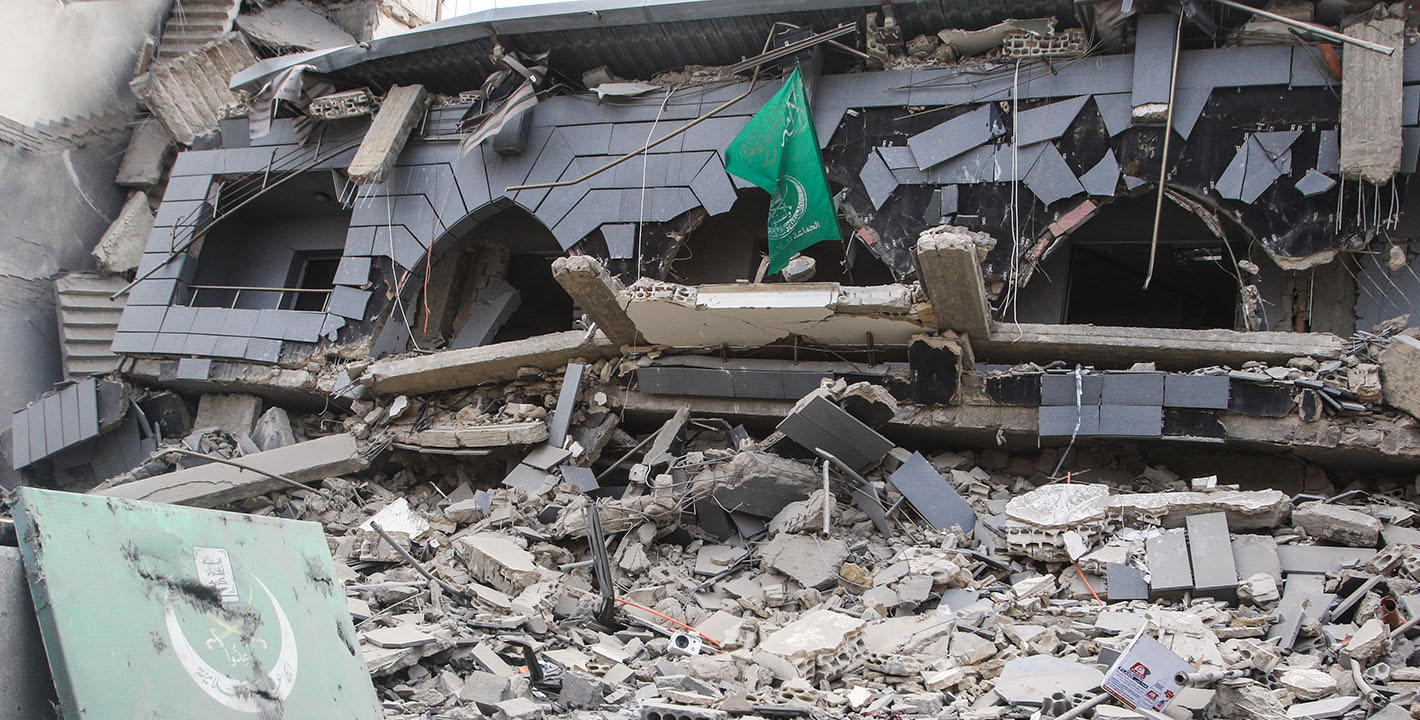
The Jamaa al-Islamiyya is the local Lebanese dimension of a broader struggle involving rival regional powers.
In the latest round of escalation between Hezbollah and Israel, following Hezbollah’s March 2 rocket attack, Israel intensified its campaign in Lebanon, striking across multiple regions. Its targets have included Hezbollah but also Muslim Brotherhood-affiliated groups, including Hamas and Lebanon’s Jamaa al-Islamiyya. On March 3, an Israeli strike targeted the Jamaa’s headquarters in Sidon. This was followed by a series of airstrikes against Hamas operatives in Tripoli on March 5, Sidon on March 6, and Beirut’s Aisha Bakkar neighborhood on March 11—this last carried out near Dar al-Fatwa, the country’s preeminent Sunni religious institution. Sidon was struck again on March 15, when another Hamas official was killed.
These strikes are not incidental. They indicate that Israel continues to define Muslim Brotherhood-affiliated networks as a distinct target category in its Lebanon campaign. Whereas Sunni Islamist actors had in previous decades operated at the margins of the conflict, they are now being drawn into its core. The battlespace in Lebanon continues to revolve around Hezbollah, but, since 2023, it has also increasingly encompassed a variety of Sunni actors, both Palestinian and Lebanese, which Israel treats as operationally indistinguishable from one another.
The Jamaa has long occupied an ambiguous position in Lebanon’s political landscape. Established in 1964 as an offshoot of the Egyptian Muslim Brotherhood, it has alternated between political organization and limited militancy, engaging in armed activity during the civil war (1975–1990). In the postwar period, it became a minor but persistent political actor. After 2005, it aligned itself with the March 14 camp and positioned itself closer to Western- and Gulf-backed currents in Lebanon than to Iran’s so-called Axis of Resistance.
Over the next several years, the organization grew internally fragmented. Leadership struggles, regional affiliations, and competing ideological orientations—between figures aligned with Türkiye or Qatar and others favoring closer ties to Hezbollah and Palestinian factions—left the Jamaa divided. A turning point came with the organization’s internal elections in 2022, when a leadership aligned with Yahya Sinwar’s camp within Hamas consolidated control over key decisionmaking bodies, thereby shifting the Jamaa’s center of gravity.
This shift became evident after October 7, 2023. Following Hamas’ attack on Israel and Hezbollah’s decision to open a “support front” on October 8, the Jamaa’s Fajr Forces entered the conflict in coordination with Hezbollah. Rocket fire attributed to the group signaled a reactivation of its armed role, though the extent of its operational autonomy remained unclear. What was unmistakable was that the Jamaa had moved from being a peripheral actor to an active participant in an ongoing conflict. As a result, since October 2023, Israel has repeatedly targeted, and even abducted, Jamaa-linked operatives, alongside engaging in a sustained campaign against Hamas in Lebanon—including the January 2024 assassination of its deputy chief, Saleh al-Arouri, in Beirut.
In addition to its ideological motivations, the Jamaa’s participation in the conflict alongside Hezbollah appears to serve domestic objectives. It reflects an attempt to reassert relevance within a fragmented Sunni political landscape, particularly in the absence of a dominant leadership following former Lebanese prime minister Saad Hariri’s withdrawal from political life in 2022. The group had also been preparing to expand its electoral footprint ahead of the now-postponed 2026 elections (it currently holds only one of the 27 seats allocated to Sunnis in Lebanon’s 128-seat parliament). Armed engagement offers an alternative path to political relevance, positioning the Jamaa within a narrative of “support for Gaza” that is likely to resonate with segments of Lebanon’s Sunni community.
However, this strategy carries clear costs. It exposes the organization to sustained Israeli attack and reinforces perceptions that it now operates less as an independent Lebanese actor and more as part of a broader regional axis. Given that the axis in question is Shiite-led and remains unpopular among sections of Lebanon’s Sunni community, the Jamaa risks further alienating a constituency already wary of Hezbollah’s role in drawing Lebanon into repeated cycles of conflict. Nonetheless, for now, the confrontation with Israel has effectively muted any dissent within the Jamaa itself.
On the international stage, the group finds itself and its allies increasingly constricted. Hamas has been designated a foreign terrorist organization by the U.S. government since 1997. In 2025, the United States extended that designation to Muslim Brotherhood branches in Egypt, Jordan, and Lebanon—thereby including the Jamaa. By extending these designations, U.S. policy effectively treats Muslim Brotherhood branches as interconnected components of a regional network, rather than as independent local actors. In turn, distinctions between Lebanese, Palestinian, and other Islamist movements become less relevant, which is something that has seemingly facilitated Israel’s targeting patterns in Lebanon.
Over the past year, Israel has increasingly framed the Muslim Brotherhood as a strategic threat. This framing extends beyond Lebanon to include regional actors such as Türkiye and Qatar, where Brotherhood-linked networks retain political and financial backing. From this perspective, targeting the Jamaa may not only be about neutralizing immediate threats along Israel’s northern border; it may also reflect a broader effort to reduce any Islamist influence in the region. Israeli officials have increasingly highlighted a perceived “radical Sunni axis,” and are pointing to Türkiye’s regional posture as part of the concern. What was once a peripheral issue for Israel is now being treated as a potentially significant strategic challenge.
The geographic distribution of Israel’s strikes—Beirut, Sidon, and Tripoli—suggests this dual logic. Beyond the operational importance of specific targets within their confines, the cities as a whole carry political significance as centers of Lebanon’s Sunni community. The strikes, therefore, appear to serve a signaling function: that armed engagement will be met with force regardless of the actor involved. Lebanon is thus both a battlefield and a site where regional actors test influence, while the country bears the brunt of the resulting violence.
Research Analyst, Malcolm H. Kerr Carnegie Middle East Center
Issam Kayssi is a research analyst at the Malcolm H. Kerr Carnegie Middle East Center.
Recent Work
Issam Kayssi
Issam Kayssi
Reconciliation councils are emerging throughout the country to mediate in intracommunal disputes, many from the war years.
Natacha Danon
As the U.S.-led Coalition withdraws, the Kurds’ reliance on Baghdad, and on themselves, will only increase.
Wladimir van Wilgenburg

In an interview, Ian Lustick and Eli Clifton discuss their new book on why a prominent ally has so much influence in America.

Michael Young
The Zaidi government’s objective to collect weapons is constrained by regional conflict, but it can take certain measures at home.
Ali Al-Mawlawi
It is improbable that Israel’s forthcoming elections will alter much in terms of how the country thinks about security.

Nathan J. Brown