

Commentary
Michael Young
{
  "authors": [
    "Michael Young"
  ],
  "type": "commentary",
  "blog": "Diwan",
  "centerAffiliationAll": "dc",
  "centers": [
    "Carnegie Endowment for International Peace",
    "Malcolm H. Kerr Carnegie Middle East Center"
  ],
  "collections": [
    "Inquiring Minds"
  ],
  "englishNewsletterAll": "menaTransitions",
  "nonEnglishNewsletterAll": "",
  "primaryCenter": "Malcolm H. Kerr Carnegie Middle East Center",
  "programAffiliation": "MEP",
  "programs": [
    "Middle East"
  ],
  "projects": [],
  "regions": [
    "Gulf",
    "Saudi Arabia",
    "Middle East"
  ],
  "topics": [
    "Political Reform",
    "Nuclear Policy"
  ]
}
Source: Getty
A regular survey of experts on matters relating to Middle Eastern and North African politics and security.
Thomas W. Lippman | Author and former journalist, author of Saudi Arabia on the Edge: The Uncertain Future of an American Ally
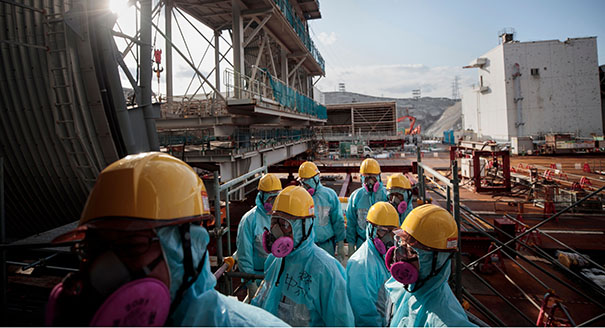
Speculation about Saudi Arabia’s possible desire to acquire or develop nuclear weapons has arisen periodically since 1988, when the Saudis secretly acquired nuclear-capable Chinese missiles. Now that Saudi Arabia is pressing ahead with its plans to build civilian nuclear power plants, the speculation has predictably intensified.
In reality, Saudi Arabia is highly unlikely to seek nuclear weapons, no matter what becomes of Iran’s nuclear program, because the negative consequences of doing so would far outweigh any conceivable strategic gain. The kingdom, a signatory to the nuclear Non-Proliferation Treaty, has tied its future to full integration with the global economic and industrial system. It cannot afford the international ostracism that nuclear proliferation would bring.
Moreover, the Saudis know that they have few friends in the U.S. Congress. Any sign that the kingdom was moving toward nuclear weapons would end U.S. arms sales and terminate the strategic relationship that has long ensured the kingdom’s security.
Jamal Khashoggi | Saudi columnist and author living in Washington, D.C.
The focus of Saudi nuclear intentions is Iran. It is not just a threat to the Saudis, but also an insult to the kingdom locally, that Iran may get nuclear power, while Saudi Arabia does not.
I think that Saudi Arabia sincerely welcomed the nuclear agreement with Iran when it was signed. The agreement’s problem was that it ignored Iran’s expansion throughout the Middle East, which Trump has promised to address. But the Saudis also know the agreement has a limited timeframe, after which Tehran can resume building a nuclear weapon. Meanwhile, Iran is still ahead of Saudi Arabia in terms of nuclear facilities and research. Despite the agreement, Tehran pursues nuclear research and trains experts.
The kingdom has begun to respond to this. There is a race to build nuclear reactors in the region, which includes the United Arab Emirates and Egypt, even if they don’t have nuclear weapons. It is not clear whether there is cooperation between them similar to the alleged cooperation between Saudi Arabia and Pakistan.
As long as the agreement with Iran is in place, we can be optimistic that most nuclear activities will go toward generating power. This is the right way, so that Saudi Arabia does not continue to consume more than one million barrels per day to provide electricity to its cities and factories. The real arms race will begin in eight years, when the Iran agreement ends. That is, unless it is renewed or it collapses due to President Donald Trump’s policies. Certainly, such a collapse will not be in Saudi Arabia’s favor, even if the Saudi media would appear to welcome it.
Simon Henderson | Director of the Gulf and Energy Policy Program at the Washington Institute
Saudi Arabia probably already has a nuclear weapons capability, courtesy of Pakistan. The assumption is that Pakistan’s nuclear-tipped missiles could be sent to the kingdom, either to boost Saudi deterrence against Iran or to safeguard part of Pakistan’s strategic force in time of crisis with India, complicating New Delhi’s options.
The details of such a Saudi-Pakistani understanding—it may not be a written agreement—are reconfirmed every time there is a change of government in Pakistan, or a change on the Saudi throne. Hence the two visits that Saudi defense minister (and now crown prince) Muhammad bin Salman has made to Pakistan since his father King Salman took over the throne in 2015. Hence, also, the regular visits by Pakistan’s military leadership to the kingdom—on military and security policy any civilian government in Islamabad takes a back seat.
Kenneth Katzman | Senior analyst of Iran, Iraq, Afghanistan, and Persian Gulf Affairs at the Congressional Research Service, but provides this analysis in his personal capacity
Saudi Arabia will not likely use civilian nuclear technology as a cover to pursue a nuclear weapons program unless Iran moves toward doing so. Saudi Arabia seeks to develop nuclear technology to meet growing energy demand, as well as to demonstrate to Iran that Tehran does not have a monopoly on nuclear technology in the Gulf region. Any U.S. approval for Saudi Arabia to develop nuclear power will carry significant restrictions on the use of U.S. technology to preclude Saudi Arabia from developing a nuclear weapon. Saudi leaders undoubtedly understand that the kingdom’s relationship with the United States would be harmed irreparably if Saudi Arabia were to violate those restrictions. Still, the acquisition of civilian nuclear technology adequately serves the kingdom’s purpose of signaling to Iran that any moves by the Islamic Republic to develop a nuclear weapon can be easily countered by Saudi Arabia.
Mark Hibbs | Senior fellow in Carnegie’s nuclear program
So far, Saudi Arabia has done things that suggest it doesn’t want nuclear weapons. It is a party to the nuclear Non-Proliferation Treaty and has a comprehensive inspection agreement with the International Atomic Energy Agency (IAEA). Last year it voted for the Nuclear Weapons Ban Treaty at the United Nations. The Saudis have informed the IAEA, the United States, Russia, and others that they want to build nuclear power plants to generate electricity, advance their technology basis, and reduce their dependence on fossil fuels. Because of Riyadh’s enmity toward Tehran, there is concern it might, like Iran, try to secretly enrich uranium that could be used for power or to build nuclear weapons. Unlike Iran, the Saudi nuclear infrastructure is rudimentary, with no clear path to an enrichment capacity. For security and commercial reasons, none of the countries enriching uranium to make nuclear fuel will likely share their technology.

Editor, Diwan, Senior Editor, Malcolm H. Kerr Carnegie Middle East Center
Michael Young is the editor of Diwan and a senior editor at the Malcolm H. Kerr Carnegie Middle East Center.
Recent Work
Michael Young
Michael Young
Carnegie does not take institutional positions on public policy issues; the views represented herein are those of the author(s) and do not necessarily reflect the views of Carnegie, its staff, or its trustees.
There is a disturbing structural parallel between the old global energy economy and the new green transition.

Angie Omar
This will be the region’s most representative tournament, amid broad changes in its footballing landscape.

Issam Kayssi
In an interview, Marc Lynch discusses his new book decrying the post-1990 U.S.-dominated order in the Middle East.
Michael Young

Because perpetual conflict enhances control, offers economic benefits, and allows leaders to ignore popular preferences.
Angie Omar
The community already suffers social discrimination, so addressing inequalities requires sustained interventions.
Musaed Aklan , Mohammad Al-Saidi