

Commentary
Michael Young
{
  "authors": [
    "Michael Young"
  ],
  "type": "commentary",
  "blog": "Diwan",
  "centerAffiliationAll": "dc",
  "centers": [
    "Carnegie Endowment for International Peace",
    "Malcolm H. Kerr Carnegie Middle East Center"
  ],
  "collections": [
    "Inquiring Minds"
  ],
  "englishNewsletterAll": "menaTransitions",
  "nonEnglishNewsletterAll": "",
  "primaryCenter": "Malcolm H. Kerr Carnegie Middle East Center",
  "programAffiliation": "MEP",
  "programs": [
    "Middle East"
  ],
  "projects": [],
  "regions": [
    "Levant",
    "Türkiye",
    "Syria",
    "North America",
    "United States",
    "Middle East"
  ],
  "topics": [
    "Political Reform"
  ]
}
Source: Getty
A regular survey of experts on matters relating to Middle Eastern and North African politics and security.
Assaad al-Achi | Syrian economist and executive director of Baytna Syria, a Syrian civil society support organization
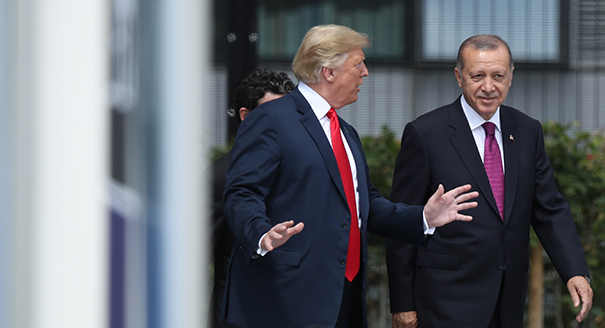
Closer U.S.-Turkish cooperation may ease tensions between U.S.-controlled northeastern and Turkish-controlled northwestern Syria and defuse risks of a military escalation. In the longer run, a stronger partnership between the two could allow for their cooperation, bringing about 40 percent of Syrian territory under one umbrella.
However, neither will be enough to remove Bashar al-Assad from power. The Russians and the Iranians have invested so much in him and his entourage that no matter what level of rapprochement between Turkey and the United States, they will not be willing to forego their investment. Moreover, with the beginning of operations of the TurkStream natural gas pipeline from Russia to Turkey and the potential delivery of the Russian S400 air defense system to Turkey’s armed forces, both scheduled for 2019, Turkey will not risk damaging its relationship with Russia, especially for a partner it does not trust.
Having said that, closer U.S.-Turkish cooperation can definitely push Assad to take negotiations seriously and bring him to the table to kickstart a credible political process. The outcome of such negotiations remains to be seen.
Dorothée Schmid | Senior research fellow and head of the Turkey Program at IFRI, the French Institute of International Relations
Turkey was an outspoken adversary of Bashar al-Assad from the outset of the Syrian crisis, constantly calling for the Syrian president to step down. Although Ankara moved closer to Russia after the failed coup in 2016, its relations with the Syrian regime have never completely normalized and the risk of direct confrontation has escalated in Idlib Governorate. It is nonetheless doubtful that the Turkish armed forces would engage in a full-scale war with the Assad regime without support from their Western allies. In the coming year, the main objective of the United States in Syria will be to contain Iran. Therefore, defining the Syrian leader’s fate could lead to political cooperation between Ankara and Washington. Yet the relationship between the United States and Turkey is strained and their strategies in Syria diverge over a central point: Washington stands firmly with the Kurdish-dominated Syrian Democratic Forces to help it fight the Islamic State group, while the Kurds’ rise in Syria remains Turkey’s chief preoccupation and motive for military intervention beyond its border. Meanwhile, Assad has regained some margin of maneuver and would not necessarily be easy to remove from office.
Thomas Pierret | Senior researcher at CNRS-Institut de Recherches et d’Etudes sur les Mondes Arabes et Musulmans
Turkey can do little more to that effect than avoid undermining Washington’s position in eastern Syria, which constitutes U.S. leverage over Damascus. That is the extent to which U.S.-Turkish coordination can be helpful. Otherwise, and despite its persistent reluctance to normalize with Syrian President Bashar al-Assad, Ankara adds little to the partnership in terms of leverage. Its military deployment in northern Syria is a significant asset, but an essentially defensive one. Turkish-protected zones are of limited strategic value compared to oil-rich eastern Syria. More important, Ankara’s vulnerability to the further weaponization of refugees by Assad and his allies makes it an unlikely partner in a policy of regime change, even through diplomatic means. Indeed, it has already been forced to relinquish one of the few means of pressure it held against Damascus by accepting, as per last September’s Sochi agreement, that the rebels in Idlib Governorate restore transit traffic on the segments of the M4 and M5 highways that they control.
Soli Özel | Professor of international relations at Kadir Has University in Istanbul, columnist at Habertürk newspaper
At this stage of the Syrian war, it requires more than optimism to expect that Bashar al-Assad will be ousted from power, either before a deal or as part of one. His Iranian allies in particular will see that this does not happen. The chances of a coordinated U.S.-Turkish effort to oust him, although conceivable, are close to nil as the two “allies” have very different conceptions of what constitutes the terrorist threat in Syria, and it is ambiguous at best that Washington is still adamant about seeing Assad’s departure.
For the United States the fight against the Islamic State group is a priority. In that fight the Kurdish People’s Protection Units (YPG) are deemed to be the most reliable partners, even if for the more ambitious goal of rolling back Iran Turkey is the ally of choice. For Turkey, the YPG and its parent organization, the Democratic Union Party (PYD), the Syrian extension of the Kurdistan Workers Party, represent an existential terrorist threat. President Recep Tayyip Erdoğan has just dismissed the Islamic State in Syria as a ragtag organization, and he has recommitted himself to ridding the areas under U.S. control from the PYD-YPG. With such irreconcilable interests, Washington and Ankara could not act in concert unless the Kurdish issue is resolved first. Furthermore, given Turkish dependence on Russian goodwill and support in the areas under Turkish control and in Idlib Governorate, Ankara will refrain from taking radical steps that could place it in Moscow’s crosshairs.
Mohanad Hage Ali | Communications director at the Carnegie Middle East Center, author of Nationalism, Transnationalism, and Political Islam: Hizbullah’s Institutional Identity (Palgrave Macmillan, 2017)
Coordination seems highly unlikely, and even if it occurs a U.S.-Turkish alliance would further entrench Moscow in its alliance with the Assad regime. Another reason why such an alliance and outcome are unlikely is Turkey’s Syria strategy. Ankara is not focused on removing Bashar al-Assad today, but on further connecting to mainland Turkey the Syrian areas it took during its Euphrates Shield and Olive Branch military operations—culturally, politically, and economically. Turkey’s Harran University has established a branch in Al-Bab, while hundreds of schools receive textbooks from Turkey’s Education Ministry. The Turkish language is widely taught in schools across the region. Turkish post offices have opened in every city, while Turkey’s religious authorities now have sway over the region’s mosques and clerical learning. This is a takeover similar to what happened in northern Cyprus, quite different from an investment in a Syrian leadership transition. The only question about Turkey’s intervention in Syria is how and when it will expand westward toward Idlib Governorate, and eastward toward Kurdish areas that are collaborating with the United States. Turkey’s primary motivation is its long-term investment in a Turkified Syria.

Editor, Diwan, Senior Editor, Malcolm H. Kerr Carnegie Middle East Center
Michael Young is the editor of Diwan and a senior editor at the Malcolm H. Kerr Carnegie Middle East Center.
Recent Work
Michael Young
Michael Young
Carnegie does not take institutional positions on public policy issues; the views represented herein are those of the author(s) and do not necessarily reflect the views of Carnegie, its staff, or its trustees.
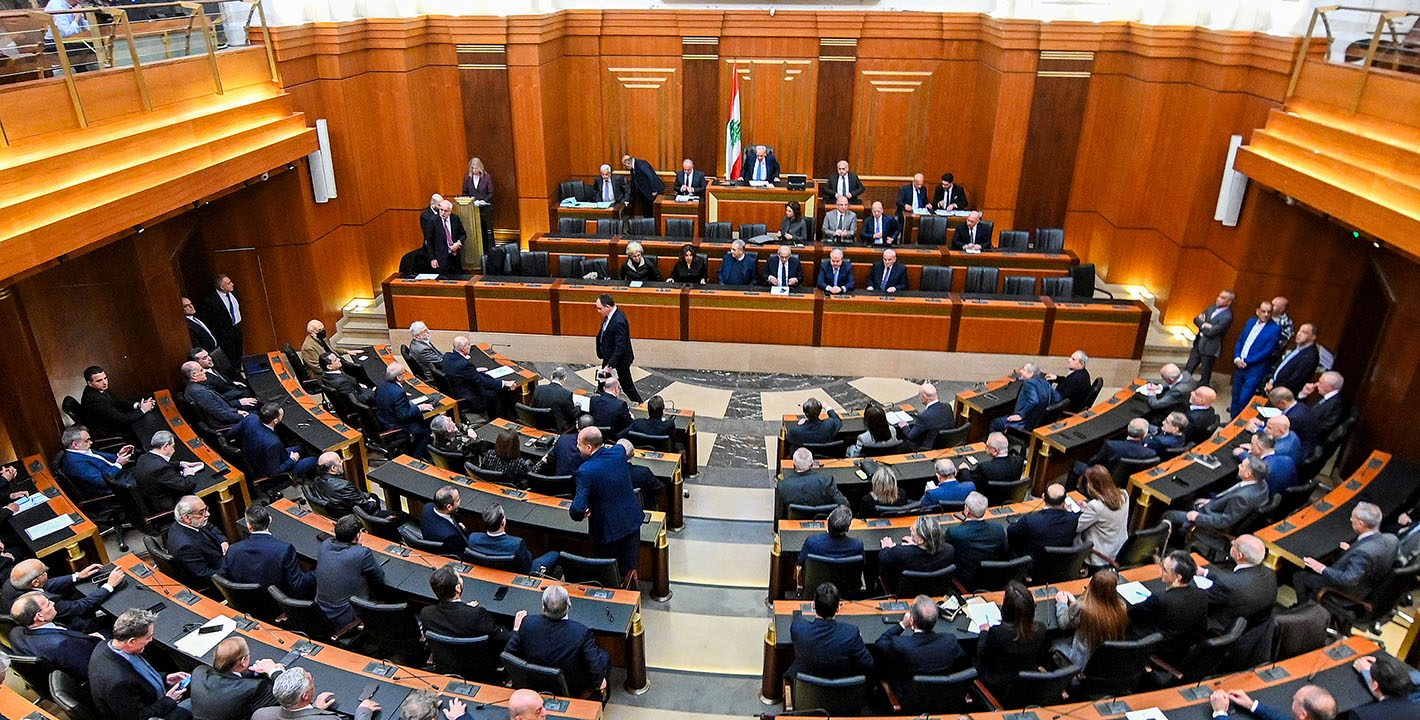
The decision of Lebanon’s parliament may look exceptional, but in reality it is not.

Issam Kayssi
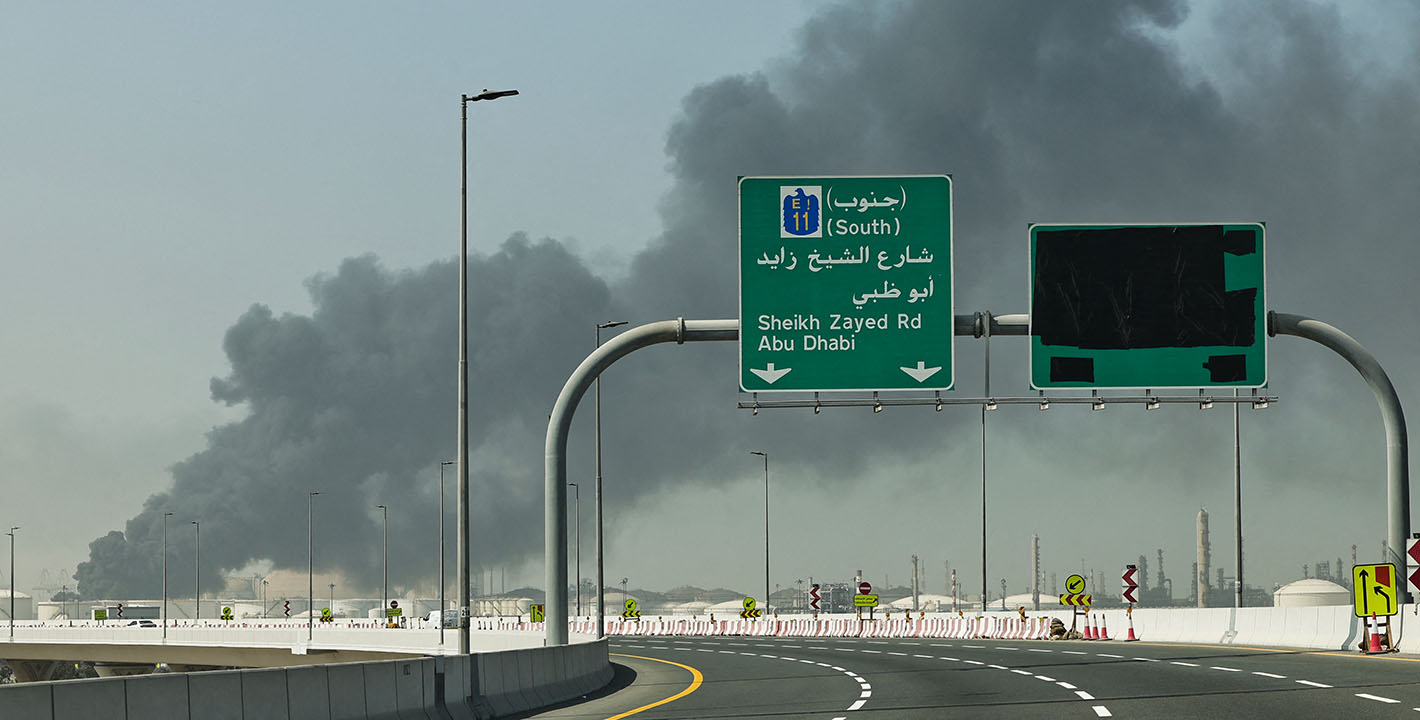
The countries in the region are managing the fallout from Iranian strikes in a paradoxical way.

Angie Omar

In an interview, Hassan Mneimneh discusses the ongoing conflict and the myriad miscalculations characterizing it.
Michael Young
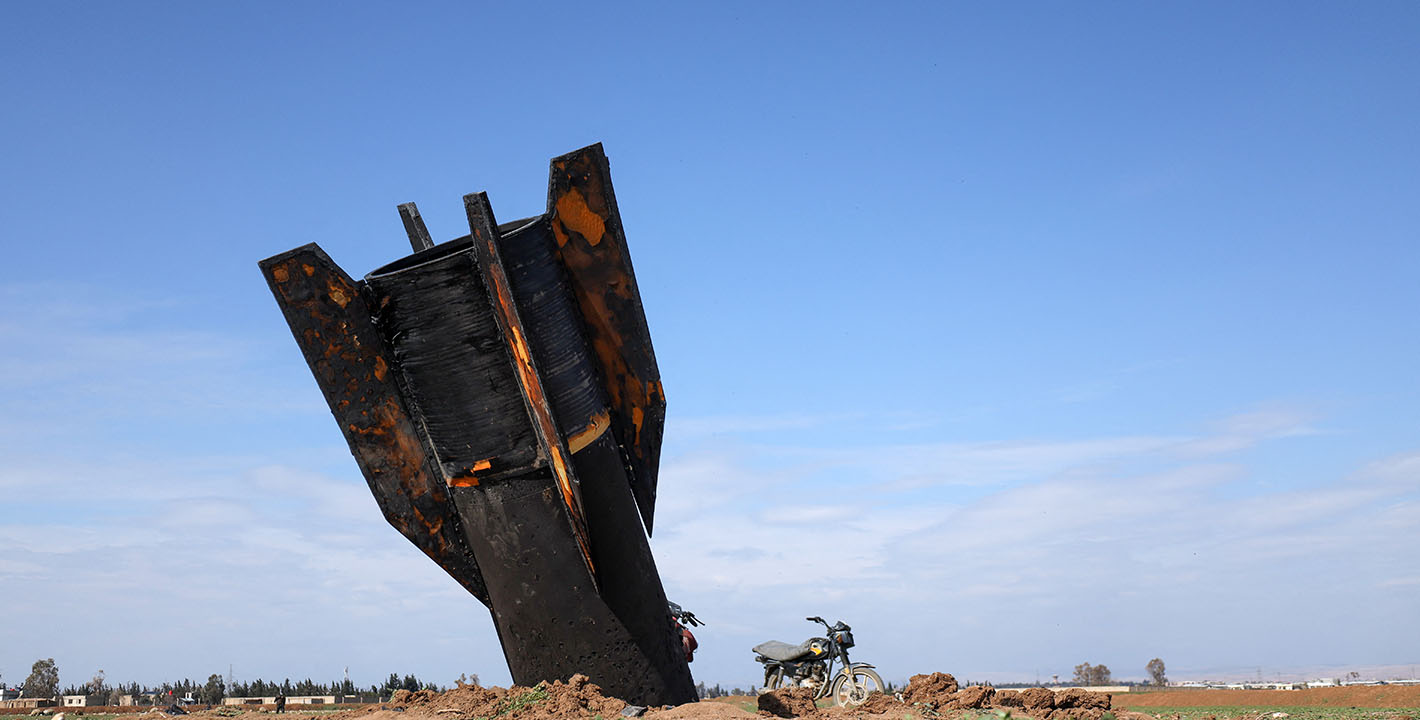
In an interview, Nicole Grajewski discusses the military dimension of the U.S. and Israeli attacks on Iran.
Michael Young

In an interview, Naysan Rafati assesses the first week that followed the U.S. and Israeli attack on Iran.
Michael Young