

Paper
Ahmed Nagi
{
  "authors": [
    "Ahmed Nagi"
  ],
  "type": "commentary",
  "blog": "Diwan",
  "centerAffiliationAll": "dc",
  "centers": [
    "Carnegie Endowment for International Peace",
    "Malcolm H. Kerr Carnegie Middle East Center"
  ],
  "collections": [],
  "englishNewsletterAll": "menaTransitions",
  "nonEnglishNewsletterAll": "",
  "primaryCenter": "Malcolm H. Kerr Carnegie Middle East Center",
  "programAffiliation": "MEP",
  "programs": [
    "Middle East"
  ],
  "projects": [],
  "regions": [
    "Gulf",
    "Saudi Arabia",
    "United Arab Emirates",
    "Yemen",
    "Middle East"
  ],
  "topics": [
    "Political Reform"
  ]
}
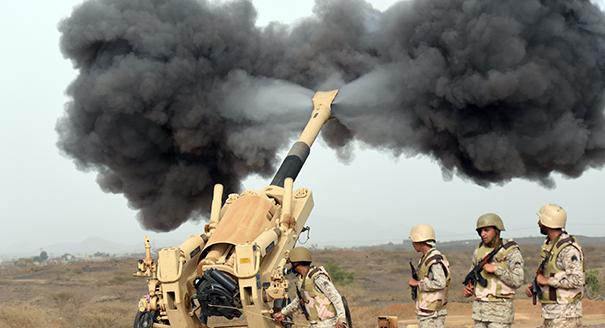
Source: Getty
On the fifth anniversary of the Saudi-led coalition’s intervention in Yemen, the message is hardly one of success.
At the Carnegie website, Ahmed Nagi has just published a commentary marking the fifth anniversary of the Saudi-led coalition’s intervention in Yemen. Nagi, a nonresident scholar at the Carnegie Middle East Center, has been covering all dimensions of the Yemeni conflict for Carnegie, and, most recently, published an article for Diwan on the rise of internal borders in Yemen. His view of the Saudi-led coalition’s campaign is that it “has still not achieved its announced goal: defeating the Houthi rebels and restoring Yemen’s legitimate government. Instead, the Saudi coalition has become fragmented by conflicts of interests among its members, allowing the Houthis to advance on several fronts.”
Senior Analyst at the International Crisis Group
Ahmed Nagi is a senior Analyst at the International Crisis Group.
Recent Work
Ahmed Nagi
Carnegie does not take institutional positions on public policy issues; the views represented herein are those of the author(s) and do not necessarily reflect the views of Carnegie, its staff, or its trustees.

Huawei pushed hard to enter the Egyptian data centers market, until the Americans made a better offer.

Angie Omar

Middle Eastern states should welcome an accelerated U.S. disengagement from their region.

Michael Young

The accord represents a pivotal moment in the region to avert a security vacuum in the Gulf.


Azeema Cheema, Mohanad Hage Ali

In an interview, Jason Burke discusses his sweeping account of the “revolutionists” who so shaped the 1970s and early 1980s.
Michael Young

There is a disturbing structural parallel between the old global energy economy and the new green transition.
Angie Omar