

Commentary
Michael Young
{
  "authors": [
    "Michael Young"
  ],
  "type": "commentary",
  "blog": "Diwan",
  "centerAffiliationAll": "",
  "centers": [
    "Carnegie Endowment for International Peace",
    "Malcolm H. Kerr Carnegie Middle East Center"
  ],
  "englishNewsletterAll": "",
  "nonEnglishNewsletterAll": "",
  "primaryCenter": "Malcolm H. Kerr Carnegie Middle East Center",
  "programAffiliation": "",
  "regions": [
    "Middle East",
    "Levant",
    "Gulf",
    "Iran",
    "Israel",
    "United States",
    "Lebanon"
  ]
}
Source: Getty
As Iran defends its interests in the region and its regime’s survival, it may push Hezbollah into the abyss.
The decision of the United States and Israel to attack Iran on February 28 has pushed the Middle East into a climatic conflict whose outcome remains very much unknown. On the third day of another open-ended war, it is evident that Iran considers the threat it is facing to be an existential one, which has shaped its response and that of some of its closest allies.
From the Iranian perspective, it appears, there are two directions to the U.S. and Israeli operations. First, to create a situation in which Iran is forced to accept the elimination of its nuclear program, the radical curtailment of its ballistic missile capacities, and an end to its regional network of mostly nonstate actors—in other words, conditions effectively imposing unconditional surrender on Tehran. The second aim, running in parallel with the first, is to undermine the foundations of the Iranian regime, which the killing of supreme leader Ali Khamenei was designed to accelerate, in the hope that it will encourage the Iranians themselves to overthrow their leaders.
Tehran’s systematic bombing of Arab countries (or, as its officials claim, U.S. military bases in these countries), but also its closing of the Strait of Hormuz and the cutting off of oil exports from the Gulf, appear to be directed at thwarting the first objective. By showing that Iran can hit targets in neighboring Arab countries at will and threaten the global economy, the Iranians are generating region-wide instability and strengthening their hand in negotiations that are bound to begin sooner or later. They may believe that this will compel the Americans and Israelis to cut back on their demands, and allow Iran’s regime to reinforce itself again in the aftermath of the conflict.
The idea of provoking regime change is more complicated as an objective. There are real doubts both in the United States and Israel that this is achievable today, and one might argue that Khamenei’s killing actually bolstered the Iranian system’s continuity. Why? Because any transition after Khamenei’s death from natural causes was always going to be tricky in a system that has largely lost legitimacy among the population, which could have provoked major internal dissension. Today, devising a changeover in the midst of war, while the population is incapable of mobilizing against any decisions taken, may prove easier, allowing Iran’s vast security apparatus to later consolidate the new situation.
What do such calculations mean for the Iranian network of allies in the region? It’s difficult to see these allies representing a strategic game changer in the conflict. Hamas is exhausted by two years of war in Gaza, the pro-Iran militias in Iraq at best can be marginally effective against U.S. military bases, Ansar Allah in Yemen is too far from the battle to do more than amplify Iranian pressure, which leaves Hezbollah in a sort of twilight zone. In many regards, the Iranians sent their allies down the path to perdition in 2023, when they came up with their hubristic Unity of the Arenas strategy, in which all of their nonstate allies would intervene together militarily against Israel if one member was attacked. The Hamas leader in Gaza, Yahya Sinwar, evidently launched his attack against Israel on October 7, 2023, with this in mind, believing the so-called Resistance Axis would ultimately prevail—only for Hezbollah to suffer a monumental defeat from which it has yet to recover.
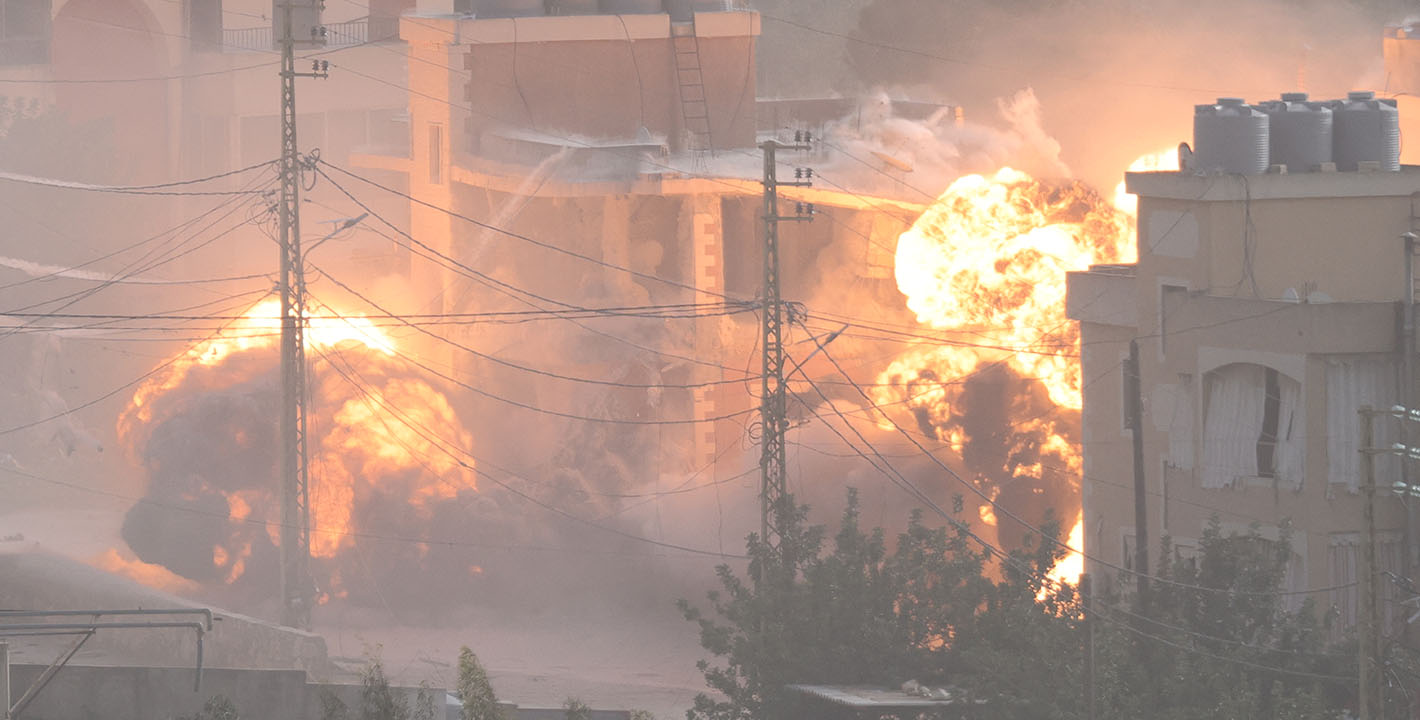
That is why it was surprising to see Hezbollah fire a handful of rockets at northern Israel in the early hours of March 2. In response, Israeli aircraft bombed Beirut’s southern suburbs, as well as towns and villages in the south and Beqaa Valley. The Israelis also ordered the evacuation of 53 villages in these areas, creating a new humanitarian crisis for Hezbollah to address, while people also began leaving the southern suburbs. In the early morning, the casualty toll was already 31 dead and 149 injured, according to Lebanon’s Health Ministry, with unconfirmed reports in the Jerusalem Post saying that Mohammed Raad, the head of Hezbollah’s parliamentary bloc, had been killed.
In other words, hundreds of thousands of Shiites are once again being displaced because Hezbollah decided to carry out a pin prick attack against Israel. It’s difficult to see anything useful in such an endeavor. This has led to speculation that there are rifts within the party, and that some members of its military wing acted on their own against the decision of the party’s political leadership. That doesn't sound very likely, however. It also raises questions about Hezbollah’s vaunted precision-guided missile arsenal. During the 2023–2024 war, no such missiles were employed by the party, perhaps indicating that Iran was saving them to protect its nuclear program and regime. Yet today, one has to assume the Iranians have lifted all restrictions on their use, so why open up hostilities by firing short-range rockets that cause minimal damage? Do the party’s missiles still exist?
The argument can be made that the Iranians are mainly interested in bolstering their negotiating hand, therefore that Hezbollah’s wellbeing is secondary. Yet, if this is true, there are important dimensions here that officials in Tehran are ignoring. The first is that the Lebanese government’s credibility is too tied up with the party's disarmament to allow the ambiguous situation prevailing today to continue. On March 2, the Lebanese government decided to outlaw Hezbollah’s military activities, a remarkable escalation against the party, which was reportedly supported by the Shiite speaker of parliament Nabih Berri, who was burned by the fact that the party had assured him it would not enter the war.
A second dimension is Lebanese sectarian politics. The Shiite community is now completely isolated in the multisectarian Lebanese system, opposed by a majority in the government, the president, and perhaps even Berri, who understands the risks his community would face if it suffered a new military defeat. At a time when Shiites are surrounded by unsympathetic communities, including a revitalized Sunni community backed by a regime in Damascus deeply hostile to Hezbollah, anything that weakens the Shiites even more could debilitate them politically for many years to come.
The community has remained unified, but Berri has been stung by Hezbollah’s actions of late. The fact that he was hoodwinked by the party comes not long after he was one of those targeted in an open letter released by Hezbollah last November, in which it restated its opposition to disarmament and “political negations” with Israel. Berri was reported to be angry with that letter, and there have been tensions on the ground between Berri’s supporters and Hezbollah’s, most recently in January, reflecting different priorities. The speaker is said to want to focus on reconstruction in the south, which requires Hezbollah to disarm, while the party is unwilling to concede a monopoly over weapons to the Lebanese state.
Where might all this lead? Hezbollah is trapped—precisely where the Israelis want it to be. Even presuming the Iranians come out of the regional conflict strengthened, nothing can now stop Israel’s intention to hit Hezbollah and its community hard, completing what was started in 2024. With Hezbollah geographically isolated due to the downfall of the Assad regime in Syria, and politically isolated at home, its ability to put up a serious fight is limited. What is more worrisome, however, is that the party’s defeat will make it easier for Israel to impose a ceasefire agreement that creates conditions for a peace settlement, one that eventually draws Lebanon into an Israeli sphere of influence. Given regional rivalries and the fact that there are leading states in the Middle East that will try to prevent Lebanon from going in this direction, the risks of domestic dissension will rise.
The key variable to watch in the coming weeks is the ability of Iran on the one side and the United States and Israel on the other to sustain their fight, as they burn through their munitions. The U.S. chairman of the Joint Chiefs of Staff, General Dan Caine, reportedly cautioned President Donald Trump about this, and the Pentagon had requested $30 billion from Congress to rebuild its stockpile of missiles and interceptors. According to the Washington Post, the “request was only partially fulfilled in the Pentagon budget passed last month ...” Iran may also have problems, with the Israelis announcing on Sunday that they had destroyed about half of Iran’s missile launchers. There are no obvious off-ramps in this continuing slugfest, but the real issue is which of the two sides will first be blindsided by reality.

Editor, Diwan, Senior Editor, Malcolm H. Kerr Carnegie Middle East Center
Michael Young is the editor of Diwan and a senior editor at the Malcolm H. Kerr Carnegie Middle East Center.
Recent Work
Michael Young
Michael Young
Carnegie does not take institutional positions on public policy issues; the views represented herein are those of the author(s) and do not necessarily reflect the views of Carnegie, its staff, or its trustees.
Reconciliation councils are emerging throughout the country to mediate in intracommunal disputes, many from the war years.
Natacha Danon

In an interview, Rozina Ali discusses her new book on the rise and manifestations of Islamophobia in the United States.
Michael Young
As the U.S.-led Coalition withdraws, the Kurds’ reliance on Baghdad, and on themselves, will only increase.
Wladimir van Wilgenburg

In an interview, Ian Lustick and Eli Clifton discuss their new book on why a prominent ally has so much influence in America.
Michael Young

As the U.S. stumbles in its war with Iran, we are likely to see an acceleration of its disengagement from the region.
Michael Young