

Research
- +6
Yasmine Farouk, Nathan J. Brown, Maysaa Shuja Al-Deen, …
{
  "authors": [
    "Michele Dunne"
  ],
  "type": "commentary",
  "blog": "Diwan",
  "centerAffiliationAll": "dc",
  "centers": [
    "Carnegie Endowment for International Peace",
    "Malcolm H. Kerr Carnegie Middle East Center"
  ],
  "collections": [
    "Reaction Shot"
  ],
  "englishNewsletterAll": "menaTransitions",
  "nonEnglishNewsletterAll": "",
  "primaryCenter": "Malcolm H. Kerr Carnegie Middle East Center",
  "programAffiliation": "MEP",
  "programs": [
    "Middle East"
  ],
  "projects": [],
  "regions": [
    "North America",
    "United States",
    "Middle East",
    "Iran",
    "Israel",
    "Palestine",
    "Saudi Arabia",
    "Gulf",
    "Levant"
  ],
  "topics": [
    "Political Reform"
  ]
}
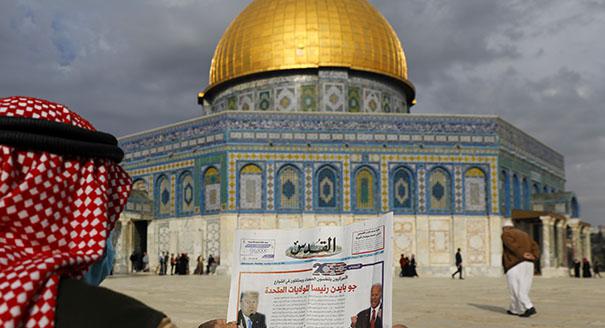
Source: Getty
Spot analysis from Carnegie scholars on events relating to the Middle East and North Africa.
How Will Joe Biden’s Policies Be Different From Donald Trump’s?
Joe Biden will reverse steps by President Donald Trump that harmed tens of thousands of people in the region. Although policies toward the Middle East were not a major topic in the U.S. presidential election, Biden has already pledged to make significant changes:
In What Way Will Biden’s Victory Affect the Region’s Leaders?
Those leaders in the region who cultivated especially close relations with Trump—Saudi Crown Prince Mohammed bin Salman, Emirati Crown Prince Mohammed bin Zayed, Israeli Prime Minister Benjamin Netanyahu, Turkish President Recep Tayyip Erdoğan, and Egyptian President ‘Abdel-Fattah al-Sisi—have lost their special protector in the White House. Biden will not aim to antagonize those leaders (many of whom he knows well) or destabilize those countries, but he also will not behave as though he owed them a favor, as Trump did. Biden has criticized the way Trump protected Mohammed bin Salman from international censure following the murder of Jamal Khashoggi, for example, as well as Trump’s unqualified support for his “favorite dictator” Sisi. While it remains to be seen how far Biden would go in changing the substance of the state-state relationships, the style and dynamics of personal ties will change.
How Might the Middle East and North Africa Shape Biden’s Approach?
Every U.S. president begins an administration embracing certain foreign policy priorities and then finds that things happen in the world—especially in the Middle East—for which the United States must have a policy, even if it does not always take the lead. Consider George W. Bush, who criticized his predecessor Bill Clinton’s intense involvement in the region, but then became even more involved himself after the September 11, 2001 attacks; or Barack Obama, who criticized Bush’s entanglements, before dealing with the fallout of the 2011 Arab uprisings.
Biden, too, is likely to face unanticipated challenges in the Middle East and North Africa. Just as he is trying to diminish U.S. involvement and turn his attention elsewhere—to domestic challenges certainly as well as Asia—he might well find that the region is coming apart at the seams. The gradual shift in world energy markets away from oil and gas has accelerated as a result of Covid-19, bringing closer the day when the region’s oil exporters (and their beneficiaries) no longer have the wealth to buy social peace from restive youthful populations. Once the pandemic begins to recede, more popular uprisings along the lines of those that have proliferated in the past decade—resulting in leadership changes in six countries so far—or other forms of unrest are likely.
A Biden administration might be no more prepared than was the Obama administration to figure out how to support citizens’ demands for human rights and accountable government in a turbulent and confusing Middle East, while the leaders and elites with whom the United States has worked panic and struggle to survive. One thing that is almost certain is that when it comes to the impact on citizens, U.S. policies under Biden will be less cruel than those under Trump.

Former Nonresident Scholar, Middle East Program
Michele Dunne was a nonresident scholar in Carnegie’s Middle East Program, where her research focuses on political and economic change in Arab countries, particularly Egypt, as well as U.S. policy in the Middle East.
Recent Work


Yasmine Farouk, Nathan J. Brown, Maysaa Shuja Al-Deen, …
Robert Springborg, Emile Hokayem, Becca Wasser, …
Carnegie does not take institutional positions on public policy issues; the views represented herein are those of the author(s) and do not necessarily reflect the views of Carnegie, its staff, or its trustees.
As the U.S.-led Coalition withdraws, the Kurds’ reliance on Baghdad, and on themselves, will only increase.
Wladimir van Wilgenburg

In an interview, Ian Lustick and Eli Clifton discuss their new book on why a prominent ally has so much influence in America.

Michael Young

As the U.S. stumbles in its war with Iran, we are likely to see an acceleration of its disengagement from the region.
Michael Young
The Zaidi government’s objective to collect weapons is constrained by regional conflict, but it can take certain measures at home.
Ali Al-Mawlawi
It is improbable that Israel’s forthcoming elections will alter much in terms of how the country thinks about security.
Nathan J. Brown