

Article
Hamza Meddeb, Mohamed Ali Adraoui
{
  "authors": [
    "Hamza Meddeb"
  ],
  "type": "commentary",
  "blog": "Diwan",
  "centerAffiliationAll": "dc",
  "centers": [
    "Carnegie Endowment for International Peace",
    "Malcolm H. Kerr Carnegie Middle East Center"
  ],
  "collections": [
    "Reaction Shot"
  ],
  "englishNewsletterAll": "menaTransitions",
  "nonEnglishNewsletterAll": "",
  "primaryCenter": "Malcolm H. Kerr Carnegie Middle East Center",
  "programAffiliation": "MEP",
  "programs": [
    "Middle East"
  ],
  "projects": [
    "Tunisia Monitor"
  ],
  "regions": [
    "Maghreb",
    "North Africa",
    "Tunisia"
  ],
  "topics": [
    "Political Reform"
  ]
}
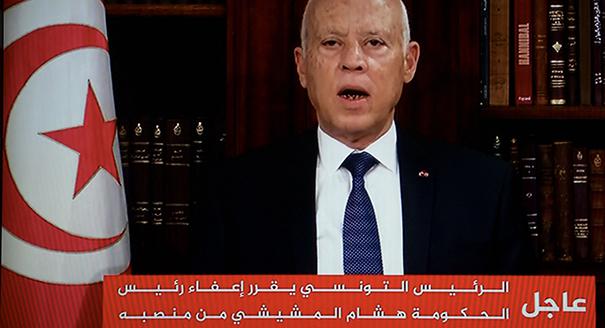
Source: Getty
Spot analysis from Carnegie scholars on events relating to the Middle East and North Africa.
What Happened?
On July 25, after a day of protests across Tunisia in reaction to socioeconomic hardships and poor management of the Covid-19 crisis, President Qaïs Said suspended parliament, dismissed the prime minister, and declared himself to be the county’s general prosecutor.* He also announced that he would appoint a new prime minister who would be in charge of forming a cabinet.
Said invoked Article 80 of the constitution, which gives the president extraordinary prerogatives to address any “imminent danger” to national security. He took advantage of the absence of a constitutional court that could have restricted his broad interpretation of the article. Commentators described his move as a constitutional coup. The current constitutional vacuum allows Said to accumulate extraordinary presidential, executive, and judicial powers.
The Islamist party Ennahda and its allies tried to oppose the president’s decisions by reactivating parliament. However, the party’s parliamentarians, led by speaker Rashed Ghannouchi, were denied access to the building, which is guarded by the military. On July 26, Prime Minister Hichem Mechichi issued a communiqué announcing his acceptance of the president’s decision and his readiness to hand over power. Said’s measures created divisions among the political class. Many progressive parties opposed them, while others were more supportive. Without contesting their legitimacy, the Tunisian General Labor Union (UGTT) urged the president to return to a constitutional and democratic framework.
Why Is It Important?
Said’s decision came after months of a power struggle that included the president, the prime minister, and the speaker of parliament. Disagreement over a partial government reshuffle announced by Mechichi and opposed by the president had resulted in a constitutional stalemate since last January.
Said’s move also came in the context of a deepening economic crisis that was aggravated by the Covid-19 pandemic. Power struggles and a lack of coordination between government departments led to the disastrous management of the disease and failures in the vaccination campaign. The wave of infections because of the Delta variant caused an average of 1,000 death per week. Videos of poorly equipped hospitals and overwhelmed medical staff caused anger among a population that views Tunisia’s political class as corrupt, self-centered, and shortsighted. By July 26, there had been 18,600 deaths due to the virus, prompting Said to intervene. The president views himself as the arbiter of the constitution and protector of national security. Since his election in 2019, he has also railed against corruption and nepotism, helping to delegitimize the political class.
What Are the Implications for the Future?
Said is expected to appoint a new prime minister who will be in charge of forming a government of technocrats to address Tunisia’s health and economic emergencies. His second priority would be to formulate a road map that can attract support from the international community and domestically. Said also announced his intention of reforming the constitution and introducing a presidential system. The aim would be to end the confusion over prerogatives and define clearly the powers of the president, prime minister, and parliament. His plan might also include a referendum on a new political system, reform of the electoral law, and the holding of early elections.
Said’s challenge will be to secure legitimacy for his road map. This will imply garnering the support of the political class and national organizations—mainly the quartet of the UGTT, the Tunisian Confederation of Industry, Trade, and Handicrafts, the Lawyers Association, and the Tunisian League for Human Rights. Without political compromises and without integrating social and political forces into his efforts, Said risks taking Tunisia into a phase of prolonged political instability.
The constitutional crisis comes as Tunisia is discussing a new reform program with the International Monetary Fund. The importance of having a clear and broadly supported plan of action is key to restoring the trust of the international community and international financial institutions, especially given the burden of Tunisia’s debt and the significant levels of financing the country requires. Tunisia must extract itself quickly from this period of uncertainty, restore its democratic system, and address its economic challenges.
* The sentence has been modified, as the word “prosecutor” was initially, and incorrectly, rendered “persecutor."
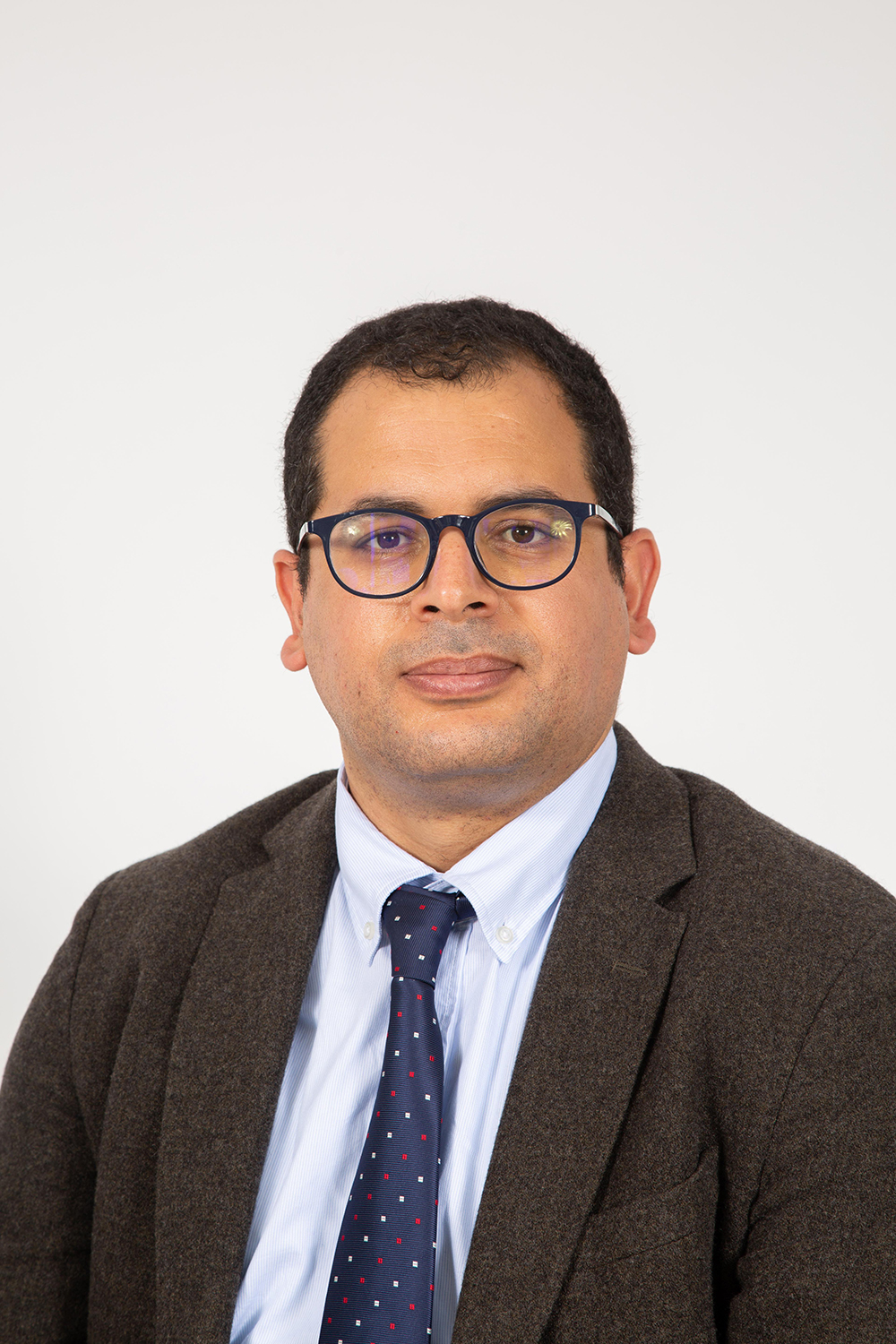
Fellow, Malcolm H. Kerr Carnegie Middle East Center
Hamza Meddeb is a research fellow at the Malcolm H. Kerr Carnegie Middle East Center in Beirut, where he co-leads the Political Economy Program
Recent Work
Hamza Meddeb, Mohamed Ali Adraoui
Carnegie does not take institutional positions on public policy issues; the views represented herein are those of the author(s) and do not necessarily reflect the views of Carnegie, its staff, or its trustees.
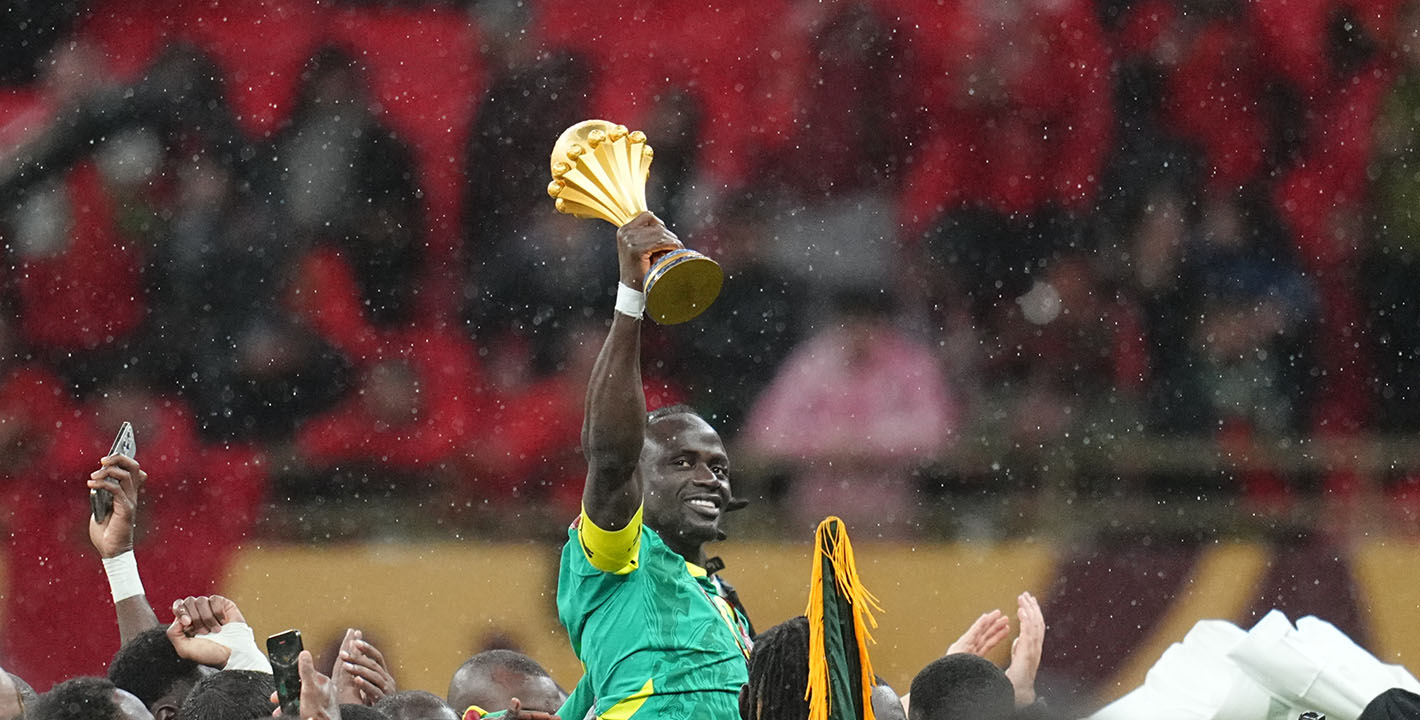
The recent African Cup of Nations tournament in Morocco touched on issues that largely transcended the sport.


Issam Kayssi, Yasmine Zarhloule
Mustaqbal Misr has expanded its portfolio with remarkable speed, but a lack of transparency remains.

Yezid Sayigh
The burden of environmental degradation is felt not only through physical labor but also emotional and social loss.
Yasmine Zarhloule, Ella Williams
The country’s youthful protest movement is seeking economic improvement, social justice, and just a little hope.
Yasmine Zarhloule
The Moroccan-Algerian rivalry is playing itself out in ties with Burkina Faso, Niger, and Mali.
Yasmine Zarhloule