

Commentary
Michael Young
{
  "authors": [
    "Michael Young"
  ],
  "type": "commentary",
  "blog": "Diwan",
  "centerAffiliationAll": "dc",
  "centers": [
    "Carnegie Endowment for International Peace",
    "Malcolm H. Kerr Carnegie Middle East Center"
  ],
  "collections": [
    "Decoding Lebanon"
  ],
  "englishNewsletterAll": "menaTransitions",
  "nonEnglishNewsletterAll": "",
  "primaryCenter": "Malcolm H. Kerr Carnegie Middle East Center",
  "programAffiliation": "MEP",
  "programs": [
    "Middle East"
  ],
  "projects": [],
  "regions": [
    "Levant",
    "Lebanon",
    "Middle East"
  ],
  "topics": [
    "Political Reform"
  ]
}
Source: Getty
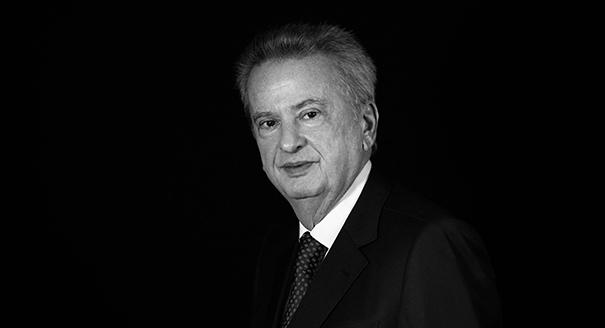
A recent article in an online website reveals how the former central bank governor had journalists and commentators on his payroll.
Two weeks ago, the independent website, Daraj, published an article based on the interview last April by French magistrate Aude Buresi of the Lebanese banker Marwan Kheireddine, owner of Mawarid Bank. Kheireddine was brought before Buresi on suspicion that he had given the French authorities forged documents in their investigation of Lebanon’s former central bank governor Riad Salameh.
Salameh has been indicted by Buresi for a series of financial crimes, but the focus of her questions to Kheireddine, at least that portion highlighted by Daraj, pertained to several journalists. In their investigation, the French noticed that Salameh had paid off five journalists or media commentators after the financial crisis of 2019 through Mawarid Bank, apparently so these individuals could defend him publicly.
According to the article, Kheireddine admitted that the system Salameh employed to pay the five was aimed at concealing the transactions. Salameh would deposit money from his personal account into Mawarid’s account at the central bank, after which he would contact Kheireddine by telephone or WhatsApp to notify him. The banker would then transfer the money to the designated individuals.
There had long been stories circulating that Salameh bribed journalists and media outlets to burnish his image, but the Daraj article was the first to confirm such accusations. What it underlined was the corruption and ethical shortcomings that permeate the Lebanese media landscape, but also the society in general.
I myself have been a victim several times of the lack of professionalism, even self-respect, on the part of fellow journalists. In 2019, a prominent columnist in the daily An-Nahar, Sarkis Naoum, lifted an article I had written in its entirety, and published it under his name without any effort to reference me. On another occasion, a leading television station, MTV, purloined an article I had written and turned it into a short clip on its nightly news, again without mentioning the source.
Such behaviour is par for the course in a country that takes pride in cutting corners. Lebanon has always seen itself as the country of the possible, the realm of the back-up plan, reflecting a flexibility that helps explain its impatience with principle.
And yet, the country for a long time remained a stimulating outpost for media freedom in the Middle East, even if many journalists were assumed to be on the take. The reason for this is that media outlets were used as instruments in political infighting, so that they revealed quite a bit about their rivals. A careful follower of the news could learn a great deal if he or she understood the political agendas of contending newspapers or television stations.
What the media world had in Lebanon, and still has to an extent, is pluralism, and listening to many sides can help in pasting together a fairly accurate image of what is taking place. But that doesn’t change the fact that this is far from ideal journalistically. Those who follow the news shouldn’t have to become code-breakers to get a better sense of what their officials are actually thinking or doing.
Salameh’s manipulations are a case in point. Well into 2019, the former central bank governor was reassuring the public that Lebanon had enough foreign currency reserves to avert a financial collapse. On the basis of such reassurances, many people kept their money in local banks, even though it was becoming increasingly difficult for depositors to withdraw U.S. dollars that year. Today, their misplaced confidence has very likely cost them everything.
Salameh’s siren songs were relayed by the journalists and commentators whom he funded, who were therefore complicit in duping the public. Behavior like that cannot simply be written off as an example of “Lebanese flexibility.” It involves criminal disinformation.
It’s a shame to see what Lebanon’s media world risks becoming. It was always “under the influence,” but that didn’t prevent good journalism. Today, there are still credible journalists plying their trade, who are not on some politician’s or official’s payroll. However, you have to fear that these people are a dying breed.
The only bright light comes from the collapse of the business model of media outlets after the civil war—if such a term can be used for so base a process. For decades, local and regional political money kept many outlets afloat, but that’s no longer true. Political money has dried up. Now, more independent online publications are opening, and they are looking for sustainable means of survival, not handouts. Among the success stories, a legacy newspaper, the French-language L’Orient-Le Jour, has adopted a commendable online subscription-based model.
Daraj is another prime example of this new path. It has collected journalists from traditional media outlets, letting them loose without political commandments. Many are friends, I must disclose, and their freedom also happens to be ours.

Editor, Diwan, Senior Editor, Malcolm H. Kerr Carnegie Middle East Center
Michael Young is the editor of Diwan and a senior editor at the Malcolm H. Kerr Carnegie Middle East Center.
Recent Work
Michael Young
Michael Young
Carnegie does not take institutional positions on public policy issues; the views represented herein are those of the author(s) and do not necessarily reflect the views of Carnegie, its staff, or its trustees.
Reconciliation councils are emerging throughout the country to mediate in intracommunal disputes, many from the war years.
Natacha Danon
As the U.S.-led Coalition withdraws, the Kurds’ reliance on Baghdad, and on themselves, will only increase.
Wladimir van Wilgenburg

As the U.S. stumbles in its war with Iran, we are likely to see an acceleration of its disengagement from the region.
Michael Young
The Zaidi government’s objective to collect weapons is constrained by regional conflict, but it can take certain measures at home.
Ali Al-Mawlawi

The accord represents a pivotal moment in the region to avert a security vacuum in the Gulf.


Azeema Cheema, Mohanad Hage Ali