

Commentary
Michael Young
{
  "authors": [
    "Michael Young"
  ],
  "type": "commentary",
  "blog": "Diwan",
  "centerAffiliationAll": "",
  "centers": [
    "Malcolm H. Kerr Carnegie Middle East Center",
    "Carnegie Endowment for International Peace"
  ],
  "englishNewsletterAll": "",
  "nonEnglishNewsletterAll": "",
  "primaryCenter": "Malcolm H. Kerr Carnegie Middle East Center",
  "programAffiliation": "",
  "regions": [
    "Lebanon",
    "Syria"
  ]
}
Source: Getty
In an interview, Sohaib Jawhar analyzes the profound changes in the ties between the neighboring countries.
Sohaib Jawhar is a Lebanese researcher and political analyst specializing in Middle Eastern affairs, with a focus on regional security and Levant geopolitics. He is a senior research fellow at the Triangle Center for Studies in Lebanon and a resident research fellow at the Politics and Society Institute in Jordan. His work has been published by the Carnegie Endowment for International Peace’s Sada outlet, as well as by Al-Jazeera, by the Middle East Council on Global Affairs, and by the SETA Foundation in Türkiye. Jawhar also serves as media adviser to Lebanon’s deputy prime minister, Tareq Mitri. However, the views expressed in this interview are his alone.
Michael Young: President Donald Trump has urged Syria to confront Hezbollah militarily inside Lebanon, yet Damascus has refused. Why?
Sohaib Jawhar: I suspect President Trump’s remarks reflected a broader debate inside his administration rather than an expectation Syria was prepared to intervene militarily in Lebanon. The assumption was that, after the fall of the Assad regime, Damascus might be willing to take a much more confrontational position with regard to Hezbollah. In reality, Syria’s new leadership views the situation quite differently. From its perspective, sending Syrian forces into Lebanon carries enormous political and security risks, while offering very limited strategic benefits. The priority today is rebuilding the Syrian state, restoring the economy, and attracting international investment, not opening another front that could easily spiral out of control.
However, that doesn’t mean Syria is unwilling to cooperate on security. Quite the opposite. Damascus has expressed a willingness to coordinate with Lebanon on intelligence sharing, border security, and efforts to disrupt arms smuggling and cross-border militant activity—areas in which both countries have common interests. Syria is ready to help strengthen the Lebanese state’s capacity to deal with security threats, but it has little interest in playing a direct military role inside Lebanon. The leadership believes that lasting stability can only come through cooperation with Lebanese institutions.
MY: In a recent article for Türkiye’s SETA Foundation, you argued that Syria is redefining—rather than abandoning—its relationship with Lebanon. What exactly did you mean?
SJ: For decades, Syrian policy toward Lebanon was defined by direct political and military influence. I don’t think Syria is trying to revive that model today. What’s changing is not Syria’s interest in Lebanon—geography makes that impossible—but the way it seeks to protect those interests. As I noted, the new approach is far more institutional. Instead of relying on military leverage or political patronage, Damascus wants to build state-to-state relations based on border security, economic cooperation, trade, and coordinated infrastructure projects. This reflects both domestic Syrian priorities and the broader regional environment, which greatly differs from what it was 20 years ago.
Another important shift involves Hezbollah. Syrian officials are increasingly distinguishing between Hezbollah as an armed organization and Lebanon’s Shiite community as a political and social community. That explains why Damascus continues to value communication with figures such as the speaker of parliament, Nabih Berri, while avoiding policies that might deepen sectarian divisions inside Lebanon. I would describe Syria’s approach to Lebanon less as a strategic retreat than as a strategic readjustment.
MY: You have argued that Syrian-Lebanese relations reflect a broader competition over the future of the Levant. What do you mean by that?
SJ: It’s difficult to understand Syrian-Lebanese relations today if we look at them on their own. They’re part of a much larger regional transition taking place after the fall of Bashar al-Assad’s regime and the decline of Iranian influence in Syria. For years, the regional balance was shaped by Iran’s effort to build a strategic corridor stretching from Tehran through Iraq and Syria to Lebanon, with Hezbollah playing a central role in this. That framework has been considerably weakened, but the competition over what replaces it is only beginning.
Today, Türkiye is trying to consolidate a stable and unified Syria while expanding regional economic connectivity ties. The Gulf states are working to bring Syria and Lebanon back into the Arab political fold, without creating a new system of external dominance. The United States remains focused on strengthening Lebanese state bodies and reducing the sway of armed non-state actors, while Israel continues to prioritize security along its northern border. That’s why discussions over Hezbollah’s weapons, border security, energy infrastructure, and transport corridors are no longer just Lebanese or Syrian issues. They have become part of a wider regional contest for influence, connectivity projects, and the future balance of power in the region.
To me, the real question is whether the Levant is moving toward a regional order built around sovereign states that cooperate with one another, or whether it will remain defined by proxy conflicts and competing spheres of influence. The answer to that question will shape not only what happens in Syria and Lebanon but also the wider region for years to come.
MY: How has Lebanon’s approach toward Türkiye evolved, and what impact has this had on Lebanese relations with Syria?
SJ: Lebanon’s approach toward Türkiye has changed quite noticeably over the past year. Earlier reservations, many of them rooted in domestic politics, have gradually given way to a more pragmatic approach as regional priorities have shifted. That change became visible through a series of high-level visits to Türkiye by Deputy Prime Minister Tareq Mitri, Prime Minister Nawaf Salam, and last week President Joseph Aoun. From Beirut’s perspective, Türkiye is no longer regarded as just an important regional power. It is seen as one of the few countries able to maintain a credible relationship with Syria’s new leadership, while also working closely with the United States, the Gulf states, and Iraq. This gives Ankara diplomatic flexibility that few other regional actors currently possess.
Consequently, cooperation between Lebanon and Türkiye now extends beyond traditional bilateral issues to includes border security, economic integration, energy, reconstruction, transport links, and, perhaps most importantly, coordination over the future relationship between Beirut and Damascus. That said, I don’t think Lebanon sees Türkiye as a substitute for direct engagement with Syria. Rather, Beirut regards Türkiye more and more as a constructive regional partner that can facilitate dialogue, reduce tensions, and support a more predictable institutional relationship between Lebanon and Syria. This is especially important on issues such as border management, refugee returns, security coordination, and future economic cooperation.
MY: Isn’t it overly optimistic to argue that Syria has abandoned its historical tendency to dominate Lebanon?
SJ: I understand the skepticism because geography hasn’t changed, nor will it. Whatever happens in Lebanon inevitably affects Syria’s security, whether we’re talking about the border, smuggling networks, armed groups, refugees, or Israeli military operations. No government in Damascus can treat Lebanon as a foreign policy issue that can be ignored. But I don’t think the question is whether Syria will continue to have interests in Lebanon. Of course, it will. The more important question is how those interests are pursued. The regional environment that once allowed Syria to dominate Lebanon no longer exists. Syria itself has changed, Lebanon has changed, and the balance of power across the Middle East has changed. The new Syrian leadership is preoccupied with rebuilding state institutions, reviving the economy, attracting foreign investment, and securing international legitimacy. Trying to restore the old model of political tutelage or military intervention would work against all of those objectives. It would also face strong resistance inside Lebanon and from key regional actors, particularly Türkiye and Saudi Arabia, both of which have consistently supported a stronger Lebanese state over renewed external control of Lebanon.
That doesn’t mean Syria will step back from Lebanese affairs altogether. There will continue to be close coordination on border security, intelligence cooperation, trade, transport, and other issues where the interests of both countries overlap. Those links, which are redefining the relationship, are inevitable because the security of one country directly affects that of the other. Whether that approach ultimately succeeds is something we’ll only be able to judge over time, especially when both governments face their next major security crisis together.

Editor, Diwan, Senior Editor, Malcolm H. Kerr Carnegie Middle East Center
Michael Young is the editor of Diwan and a senior editor at the Malcolm H. Kerr Carnegie Middle East Center.
Recent Work
Michael Young
Michael Young
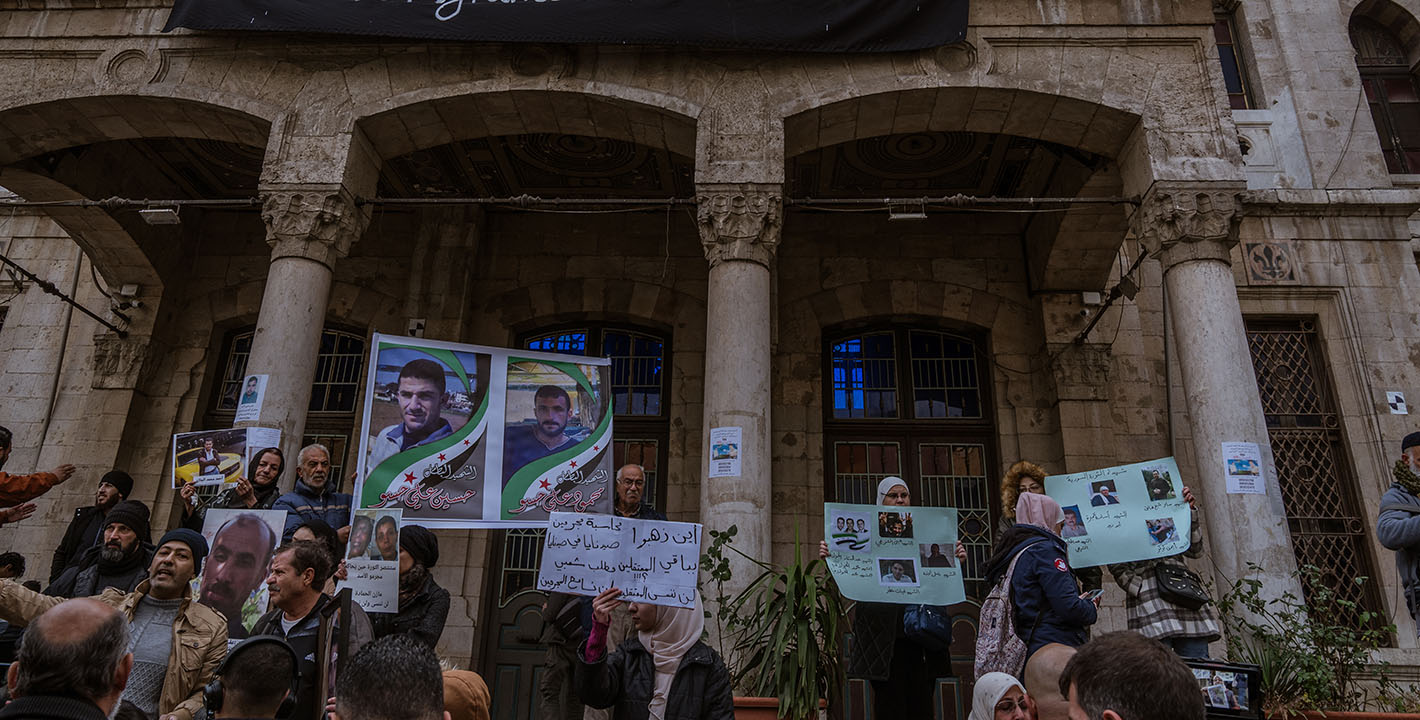
Reconciliation councils are emerging throughout the country to mediate in intracommunal disputes, many from the war years.
Natacha Danon
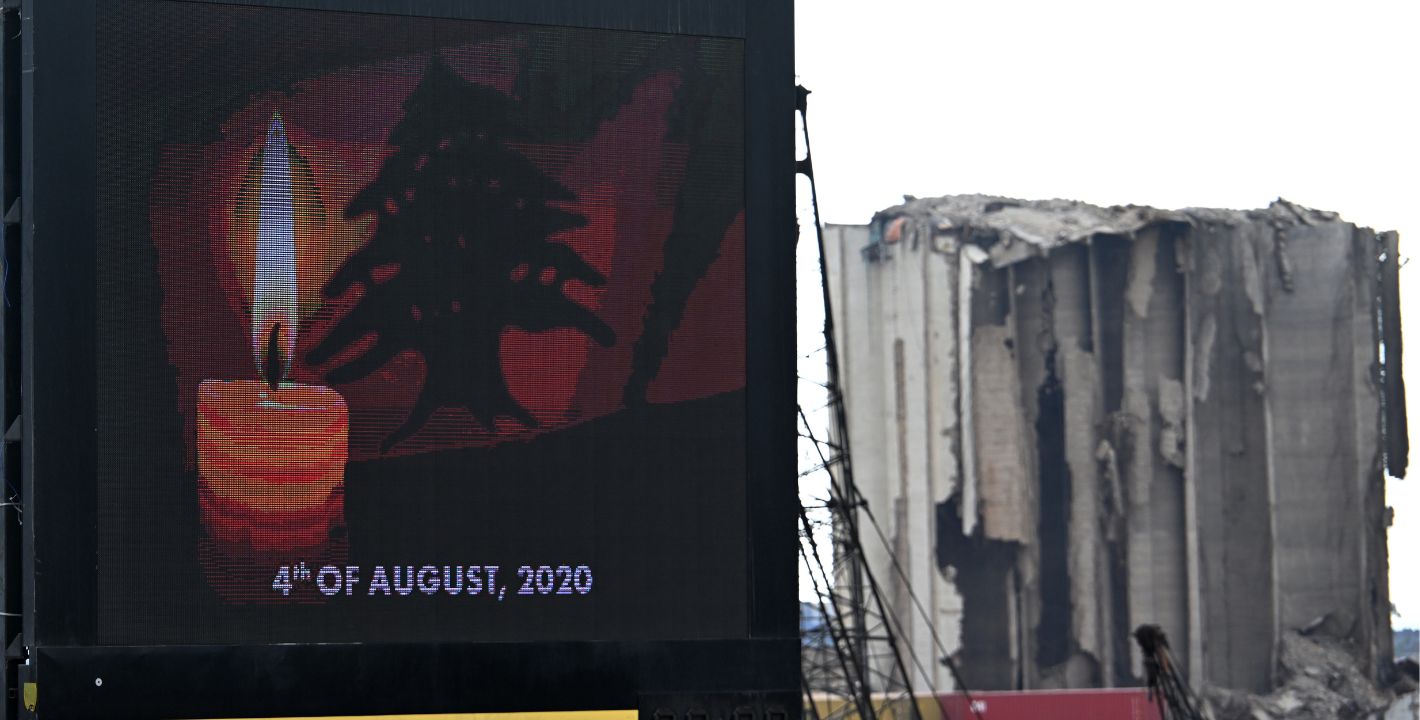
Lying at the heart of Lebanon’s dysfunction is an inability to secure accountability and institutional legitimacy.

Maha Yahya
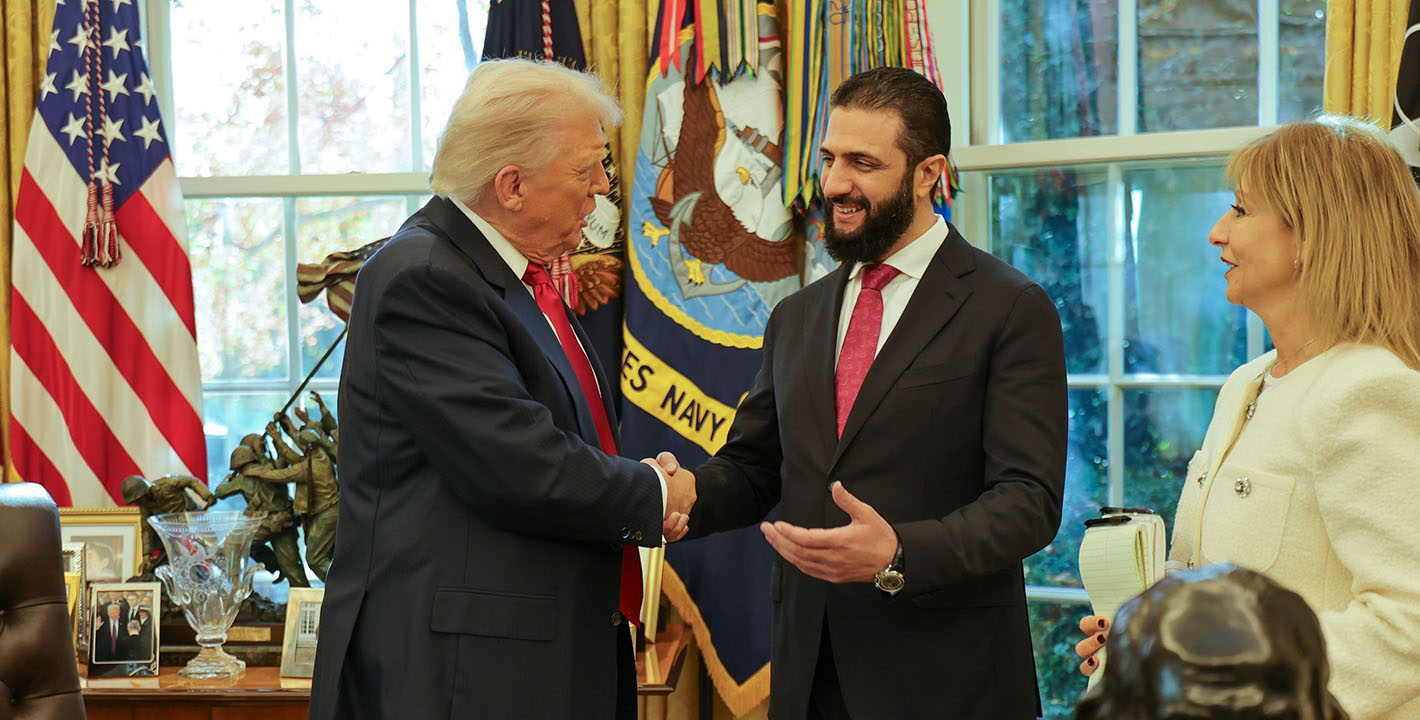
Any move by the United States to make good on Trump’s suggestion that Washington persuade Damascus to confront Hezbollah militarily would have catastrophic consequences.
Kheder Khaddour
As talks begin between Washington and Tehran, Beirut has an opening to advance a regional plan for the party’s disarmament.
Michael Young
In an interview, Elizabeth Thompson recalls how the country formulated a liberal constitution in 1920, before being denied by France and Britain.
Michael Young