

Commentary
As the U.S.-led Coalition withdraws, the Kurds’ reliance on Baghdad, and on themselves, will only increase.
Wladimir van Wilgenburg
{
  "authors": [
    "Zeinab Shuker"
  ],
  "type": "commentary",
  "blog": "Diwan",
  "centerAffiliationAll": "",
  "centers": [
    "Carnegie Endowment for International Peace",
    "Malcolm H. Kerr Carnegie Middle East Center"
  ],
  "englishNewsletterAll": "",
  "nonEnglishNewsletterAll": "",
  "primaryCenter": "Malcolm H. Kerr Carnegie Middle East Center",
  "programAffiliation": "",
  "projects": [
    "The Climate Crisis, Resilience, and Displacement in the Middle East and North Africa"
  ],
  "regions": [
    "Iraq"
  ]
}
Source: Getty
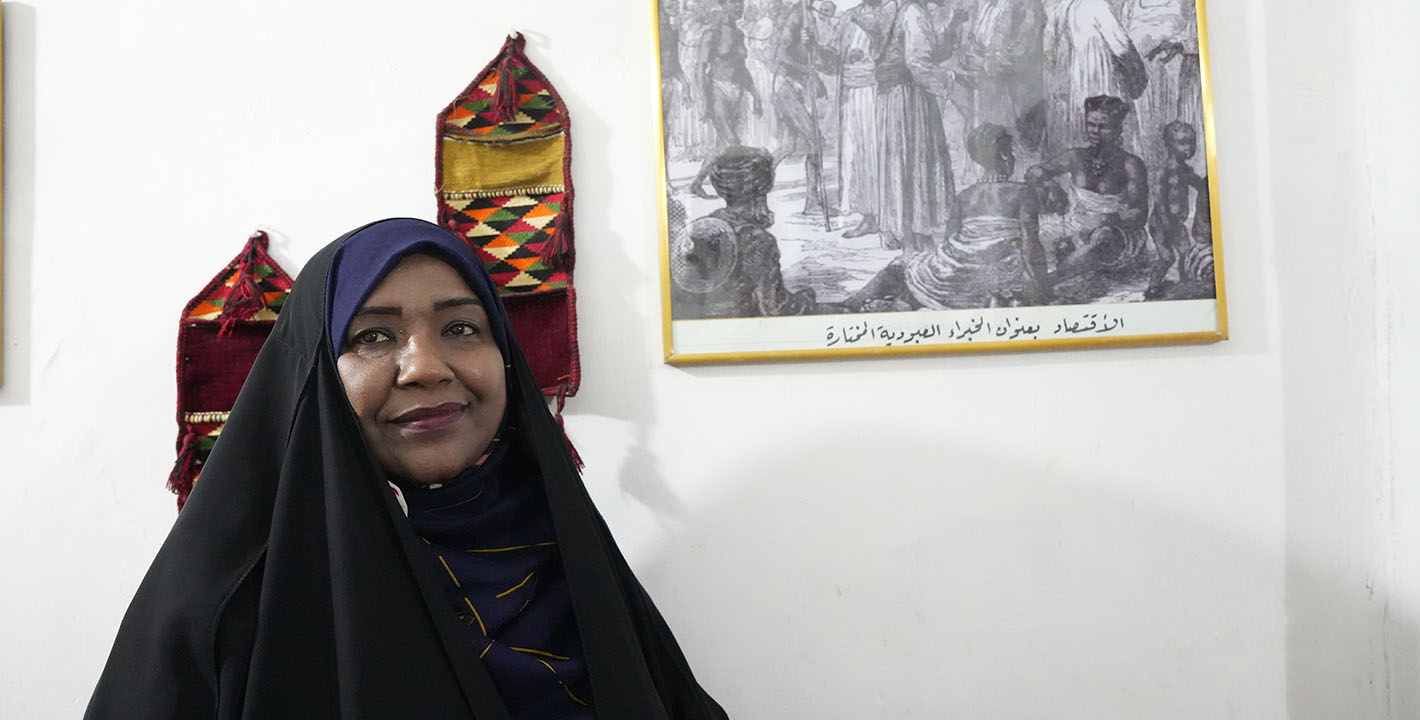
In Basra, an ethnoracial minority wages a constant struggle to assert itself in the face of marginalization.
Performing arts play a significant role in the culture of the Afro-Iraqi community of southern Iraq—in other words, Iraqis of African descent. Many of its members incorporate music and dance into their daily lives, and some even pursue careers in entertainment. To understand the important role of music, we must consider it within the broader context of the group’s sociopolitical and economic marginalization. Crucially, for Afro-Iraqis, music preserves memory and collective identity. Additionally, it serves as a vehicle for economic and class mobility.
In her work on the community and its identity, Taif Alkhudary argues that Afro-Iraqis have had to contend with Iraqi society’s “non-memory” of their origins and background. This manifests itself in scant documentation of the history of enslaved Africans brought to Iraq centuries ago, a studied avoidance of the way race has shaped Afro-Iraqis’ identity over time, as well as persistent political, economic, and social discrimination. Music derived from the group’s African roots counters the phenomenon. Most significantly, this form of remembering occurs outside existing structures of domination, such as the state or traditional social norms, that have been instrumental in fostering the widespread non-memory of Afro-Iraqis. It is pushback against the erasure of how they arrived in Iraq and the often disadvantaged sociopolitical and economic positions they have occupied since.
Music also becomes a pathway of spirituality and healing for the community. An Afro-Iraqi woman interviewed in December 2025 mentioned that instruments such as the tambura—which has been passed down through the generations—are used during a gathering called Al-Mekayyad to exorcise an underworld spirit, or zar, from people seeking treatment. The battle between good and evil spirits can take several days to conclude. The origin of the zar, which community members argue is distinct from a genie, or jinni, can be traced to Sahelian culture and was brought to the region by enslaved people from the African continent. Mekayyad rituals—which are rarely open to those beyond the Afro-Iraqi community—involve dance, music, and drumming. Many of the dances and instruments have African origins, and some of the songs are sung at least partly in African languages, along with Islamic chants and prayers in Arabic.
There are several ways to perform Mekayyad by groups that often compete with each other and specialize in certain illnesses or concerns. The aforementioned interviewee even claimed that certain groups are known not for helping people but rather for communicating with, and seeking assistance from, harmful spirits. From the color of a flag atop the roof of a house during the ceremony, a community member can identify which group is gathered at the location and for what purpose.
Beyond the Mekayyad rituals, music is a source of connection, identity, and communal belonging. Mishal al-Ziyadi, an Afro-Iraqi who started his own folkloric band, says that he and other members of the community learned the songs he performs at a young age. The men in the family play at weddings and festivals, and the children grow up both listening to and identifying with the music. Ziyadi, who was born and raised in Zubari, Basra Governorate, says his dream is to teach his children their heritage through the connection they have to their community and its music. Today, this connection extends beyond Basra and even Iraq. In his compositions, Toronto-based musician Ahmed Moneka, an Afro-Iraqi descendant of the enslaved Africans who launched the Zanj Revolution (869–883) in the area around Basra, creates vibrant Afro-Sufi fusion with influences from Iraq, Kenya, and Canada.
Beyond the safeguarding of collective memory and identity, musical entertainment can also serve as a refuge-of-sorts from bigotry. Paradoxically, though interviewees often deny the existence of racial discrimination in Iraq, they provide examples of racially tinged incidents to which they or their children have been subjected. Several mentioned derogatory language and even threats directed at their sons and daughters by classmates at school, leaving them alienated and adversely affecting their academic performance. Others pointed out that while employment in the public sector is accessible to members of the group with the requisite education and connections, private-sector employment, especially front-facing positions, remains limited due to race-based beauty standards.
Ironically, because the entertainment sector is frowned upon by many in southern Iraq for reasons of social conservatism, it has served as a source of employment for Afro-Iraqis. Indeed, performative arts, especially music, not only provide income to group members but in certain instances pull them out of a cycle of poverty and marginalization toward recognition and even stardom. An entertainer such as Anod al-Asmr, for example, has become well-known in Iraq’s contemporary music and club scene due to her catchy songs and beautiful, unique voice.
However, musicians and performers in general often face significant challenges. In November 2025, the Iraqi singer Mohammed Abdel Jabbar—who is not an Afro-Iraqi—was set to perform in Basra. Despite tickets for his concert having sold out, the show was canceled due to opposition by religious clerics who mobilized against it, claiming dancing and music are against the city’s Islamic and Husseini identity.
This was not a rare occurrence. The newfound, post-Baath dominance of traditional and religious authorities over the political and social life of southern Iraqi cities, including Basra, has significantly reshaped their cultural identities. The effort to anathematize the performative arts arguably hits Afro-Iraqis harder than others. Yet it is but one obstacle among many that the community faces in challenging the relegation of its history and identity to “non-memory.”
This work is licensed under a Creative Commons Attribution 4.0 International License.
For more details regarding the license deed, please visit: CC BY 4.0 Deed | Attribution 4.0 International | Creative Commons.
Zeinab Shuker
Zeinab Shuker is an assistant professor of sociology at Sam Houston State University, Texas. Her research interests revolve around comparative global political economy, democracy, climate change, and theory, with special emphasis on the Middle East in general and Iraq in particular.
Carnegie does not take institutional positions on public policy issues; the views represented herein are those of the author(s) and do not necessarily reflect the views of Carnegie, its staff, or its trustees.
As the U.S.-led Coalition withdraws, the Kurds’ reliance on Baghdad, and on themselves, will only increase.
Wladimir van Wilgenburg
The Zaidi government’s objective to collect weapons is constrained by regional conflict, but it can take certain measures at home.
Ali Al-Mawlawi
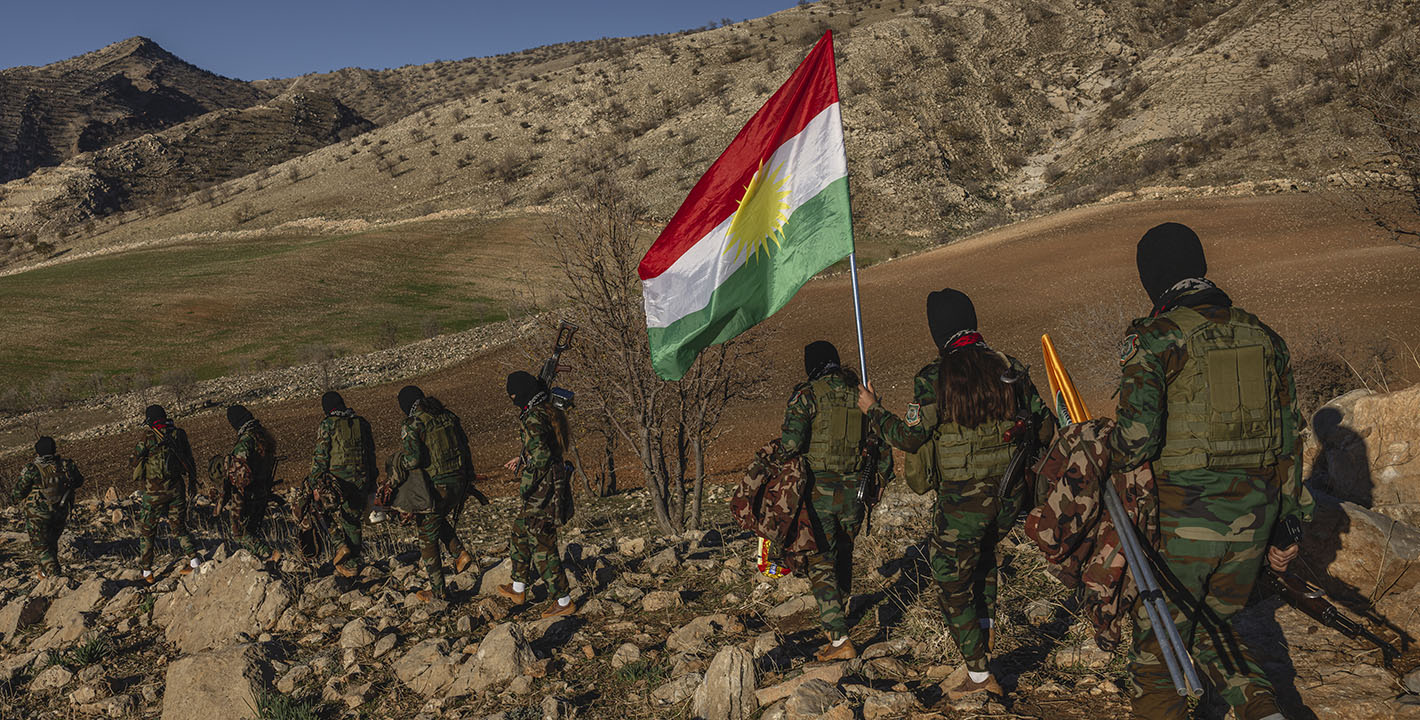
Following its deal with the United States, Iran may act against Iraq-based dissidents.
Wladimir van Wilgenburg
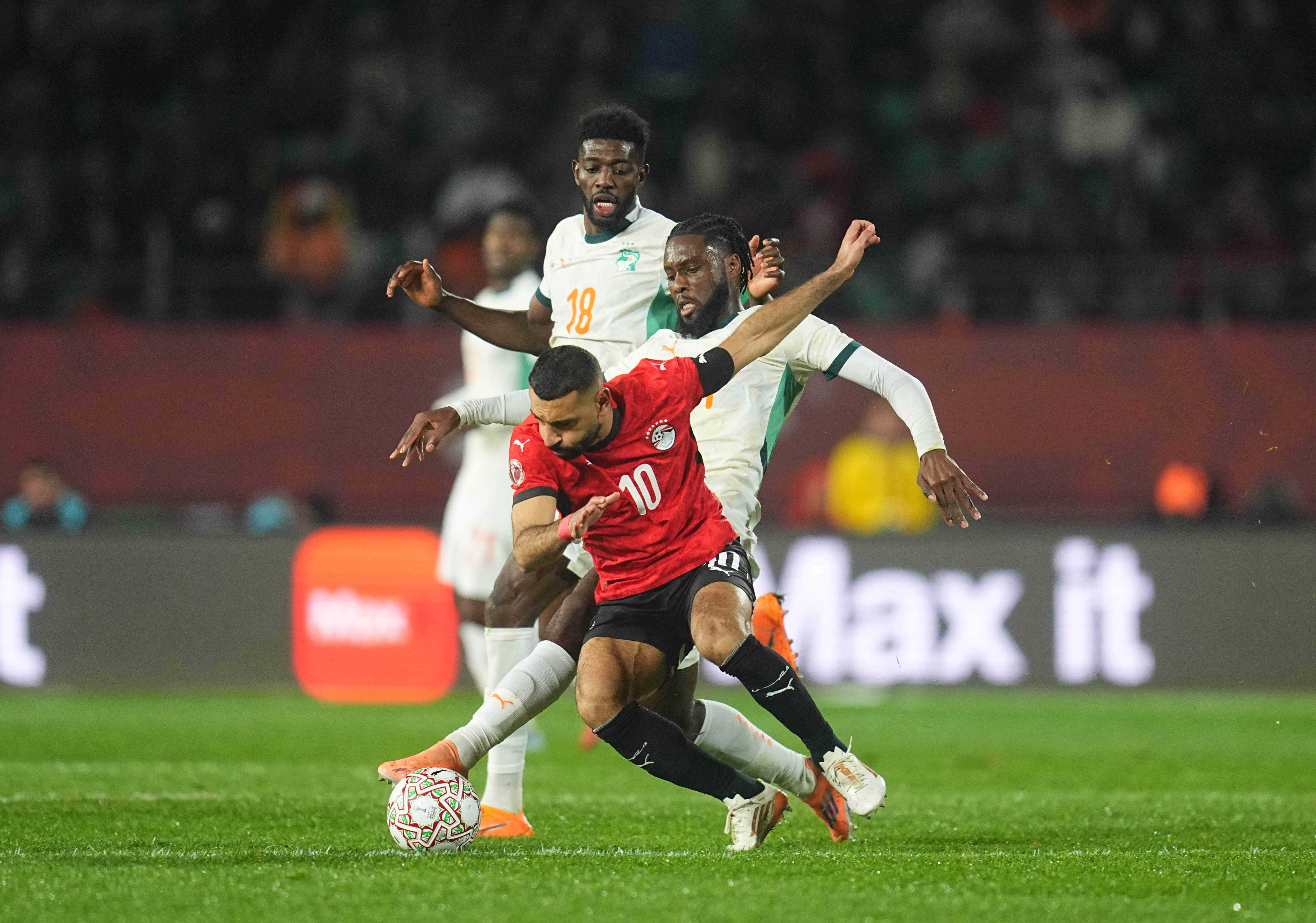
This will be the region’s most representative tournament, amid broad changes in its footballing landscape.

Issam Kayssi
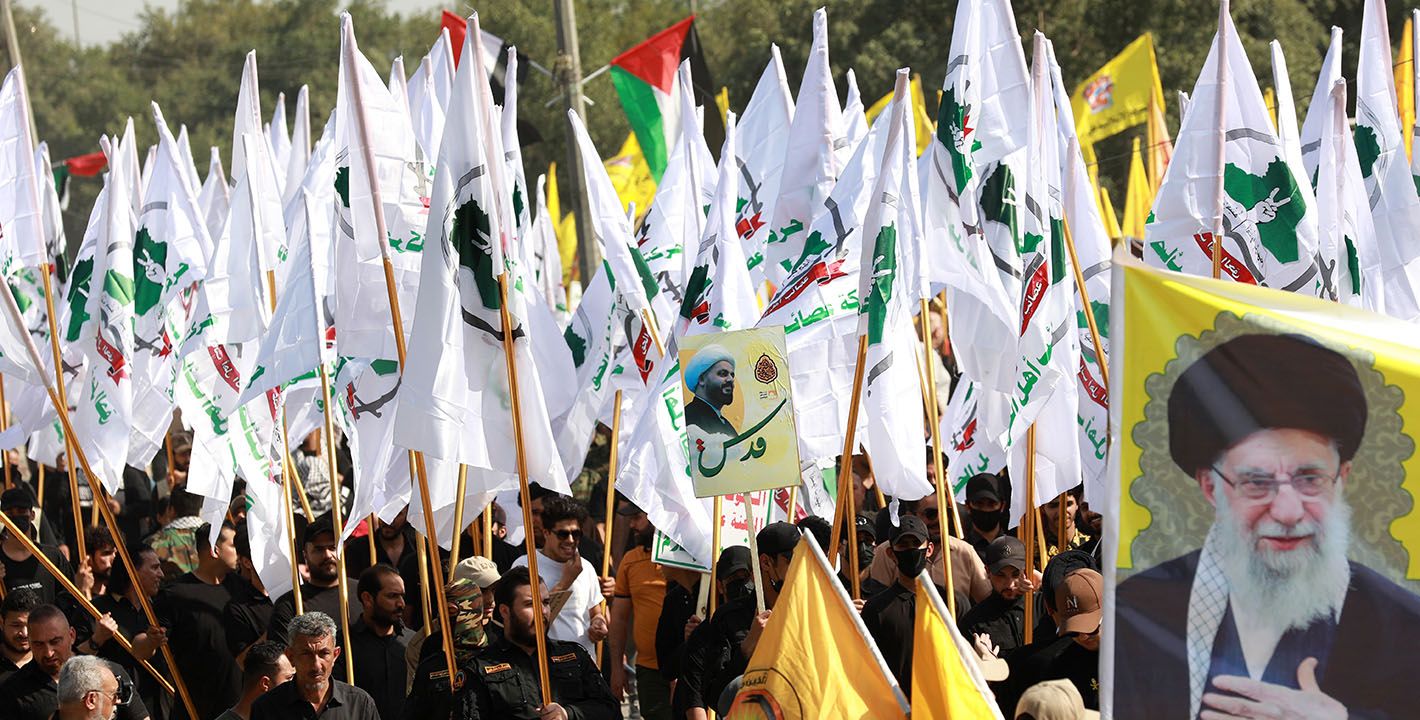
Beirut and Baghdad are both watching how the other seeks to give the state a monopoly of weapons.
Hasan Hamra