

{
  "authors": [
    "Dmitri Trenin",
    "Marina Ottaway"
  ],
  "type": "event",
  "centerAffiliationAll": "",
  "centers": [
    "Carnegie Endowment for International Peace",
    "Carnegie Europe",
    "Carnegie Russia Eurasia Center"
  ],
  "collections": [
    "Europe’s Eastern Neighborhood",
    "Europe’s Southern Neighborhood"
  ],
  "englishNewsletterAll": "",
  "nonEnglishNewsletterAll": "",
  "primaryCenter": "Carnegie Endowment for International Peace",
  "programAffiliation": "",
  "programs": [],
  "projects": [],
  "regions": [
    "North America",
    "United States",
    "Middle East",
    "Caucasus"
  ],
  "topics": [
    "Security",
    "Foreign Policy",
    "Nuclear Policy",
    "Nuclear Energy"
  ]
}
Russia and the Middle East
Thu, March 5th, 2009
Berlin
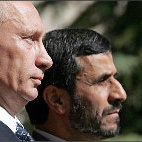
IMGXYZ1196IMGZYXFor decades Russia defined its role in the Middle East in terms of relations with Iran, Iraq, and Syria. As a member of the Quartet -- composed of Russia, the United Nations, European Union, United States -- Russia's role in Middle East affairs was muted. With the 2006 war in Lebanon, the recent Gaza Crisis, and new economic interests in the region, a more proactive Russia has emerged, pursuing policies that are significantly different from those of the United States.
At a discussion hosted by Carnegie Europe and Young DGAP, Dmitri Trenin, Director of the Carnegie Moscow Center, and Marina Ottaway, Director of the Middle East Program at the Carnegie Endowment, discussed new dynamics and old superpower rivalries in the region.
Highlights included…
- On the apparent contradiction in Russia’s relationship with Iran, Dmitri Trenin explained that although Russia has an interest in preventing Iran from becoming a nuclear power, it has an even greater interest in preventing this growing regional power from becoming hostile. Marina Ottaway explained that the Gulf States fear of Iran’s growing supremacy.
- Trenin explained that the West has very little to fear from Russia’s involvement in Syria. Moscow does not intended to create a military alliance with Damascus to counterbalance U.S. power, rather it would like to build gas pipelines through Syria in order to become a major supplier of Middle Eastern energy.
- Marina Ottaway argued that improvements in the U.S. – Russia relationship will have very little bearing on the United States' relations in the Middle East. Tensions between the United States and Middle Eastern countries have nothing to do with Russia, and everything to do with U.S. policy towards the Arab-Israeli conflict.
Carnegie does not take institutional positions on public policy issues; the views represented herein are those of the author(s) and do not necessarily reflect the views of Carnegie, its staff, or its trustees.
Event Speakers
Dmitri Trenin
Former Director, Carnegie Moscow Center
Trenin was director of the Carnegie Moscow Center from 2008 to early 2022.
Marina Ottaway
Former Senior Associate, Middle East Program
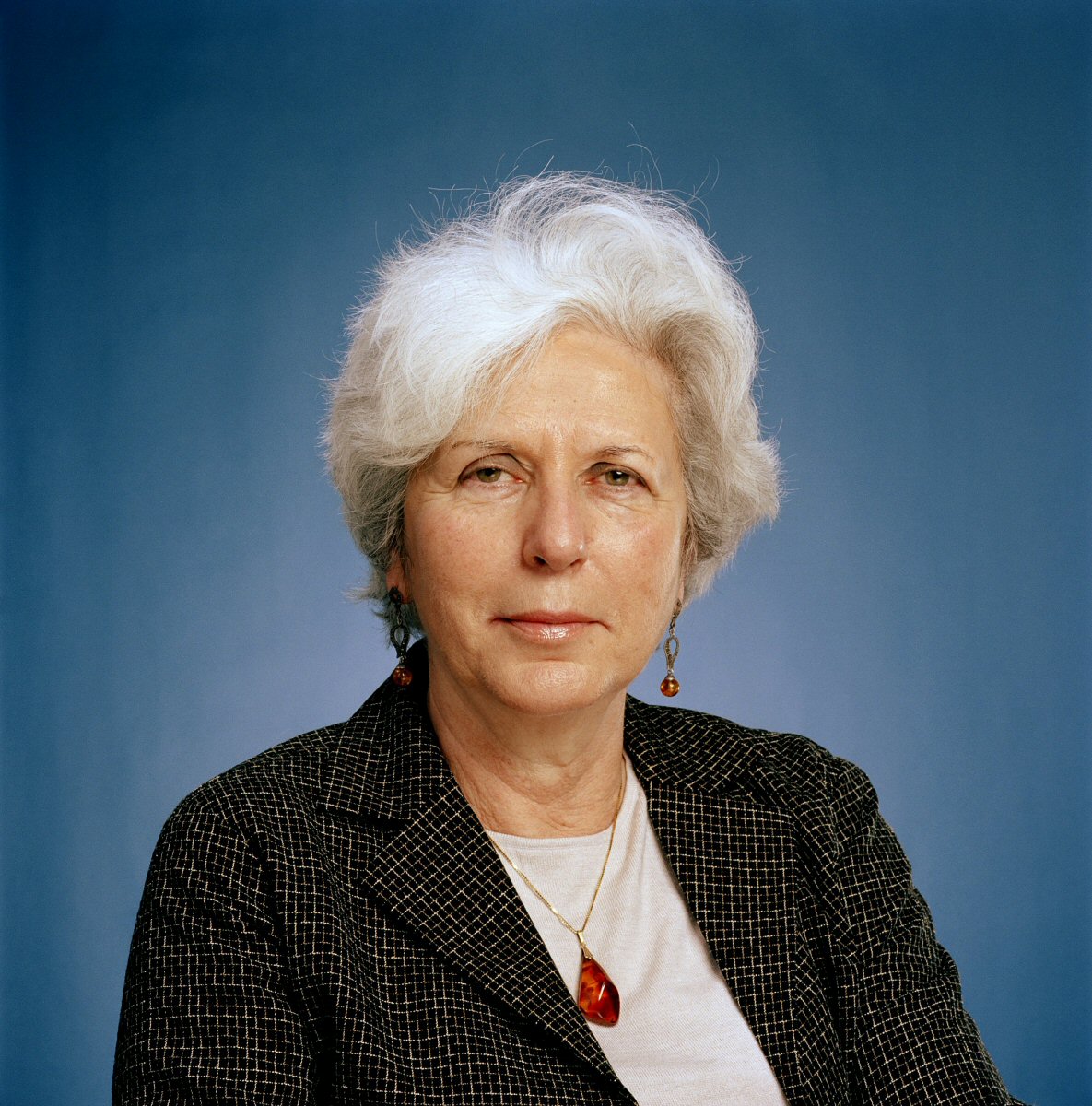
Before joining the Endowment, Ottaway carried out research in Africa and in the Middle East for many years and taught at the University of Addis Ababa, the University of Zambia, the American University in Cairo, and the University of the Witwatersrand in South Africa.