

Paper
Ms. Shanthi Kalathil, Mr. Taylor Boas
{
  "authors": [
    "Shanthi Kalathil"
  ],
  "type": "legacyinthemedia",
  "centerAffiliationAll": "",
  "centers": [
    "Carnegie Endowment for International Peace"
  ],
  "collections": [],
  "englishNewsletterAll": "",
  "nonEnglishNewsletterAll": "",
  "primaryCenter": "Carnegie Endowment for International Peace",
  "programAffiliation": "",
  "programs": [],
  "projects": [],
  "regions": [
    "China"
  ],
  "topics": []
}
REQUIRED IMAGE
Source: Carnegie
Reprinted with permission from Foreign Policy Sept.-Oct. 2000.
Review of Info, February 2000, Cambridge
Now that permanent normal trading relations with China are more or less permanent and almost normal, conventional wisdom dictates that Chinese consumers will emerge healthier, wealthier, and more wired under the new telecom-friendly, pro-market regime. But internal Chinese turf wars over telecom services and infrastructure paint a more complex picture.
Faced with a rush of foreign investment, nervous state monoliths are fiercely battling for territory. Nowhere is this urgency more apparent than in the race to build and control China's nascent information superhighway, where the telecommunications and cable/broadcasting sectors are exchanging body blows. At stake is universal communications service, as well as the hazy, evolving notion of the public interest in China?the "right" to be wired?a point made by University of California at San Diego Professor Yuezhi Zhao in the telecommunications and media journal info.
Zhao outlines the regulatory background of today's battles, detailing the history behind the elite-driven establishment of China's telecommunications network and the somewhat more ad hoc (and widespread) development of a cable and broadcasting network. Although each bureaucracy is fighting for the right to provide broadband?a high-volume telecommunications pipeline?to the masses, a deep-seated ideological chasm divides the two sides: While the telephone was traditionally a means of elite political communication, cable television, as an organ of party propaganda, has been accessible to ordinary households in ordinary villages since its inception.
Behind the street battles?and there have been many, with wire-cutting teams and armed crews out in force?questions loom. Should communications service be treated as a commodity or as a public good? Should the public interest, encompassing the notion of communications access for all of China's citizens, be equated with the emerging notion of consumer interest, as embodied by China's rising and bottom-line-oriented middle class? As Zhao points out, China's uneasy transition from a planned economy to a market economy has blurred traditional roles and left many government offices focusing on profit motive rather than public service.
The result, the author notes, is an out-of-control telecommunications buildup that rewards foreign suppliers without necessarily promoting development. Her statistics flesh out the picture: In 1998, 71.6 percent of China's 87.4 million residential phones were in urban areas. Rural areas, comprising the majority of China's population, accounted for the rest. Meanwhile, despite unprecedented network growth between 1985 and 1997, telephone service to China's 760,000 villages grew an average of less than 1 percent a year.
Hence, underlying the internal political rifts is another chasm: the so-called digital divide, or gap between the world's wired and unwired?in this case the gap between China's ultraconnected urban areas and its muffled hinterlands. Glossy media images of Beijing residents Web-surfing in hip Internet cafes contrast sharply with the reality of one village the author visited last year. Nearly 10 percent of its households had dropped cable television due to sharply increasing fees. For those who assume a smooth digital future for all of China, Zhao's arguments should provide some static.
Former Associate
Recent Work
Ms. Shanthi Kalathil, Mr. Taylor Boas
Carnegie does not take institutional positions on public policy issues; the views represented herein are those of the author(s) and do not necessarily reflect the views of Carnegie, its staff, or its trustees.

China has aligned its cooperation model with Saudi Arabia’s own priorities, most notably since the kingdom unveiled its Vision 2030. Although China announced the Belt and Road Initiative in 2013, the big push in relations happened only after the ascendance of King Salman to the throne in 2015 and Riyadh’s push for Beijing to meet Saudi needs.

Hesham Alghannam

The Gulf Cooperation Council has shifted its energy export focus to Asia, particularly India and China. This is part of a broader shift as GCC members look to expand their geopolitical alliances away from the West.

Alexandre Kateb
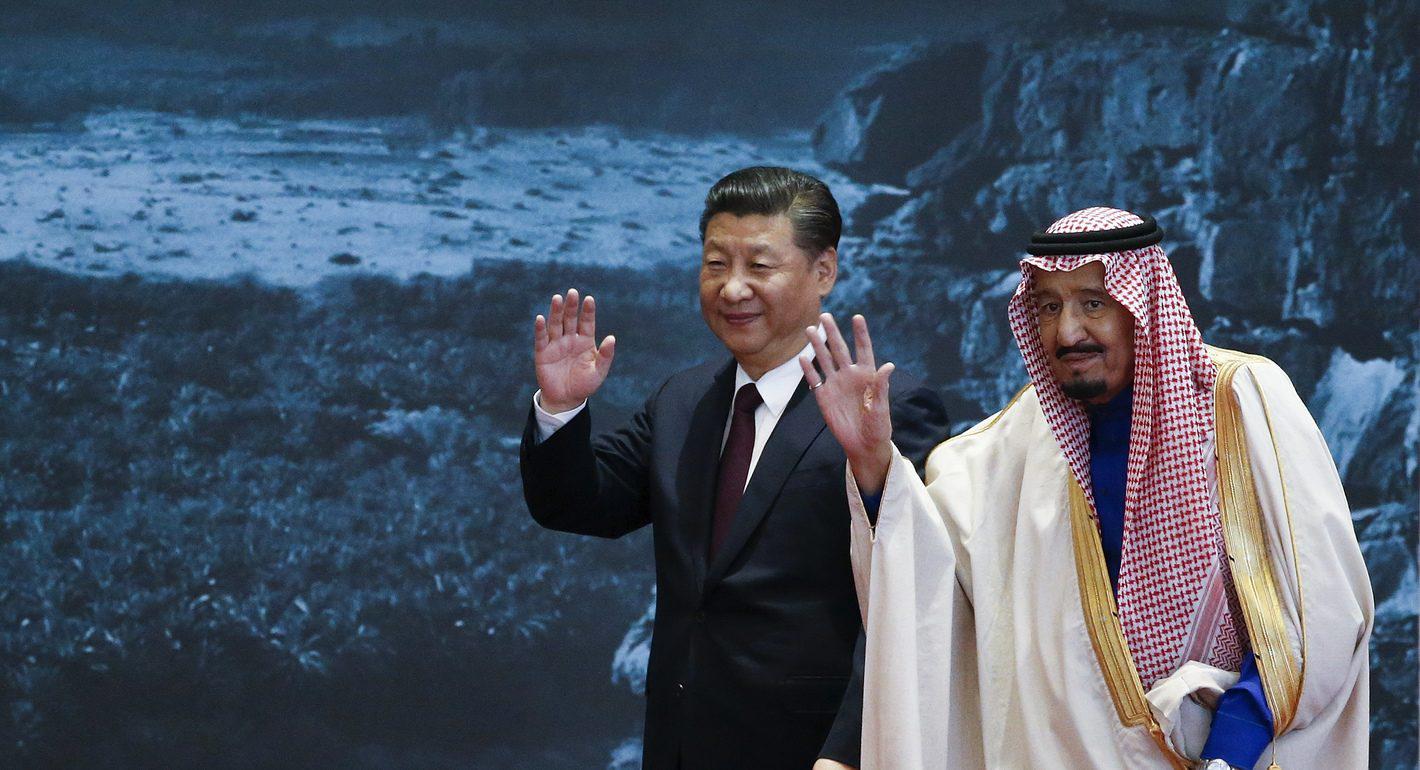
The advantage that China has over other global powers, especially America, is that its foreign policy is closely aligned with those of many of the Middle Eastern countries.
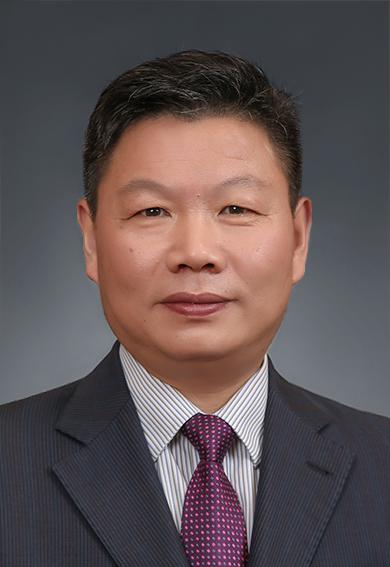

Jin Liangxiang, Maha Yahya, Hesham Alghannam
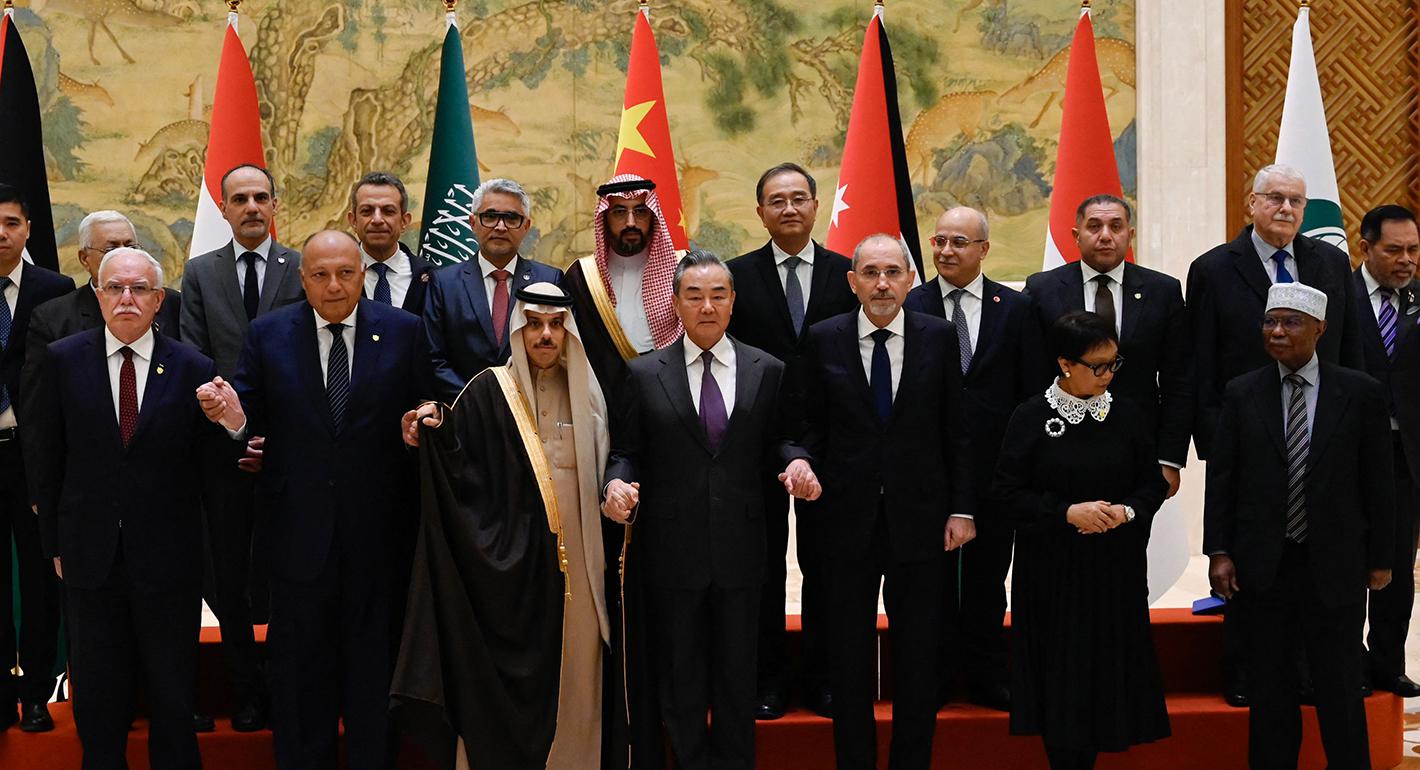
To create an environment more conducive to cooperation and development, U.S. and Chinese efforts should seek the endorsement of neighboring countries and regional organizations. Otherwise, regional and geopolitical rivalries will remain barriers.
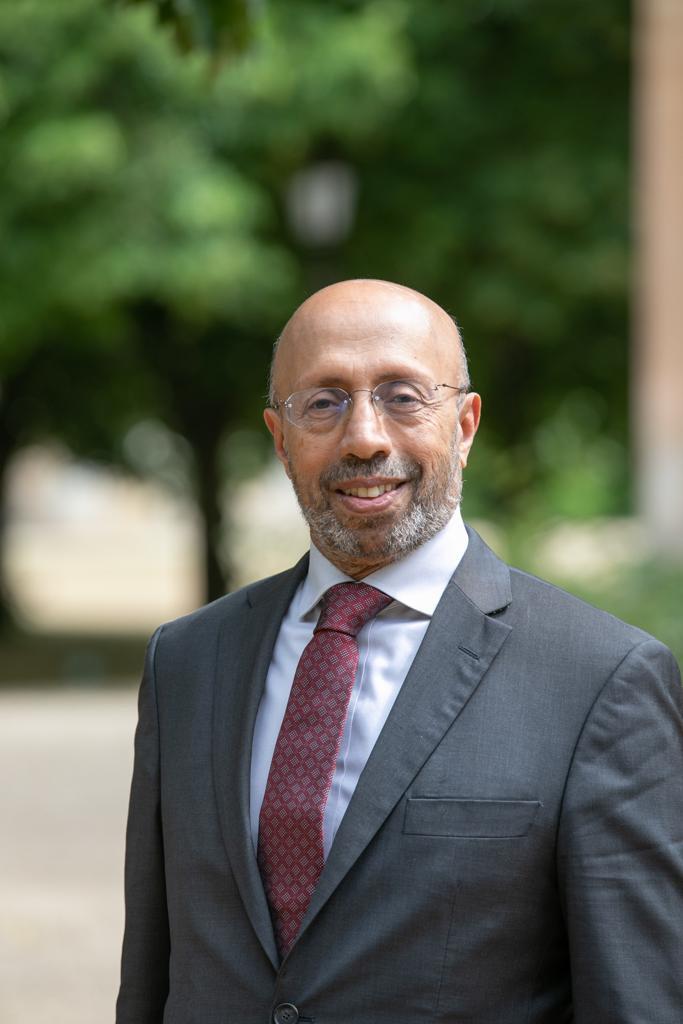
Abdullah Baabood

Scholars from Carnegie’s global network comment on how the ongoing conflict between Israelis and Palestinians is affecting their areas of interest, and what the implications of this may be.


Maha Yahya, Rosa Balfour, Judy Dempsey, …