

In The Media
Michele Dunne, Robert Kagan
{
  "authors": [
    "Robert Kagan"
  ],
  "type": "legacyinthemedia",
  "centerAffiliationAll": "",
  "centers": [
    "Carnegie Endowment for International Peace"
  ],
  "collections": [],
  "englishNewsletterAll": "",
  "nonEnglishNewsletterAll": "",
  "primaryCenter": "Carnegie Endowment for International Peace",
  "programAffiliation": "",
  "programs": [],
  "projects": [],
  "regions": [
    "United States"
  ],
  "topics": [
    "Foreign Policy"
  ]
}
REQUIRED IMAGE
Source: Carnegie
Reprinted from the Washington Post, May 9, 2001
Anyone who thinks politics stops at the water's edge must have missed the past 225 years of American history. Politics loves water. Even so, when a very famous and very important American diplomat publicly encourages foreign countries to oppose the American government's policies, that is something special.
In an interview with a German newspaper, published on Monday, former U.N. ambassador Richard Holbrooke called on European governments to "stand up" and oppose the Bush administration's missile defense proposals. The Europeans "can't just sit around grumbling in the background," Holbrooke barked. They need to complain loudly and publicly. And if they don't, "the Americans will decide for them." Beware the hyperpower, quoth the humble Holbrooke.
Holbrooke's attempt to rally European opposition to Bush came just as top officials from the Bush administration arrived in Europe to begin allied consultations on missile defense, arms reductions and arms control. One might have thought that an old pro like Holbrooke would see the value of these talks in furthering a transatlantic dialogue on such sensitive issues, that he wouldn't want to toss in a monkey wrench at the very moment President Bush is actually trying to work with the allies.
But Holbrooke is a pro in more ways than one. Back in the United States, Holbrooke's Democratic Party has decided to make a big issue out of Bush's missile defense plans. Sen. Joe Biden is the designated pitchman for the new campaign. But the moving force behind it is Senate Minority Leader Tom Daschle, who recently signaled that he wants the Democrats to play hardball.
Yesterday 43 Democrats inaugurated the new campaign by gratuitously voting against the confirmation of John Bolton as undersecretary of state for arms control and international security affairs. Bolton's sin? He supports the president's policy on missile defense. And what's more, according to Sen. Paul Wellstone, Bolton is "too partisan."
When it comes to missile defense, though, Wellstone's party knows a thing or two about partisanship. A year ago, Biden, Daschle and most other Democrats were dutifully following President Bill Clinton as he prepared to deploy the first phase of a missile defense system. If Al Gore were in the White House today, the United States would already be pouring concrete in Alaska as the first stage in a fairly robust system that would eventually have been capable of knocking out as many as two dozen incoming warheads -- the size of China's arsenal today. And lest everyone forget, the Europeans were plenty unhappy with Clinton's plans, too. Months of negotiations with the Russians last year went nowhere, and Clinton had warned that he might withdraw from the ABM treaty if he couldn't negotiate a deal with Moscow. If Gore had been elected, Secretary of State Holbrooke would probably be holding the very same talks in Europe he is now so energetically trying to disrupt.
But Gore wasn't elected, and politics is politics. Daschle and his team now want a win. The Democrats know they'll have a hard time beating Bush on missile defense if the Europeans go along with the administration and don't make a fuss. Enter Richard Holbrooke.
Nobody knows better how to push European buttons. First Holbrooke pricks European sensitivities about American bullying. Then he suggests that European leaders suffer from a testosterone shortage. Finally, he plays to their worst fears: that Bush is delusional. Bush's passion for missile defense, Holbrooke told the German newspaper, is "almost a religious matter." Bush sees threats everywhere, but there are no threats. "We have to ask ourselves," Holbrooke exhorted the Europeans, "in what way are we really threatened." Osama bin Laden, he noted, has no missiles. Of course the Clinton administration of which Holbrooke was a part had no difficulty identifying potential missile threats other than bin Laden. Otherwise why was Clinton building a missile defense system at all? But that was then and this is now. Now Holbrooke takes the French view and doesn't mind saying that the Americans are nuts.
As it happens, the Europeans are unlikely to pay him much mind. Holbrooke may have his eyes riveted on 2004, but the Europeans need to deal with Bush and have apparently decided that missile defense is not worth the fight. Some European officials actually think it's a good idea. Others see a chance for the European defense industry to get a piece of the missile defense pie. Most Europeans think they have no interest in playing American domestic politics. And they're right. Holbrooke's little gambit may backfire. As partisan manipulations go, it's a bit crude -- as Secretary of State Holbrooke will no doubt be the first to point out when some future Republican tries the same dirty trick on him.
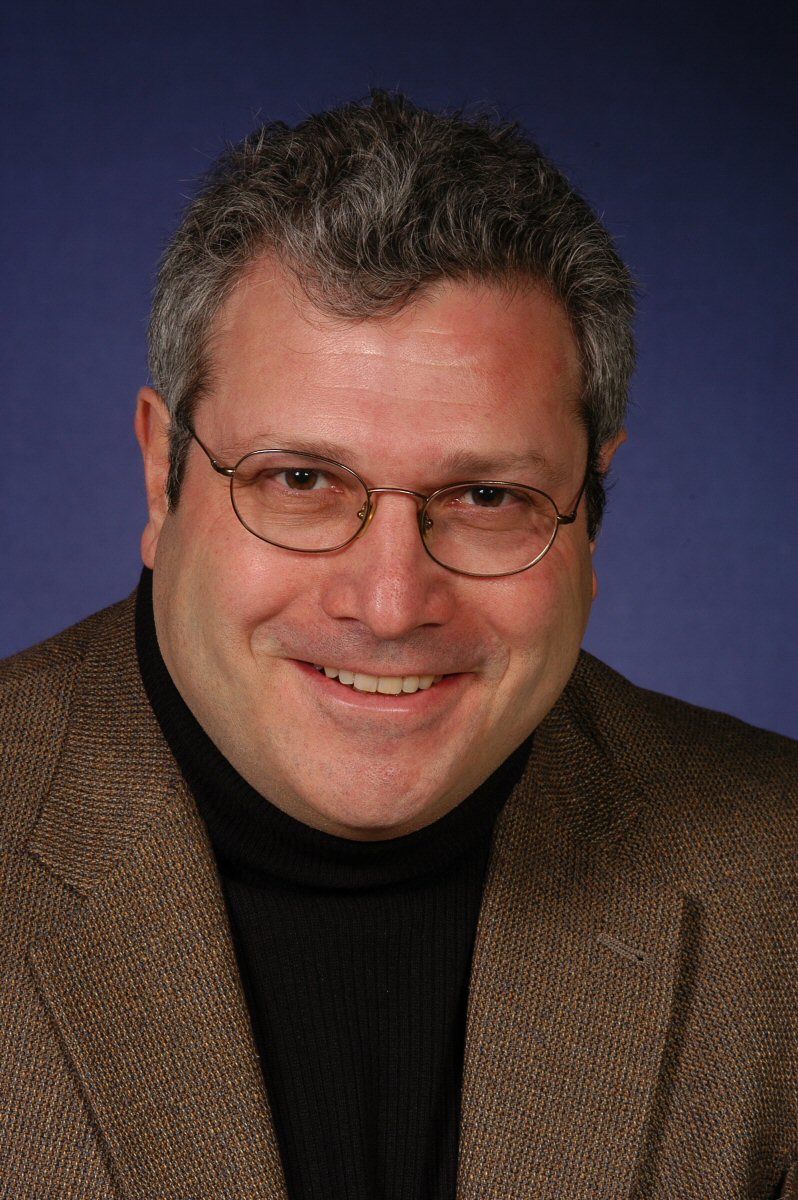
Former Senior Associate
Kagan, author of the recent book, The Return of History and the End of Dreams (Knopf 2008), writes a monthly column on world affairs for the Washington Post and is a contributing editor at both the Weekly Standard and the New Republic.
Recent Work

Michele Dunne, Robert Kagan
Robert Kagan, Michele Dunne
Carnegie does not take institutional positions on public policy issues; the views represented herein are those of the author(s) and do not necessarily reflect the views of Carnegie, its staff, or its trustees.

In an interview, Rozina Ali discusses her new book on the rise and manifestations of Islamophobia in the United States.

Michael Young

In an interview, Ian Lustick and Eli Clifton discuss their new book on why a prominent ally has so much influence in America.
Michael Young

As the U.S. stumbles in its war with Iran, we are likely to see an acceleration of its disengagement from the region.
Michael Young

Middle Eastern states should welcome an accelerated U.S. disengagement from their region.
Michael Young

In an interview, former ambassador Charles Freeman assesses the Trump administration’s war against Iran.
Michael Young