

Paper
Ms. Shanthi Kalathil, Mr. Taylor Boas
{
  "authors": [
    "Shanthi Kalathil"
  ],
  "type": "legacyinthemedia",
  "centerAffiliationAll": "",
  "centers": [
    "Carnegie Endowment for International Peace"
  ],
  "collections": [],
  "englishNewsletterAll": "",
  "nonEnglishNewsletterAll": "",
  "primaryCenter": "Carnegie Endowment for International Peace",
  "programAffiliation": "",
  "programs": [],
  "projects": [],
  "regions": [
    "China"
  ],
  "topics": []
}
REQUIRED IMAGE
Source: Carnegie
"Reprinted from The Asian Wall Street Journal © 2002 Dow Jones & Company, Inc. All rights reserved."
February 22, 2002
During his visit to Beijing, U.S. President George W. Bush may catch a glimpse of some of the best that China's burgeoning information culture has to offer -- from buzzing Internet cafes to streets lined with e-commerce billboards. But he is unlikely to see any of the sometimes fiery anti-Americanism that characterizes much of the traffic on China's information highway. In fact, both nationalism and anti-Americanism have been hot themes on Chinese Internet sites over the past year -- phenomena at times encouraged, at times reined in by the leadership.
New information and communications technologies such as the Internet present officials in China with both opportunities and challenges. The Beijing leadership is aware that it must deftly manage nationalist sentiment in order to maintain legitimacy. If properly massaged, such sentiment can significantly bolster the popularity of the Communist Party, providing crucial public support for an undemocratically elected government. Yet the flip side is also true: Popular nationalistic movements have posed significant challenges to the Chinese leadership in the past, and again may help limit the government's diplomatic maneuvering power.
Both extremes have been enhanced by the spread of the Internet. For proof, witness the impassioned outpouring on Chinese Web sites following the U.S. bombing of the Chinese embassy in Belgrade in 1999. At that time, the People's Daily newspaper -- the central government's official mouthpiece -- established on its Web site a new bulletin board forum specifically designed to provide an outlet for patriotic fervor and anti-Western sentiment. Called the "Strong Country Forum," it played a small but significant role in legitimizing among an elite, wired section of the population the Chinese government's position that the bombing was deliberate. To this day, many Chinese remain convinced that the bombing was no accident.
That wired elite has now expanded significantly, with official estimates suggesting that close to 34 million people in China are now using the Internet. Hence, subsequent international incidents have elicited a strong, online nationalistic response among a wider section of the population.
Moreover, the outlets available for such nationalistic venting have expanded dramatically. Although outside observers often believe the Internet in China is wholly controlled by the central government, the reality is that the private sector plays a large role in determining what is and isn't acceptable, in accordance with how it gauges the prevailing political wind.
While traditional propaganda organs such as the People's Daily still play a role in shaping nationalist discourse, some of the most anti-American and nationalist writing now occurs on private sector sites. For instance, following last year's downing of the U.S. EP-3E plane near Hainan Island the popular private Web site Sina.com was overwhelmed with nationalistic comments, such as "The Americans are always mouthing off about human rights . . . we don't want human rights, we want national honor!"
At the same time, however, the government is trying to ensure that amplified nationalism and anti-Americanism don't challenge central crisis management. Following the Belgrade bombing, for instance, the government was quick to tone down the intensity and volume of anti-American comments allowed on official Web sites when protests in the streets of Beijing threatened to spiral out of control.
That may be because officials had already witnessed the convergence of virtual nationalism with coordinated real-life action a year earlier, at a time when only a very small fraction of the Chinese population was online. During the May 1998 riots targeting ethnic Chinese in Indonesia, the Internet enabled the outrage of overseas Chinese to find its way into mainland China, helping to inform and politicize Internet users in China. The fusion of overseas Chinese sentiment, the Internet and a receptive domestic audience culminated in a student-led demonstration in Beijing to protest the leadership's perceived softness toward Indonesia. The rapid transformation from online hot air to flesh-and-blood marchers in the capital both surprised and worried Chinese leaders.
Now, whether representative of the entire population or not, a vocal online subculture has blossomed in China, nurtured by the government's initial vision of a coordinated, nationalistic Internet that would serve the purposes of the central government. Ironically, this may push Chinese policymakers toward a more militant foreign policy than they prefer and -- in future -- perhaps even limit diplomatic options with the U.S.
During his visit to Beijing, Mr. Bush and his advisers should engage the Chinese leadership on issues of Internet censorship and free expression. But they should also explore what types of values and discourse the Chinese government is promoting on the Internet. Such issues have become tangibly relevant to America, now that -- after Sept. 11 -- it has awoken to the fact that its image in the world matters. They are also important to China, which would like to take its place on the world stage as a peaceful and prosperous modern nation. Ardent advocates of technological advances tend to assume that merely spreading the Internet to China will take care of all these goals. Yet they would do well to keep in mind that information technology can augment balkanization and isolation just as easily as global engagement.
Ms. Kalathil is an associate at the Carnegie Endowment for International
Peace in Washington D.C. and co-author of a forthcoming book on authoritarian
regimes and the Internet.
Former Associate
Recent Work
Ms. Shanthi Kalathil, Mr. Taylor Boas
Carnegie does not take institutional positions on public policy issues; the views represented herein are those of the author(s) and do not necessarily reflect the views of Carnegie, its staff, or its trustees.

China has aligned its cooperation model with Saudi Arabia’s own priorities, most notably since the kingdom unveiled its Vision 2030. Although China announced the Belt and Road Initiative in 2013, the big push in relations happened only after the ascendance of King Salman to the throne in 2015 and Riyadh’s push for Beijing to meet Saudi needs.

Hesham Alghannam

The Gulf Cooperation Council has shifted its energy export focus to Asia, particularly India and China. This is part of a broader shift as GCC members look to expand their geopolitical alliances away from the West.

Alexandre Kateb
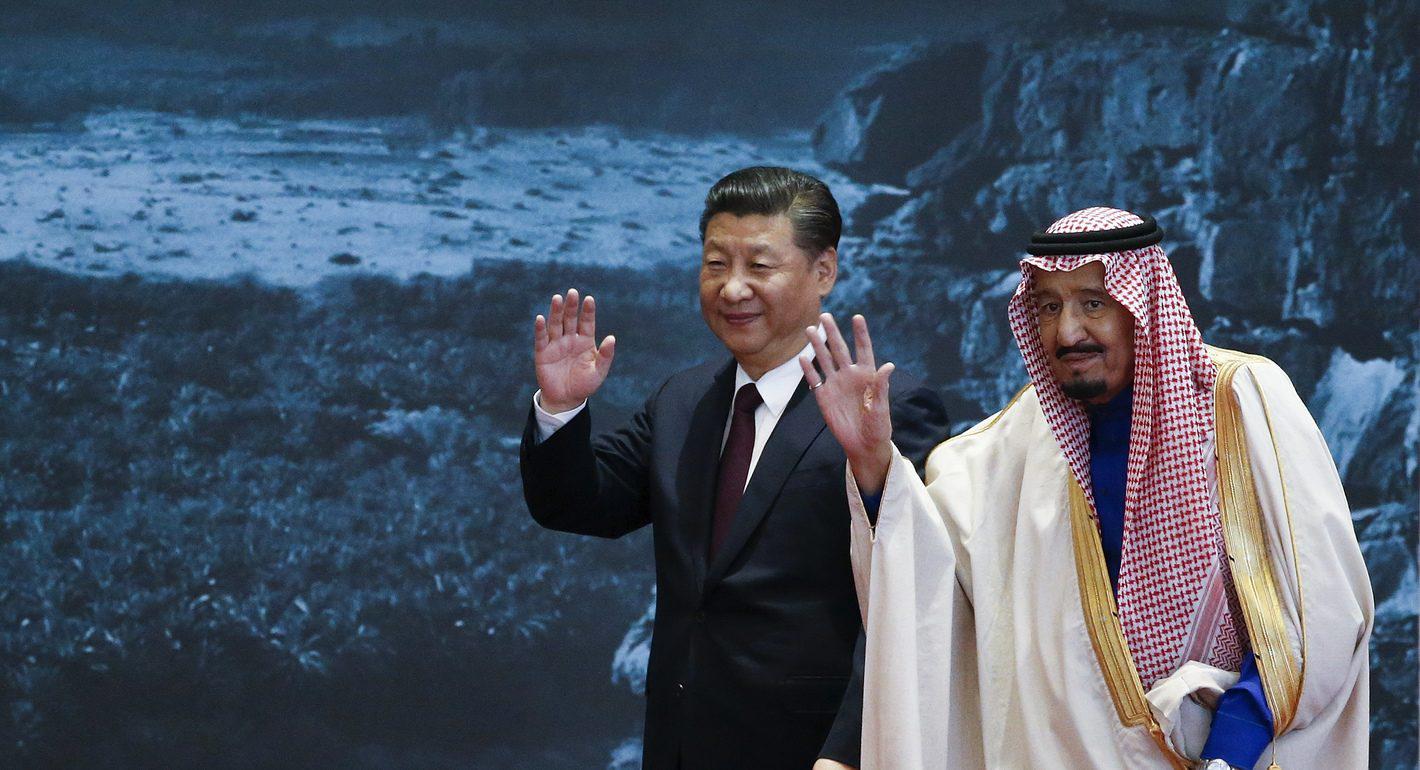
The advantage that China has over other global powers, especially America, is that its foreign policy is closely aligned with those of many of the Middle Eastern countries.


Jin Liangxiang, Maha Yahya, Hesham Alghannam
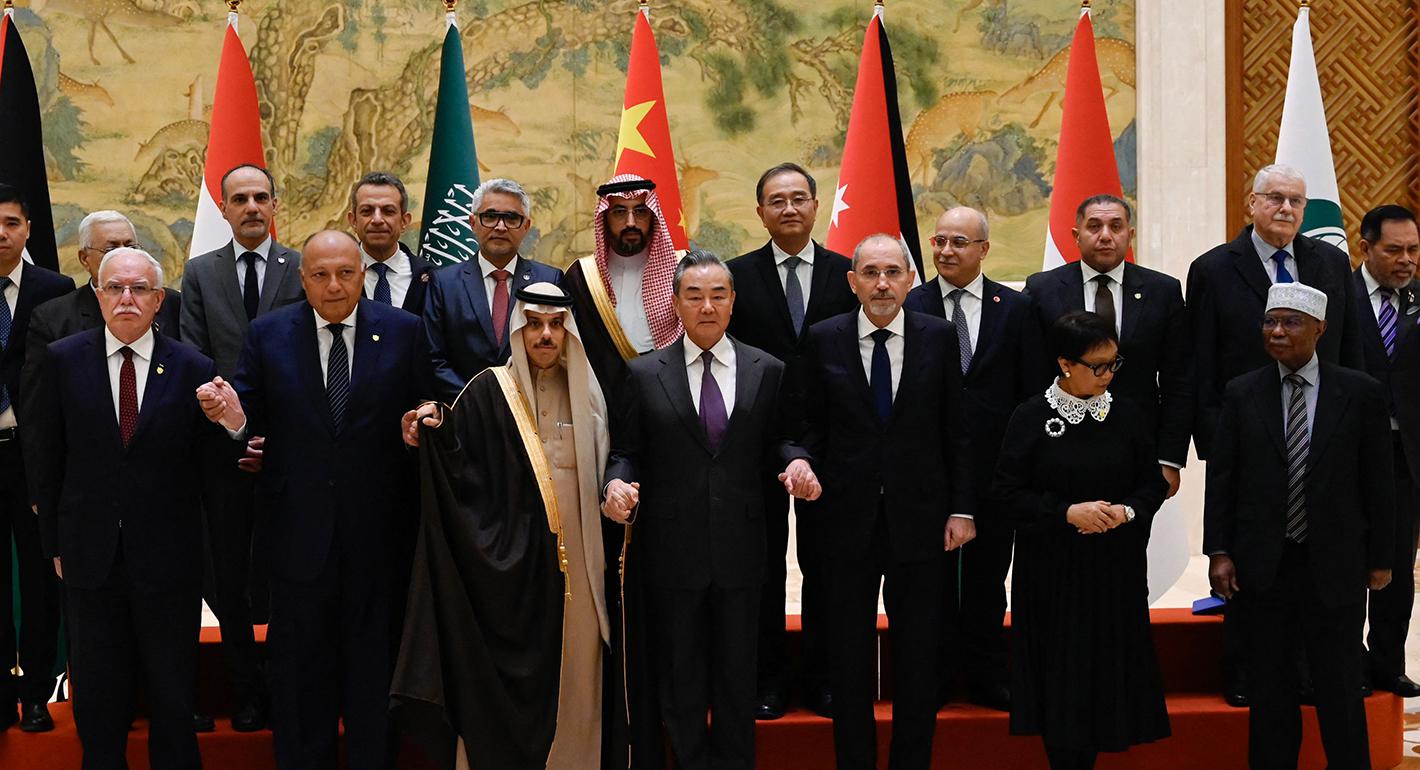
To create an environment more conducive to cooperation and development, U.S. and Chinese efforts should seek the endorsement of neighboring countries and regional organizations. Otherwise, regional and geopolitical rivalries will remain barriers.

Abdullah Baabood

Scholars from Carnegie’s global network comment on how the ongoing conflict between Israelis and Palestinians is affecting their areas of interest, and what the implications of this may be.


Maha Yahya, Rosa Balfour, Judy Dempsey, …