

Research
- +10
Rosa Balfour, Frances Z. Brown, Yasmine Farouk, …
{
  "authors": [
    "Moisés Naím"
  ],
  "type": "legacyinthemedia",
  "centerAffiliationAll": "",
  "centers": [
    "Carnegie Endowment for International Peace"
  ],
  "collections": [],
  "englishNewsletterAll": "",
  "nonEnglishNewsletterAll": "",
  "primaryCenter": "Carnegie Endowment for International Peace",
  "programAffiliation": "",
  "programs": [],
  "projects": [],
  "regions": [
    "North America",
    "South America"
  ],
  "topics": [
    "Political Reform",
    "Democracy"
  ]
}
REQUIRED IMAGE
In contrast to what, for decades, was the usual practice throughout Latin America, the fall of a democratically elected president in Ecuador, Peru and Argentina did not lead to repression by a ruthless military junta and the disappearance of thousands of political opponents. Moreover, society and not the military was the main agent of change.
Source: Carnegie
Originally published in the Financial Times,on April 26, 2002.
In January 2000, Ecuadoreans took to the streets and forced Jamil Mahuad, their democratically elected president, to resign. A few months later, Peruvians did the same to Alberto Fujimori. Last January popular protests in Argentina drove out President Fernando de la Rúa. Three countries, three differing sets of circumstances and three presidents with contrasting personalities; yet there is a telling common thread to events.
In contrast to what, for decades, was the usual practice throughout Latin America, the fall of a democratically elected president in Ecuador, Peru and Argentina did not lead to repression by a ruthless military junta and the disappearance of thousands of political opponents. Instead, demo- cracy was maintained and constitutions were respected. In Peru, democracy was even strengthened as a result of Mr Fujimori's removal. Moreover, in all three cases, civil society and not the military was the main agent of change.
Now Venezuela's Hugo Chavez has almost suffered the same fate. But not quite. In Venezuela the military hijacked what was a genuinely civil and profoundly democratic expression of dissatisfaction with Mr Chavez. Important groups in Venezuelan society were marching for freedom and democracy - and ended serving as the launch pad for a profoundly undemocratic projectile. The hopes of householders, students, oil industry managers, the unemployed and organised labour were shattered by the myopic ambitions of a small, undemocratic coterie.
The new interim president, the leader of a business lobby, and his military sponsors - one of several factions within the armed forces that were jockeying for cabinet positions in the post-Chavez government - failed to recognise that Mr Chavez was being ousted because of his exclusionary politics and his lack of respect for democracy. His successors also adopted the politics of exclusion and, unlike the broad-based, civilian, social movement that brought them to the Miraflores Palace, they represented a tiny, non-influential sliver of the military and the business sectors.
Ignoring the fact that most Venezuelans have lived all their lives in a democracy, the new government eliminated the National Assembly and most other elected bodies. It forgot that the international community no longer sees a country's internal affairs as untouchable but is willing to intervene to defend democracy.
The morning afterwards, instead of turning out to celebrate Mr Chavez's demise, Venezuelans stayed at home. Other Latin American governments immediately denounced the coup. Inside the military, tensions mounted and the generals who were left out or, even worse, saw their rivals in power rebelled. Soon, the Bolivarian Circles, paramilitary groups organised, funded and armed by the Chavez administration, were in the streets - and the conditions were created for Mr Chavez's return to power.
The effectiveness of the Bolivarian Circles stands in sharp contrast to the clumsiness of all other participants. Not for nothing have thousands of Cuban sports trainers and paramedical personnel been working in Venezuela for the past three years. Their presence is part of the payment in kind that Venezuela receives for supplying 60 per cent of Cuba's oil needs on highly advantageous terms. Obviously the survival of the Chavez regime is vital to the Cuban economy. The only policy statement made by the would-be finance minister of the interim government was that the oil deal with Cuba would be immediately halted.
What are the lessons of this tragicomic saga? First, the Venezuelan military does not know how to stage a coup. It tried twice in 1992 and failed. Now it has failed for the third time. Ironically, the corruption and incompetence of the Venezuelan armed forces have become a shield that protects democracy whenever autocratic tendencies boil over. I hope the difficult times ahead in Venezuela will not disprove this conclusion.
But even when coups succeed, Latin American militaries find it harder to retain power than they once did. Civilian society seems to have at last become at least as influential as the military, if not more so. New communications technologies, notably the internet, have spawned powerful forms of activism.
New international constraints also add to the difficulties of would-be dictators. The "CNN effect" and its influence on global public opinion, together with a democratic charter signed by all members of the Organisation of American States that commits them to isolating and sanctioning any member government that abandons democracy, are conditions the military juntas of the past did not have to face.
Third, Venezuela is a deeply divided country socially and politically, not just between rich and poor. No group can hope to retain power by excluding the others. Successive Venezuelan governments have systematically ignored this rather obvious reality. Mr Chavez's predecessors made the mistake of ignoring the needs of large swaths of society. He repeated the mistake and the faction that tried to unseat him followed this myopic and unsustainable practice. Venezuela's future stability critically rests on how quickly its current and future leaders overcome this learning disability.
Another interesting, but perhaps not surprising, lesson is how rapidly the world's attention shifted from Caracas to Washington. The main story is no longer about Venezuela and the factors that led to the ill-fated attempt to oust a government that, though democratically elected, had highly undemocratic practices. The story quickly became about what Washington - or rather, the Bush administration - knew, or did or did not do. Its political adversaries at home and its ideological critics abroad have seized the Venezuelan episode as evidence to confirm their prejudices or advance their interests.
At such times, the fundamental point is easily missed, or given short shrift. It is that Venezuelans love their democracy and their freedoms. They took to the streets for them and many died for them - regardless of what Washington or Havana did.
The writer, a Venezuelan minister of industry and trade in the early 1990s, is editor of Foreign Policy magazine in Washington DC

Distinguished Fellow
Moisés Naím is a distinguished fellow at the Carnegie Endowment for International Peace, a best-selling author, and an internationally syndicated columnist.
Recent Work



Rosa Balfour, Frances Z. Brown, Yasmine Farouk, …
Moisés Naím
Carnegie does not take institutional positions on public policy issues; the views represented herein are those of the author(s) and do not necessarily reflect the views of Carnegie, its staff, or its trustees.
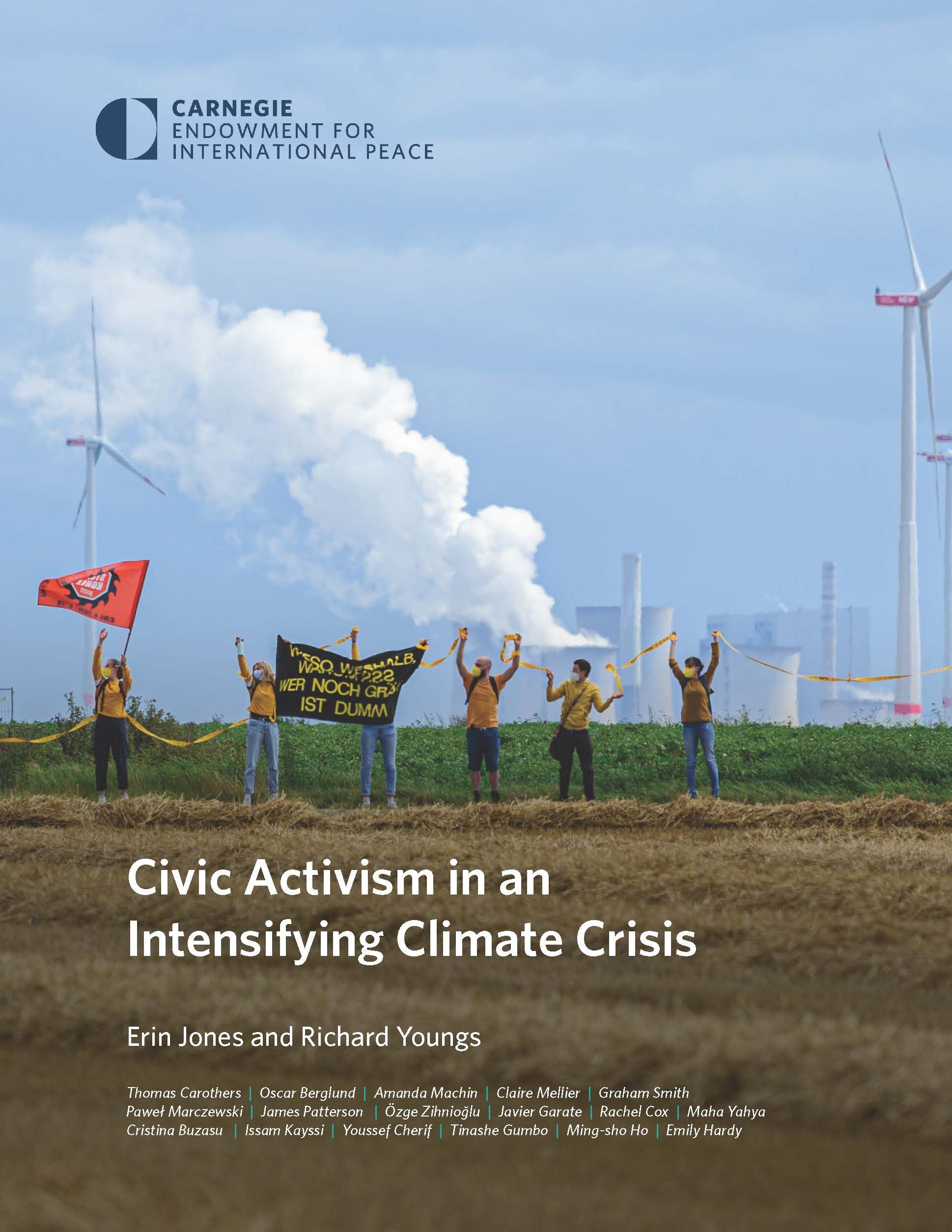
To address the deepening climate crisis, climate activism is employing a wider variety of tactics and aiming at a broader set of goals. In response, the movement faces stronger repression and civic backlash against climate action.

Erin Jones, Richard Youngs
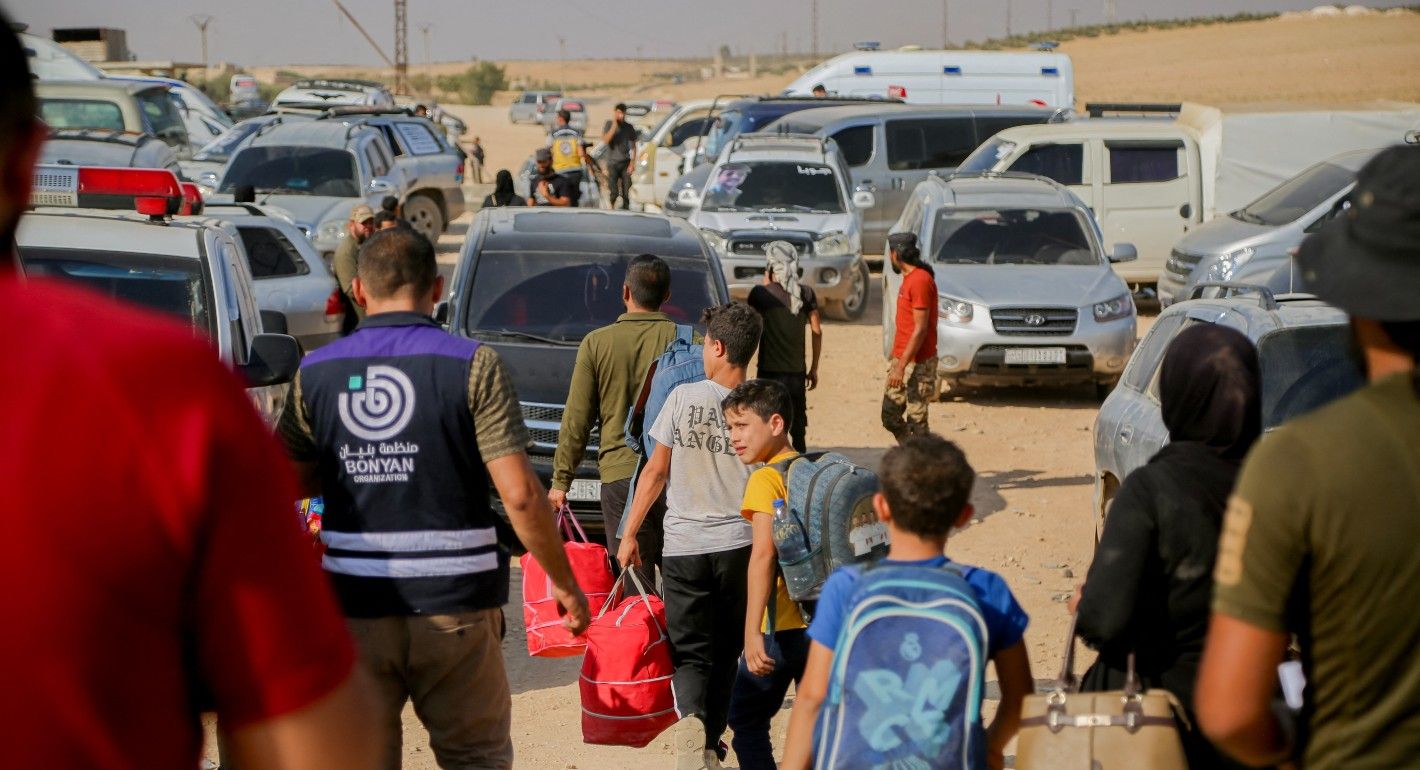
A humanitarian crisis in Lebanon deepens, and Syrian refugees face a perilous choice: remain in a war-torn environment or return to Syria where they risk encountering significant dangers and discrimination. There are significant challenges and risks to their search for safety in Syria.
Haid Haid
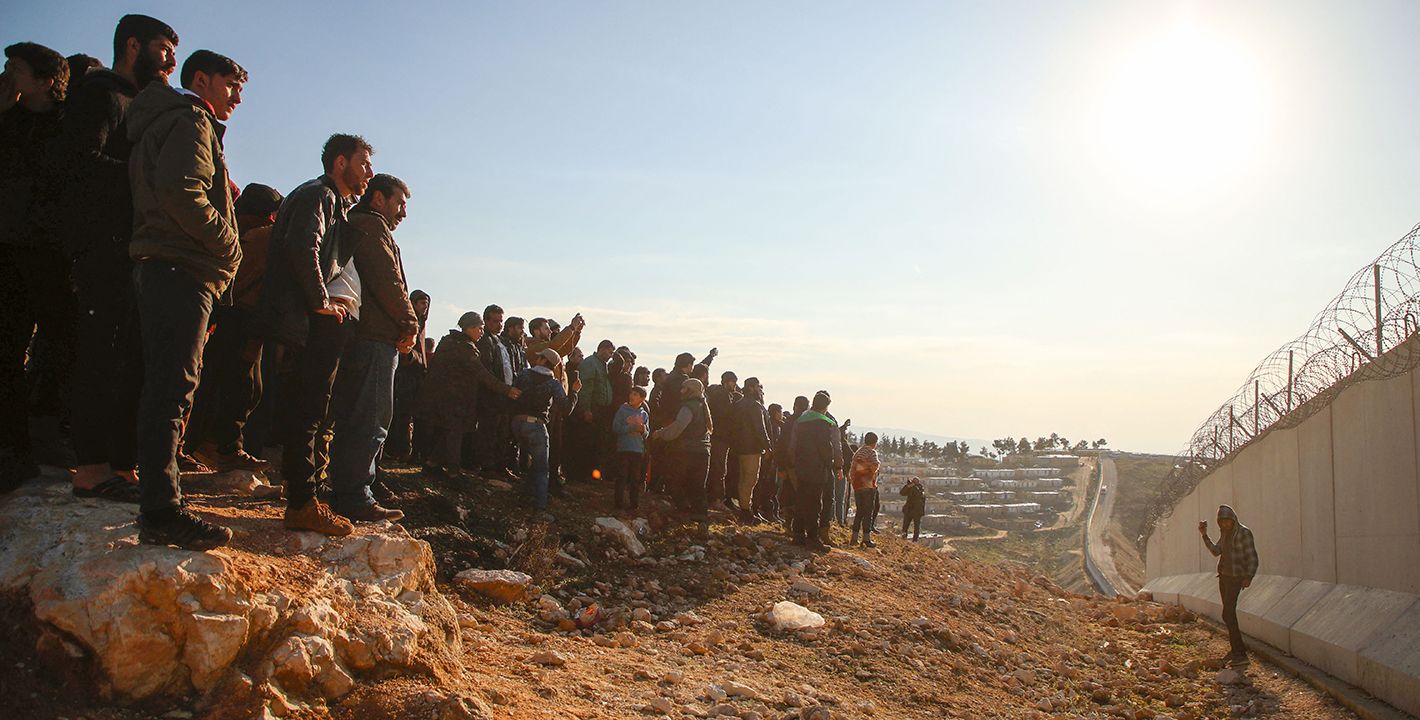
In Syria’s border regions, changes in demographics, economics, and security mean that an inter-Syrian peace process will require consensus among main regional powers that Syria must remain united, that no one side can be victorious, and that perennial instability threatens the region.

Kheder Khaddour, Armenak Tokmajyan
The interaction of national armed forces and private business sectors offers a useful lens for viewing the politics of numerous countries of the so-called Global South. A rising trend of military political activism—often accompanied by military commercial activity—underlines the importance of drivers and outcomes in these relationships.

Yezid Sayigh, Hamza Meddeb
For many in the society, the post-Ben Ali years were mainly about successive economic crises and political instability.
Jasmine Khelil