

Article
Marina Ottaway, Omar Hossino
{
  "authors": [
    "Marina Ottaway"
  ],
  "type": "legacyinthemedia",
  "centerAffiliationAll": "dc",
  "centers": [
    "Carnegie Endowment for International Peace"
  ],
  "collections": [],
  "englishNewsletterAll": "democracy",
  "nonEnglishNewsletterAll": "",
  "primaryCenter": "Carnegie Endowment for International Peace",
  "programAffiliation": "DCG",
  "programs": [
    "Democracy, Conflict, and Governance"
  ],
  "projects": [],
  "regions": [],
  "topics": [
    "Political Reform",
    "Democracy"
  ]
}
REQUIRED IMAGE
Source: Carnegie
Originally published March 30, 2004 in the International Herald Tribune.
WASHINGTON The Bush administration has put the issue of women's rights at the center of its policy to promote democracy in the Middle East. After decades during which it received virtually no high level attention, women's empowerment has become one of the four pillars of the Middle East Partnership Initiative, the program through which the Bush administration is pushing reform in the Arab world.
Many of the programs devoted to the initiative's other goals - political reform, education and economic development - also single out women for special attention. And the United States has organized a number of high profile conferences devoted to women's issues in Arab countries.
This is good. Women's rights have been severely curtailed in most of the Middle East, and even countries that recognize the equality of women on paper are not doing much to make it a reality. Entire societies would benefit if women were allowed to become citizens with full rights. For example, women's empowerment has proven to be the most effective means of curbing population growth - a problem that has reached explosive proportions in the Middle East. And in many Arab countries women constitute a badly needed trained work force; contrary to stereotypes, women are getting educated in large numbers, particularly in the Gulf countries where more women than men are now receiving university degrees.
But the United States also considers the empowerment of women to be a means of making Arab countries more democratic. Such an assumption is dangerously misleading. The empowerment of women would do little to further the cause of democracy in the Arab world.
It is true that a country will never be fully democratic while it discriminates against half its population. But it is also true that most of the well-established democracies put in place the checks and balances that make democracy possible long before they extended suffrage to women or even to the entire male population. Women's suffrage was introduced in the United States only in 1920, though democratic institutions were implanted in the country long before that date. History need not repeat itself, but it is clear that the road to democracy does not necessarily start, nor does it end, with the recognition of equal rights for women.
The fundamental obstacle to democracy in the Arab world today is the untrammeled power of the rulers - the presidents, kings, sheiks and emirs who dominate their countries - and the absence or weakness of the institutions that could limit that power. Parliaments tend to be docile, often dominated by the ruling party or by handpicked appointees. Judiciaries are rarely independent. The best-organized opposition is dominated by Islamists. Giving women the vote or training women to run for office does nothing to address these core issues.
Confusing the advancement of women and the advancement of democracy is not only futile, but it is dangerous as well. Conflating the two encourages liberal Arabs, who are deeply suspicious of the United States because of its steadfast support for authoritarian regimes in the past, to conclude that Washington is still not committed to democracy. If it were, it would put pressure on incumbent regimes to open up their political systems, not train women to compete for seats in powerless parliaments. It also feeds into conservative Arabs' belief that by seeking to export democracy the United States is really trying to subvert the values of Islam and of their culture, making Arab societies as immoral and corrupt as the West is in their eyes.
Finally, by confusing women's rights and democracy the United States provides Arab governments with a painless means to earn reformist credentials without giving up any power. Reforming divorce laws or appointing a few women to high positions are measures that in no way threaten even autocratic governments or change the political balance.
Arab countries will become more democratic only when rulers are confronted by well-organized opposition parties, strong parliaments and independent judiciaries, not when women can extricate themselves more easily from abusive marriages or when more girls attend school.
Empowering women is undoubtedly a worthwhile goal. It is not a substitute for democracy promotion.

Former Senior Associate, Middle East Program
Before joining the Endowment, Ottaway carried out research in Africa and in the Middle East for many years and taught at the University of Addis Ababa, the University of Zambia, the American University in Cairo, and the University of the Witwatersrand in South Africa.
Recent Work
Marina Ottaway, Omar Hossino
Marina Ottaway
Carnegie does not take institutional positions on public policy issues; the views represented herein are those of the author(s) and do not necessarily reflect the views of Carnegie, its staff, or its trustees.
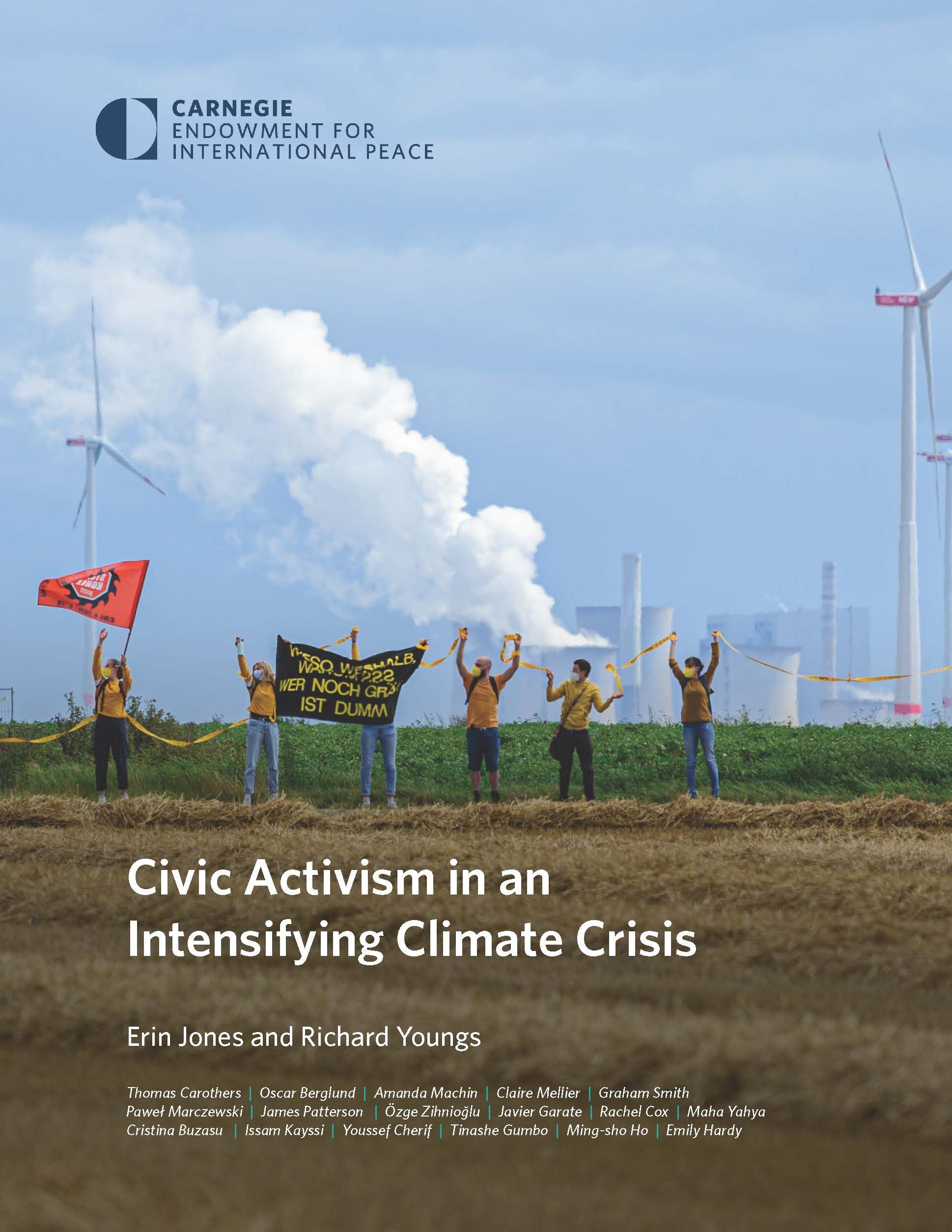
To address the deepening climate crisis, climate activism is employing a wider variety of tactics and aiming at a broader set of goals. In response, the movement faces stronger repression and civic backlash against climate action.

Erin Jones, Richard Youngs
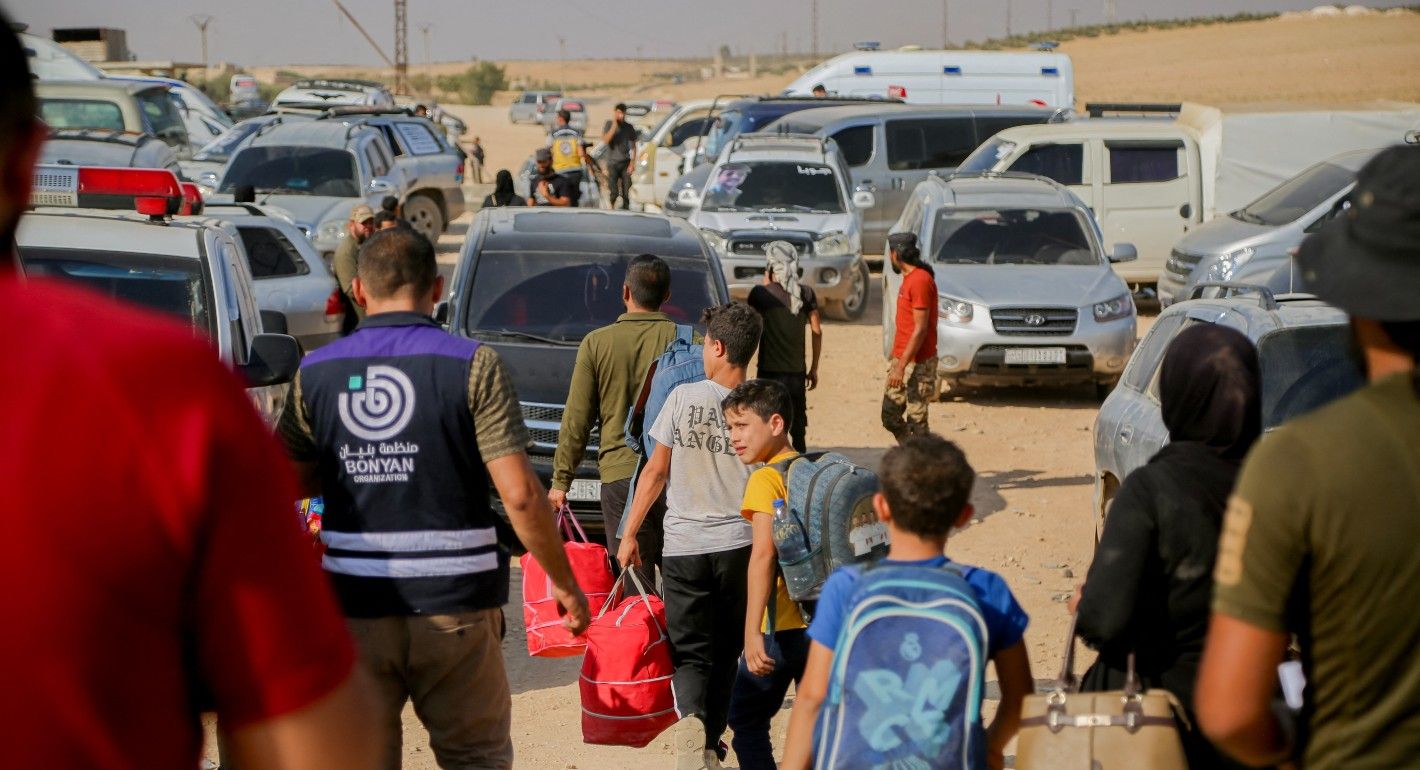
A humanitarian crisis in Lebanon deepens, and Syrian refugees face a perilous choice: remain in a war-torn environment or return to Syria where they risk encountering significant dangers and discrimination. There are significant challenges and risks to their search for safety in Syria.
Haid Haid
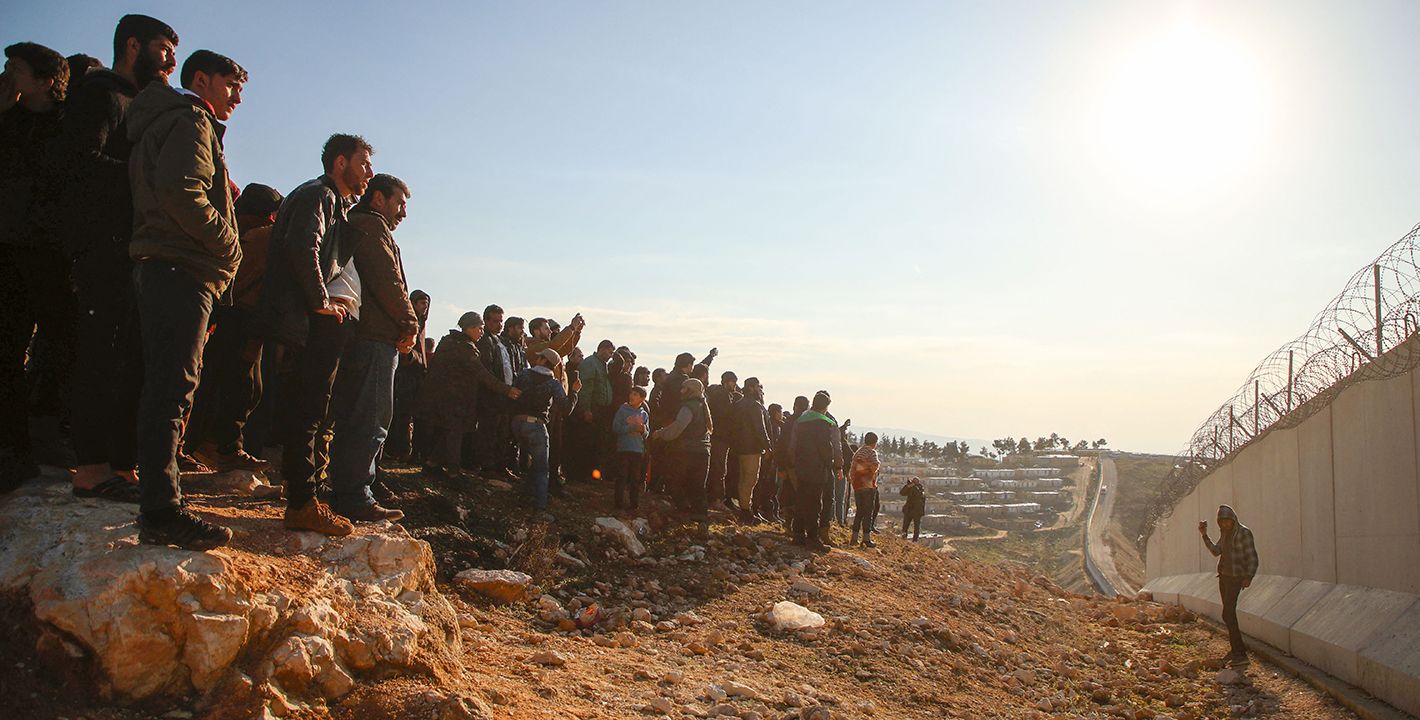
In Syria’s border regions, changes in demographics, economics, and security mean that an inter-Syrian peace process will require consensus among main regional powers that Syria must remain united, that no one side can be victorious, and that perennial instability threatens the region.

Kheder Khaddour, Armenak Tokmajyan
For many in the society, the post-Ben Ali years were mainly about successive economic crises and political instability.
Jasmine Khelil
As members, organizers, and leaders, women continue to play an important role in the General Union of Tunisian Workers and advance its political advocacy.
Heba F El-Shazli