

In The Media
Michele Dunne, Robert Kagan
{
  "authors": [
    "Robert Kagan"
  ],
  "type": "legacyinthemedia",
  "centerAffiliationAll": "",
  "centers": [
    "Carnegie Endowment for International Peace"
  ],
  "collections": [],
  "englishNewsletterAll": "",
  "nonEnglishNewsletterAll": "",
  "primaryCenter": "Carnegie Endowment for International Peace",
  "programAffiliation": "",
  "programs": [],
  "projects": [],
  "regions": [
    "United States",
    "Iraq",
    "Afghanistan"
  ],
  "topics": [
    "Political Reform",
    "Security",
    "Military",
    "Foreign Policy"
  ]
}
REQUIRED IMAGE
Source: Carnegie
By Robert
Kagan
Originally published in the Washington Post, Tuesday, March 16, 2004
The terrorist attack in Madrid and its seismic impact on the Spanish elections
this past week have brought the United States and Europe to the edge of the
abyss. There's no denying that al Qaeda has struck a strategic and not merely
a tactical blow. To murder and terrorize people is one thing, but to unseat
a pro-U.S. government in a nation that was a linchpin of America's alliance
with the so-called New Europe -- that is al Qaeda's most significant geopolitical
success since Sept. 11, 2001.
The unhappy reality is that a significant number of Spanish voters seem to have responded to the attacks in Madrid exactly as al Qaeda hoped they would. They believed their government's close cooperation with the United States, and specifically with the Bush administration in Iraq, had brought the wrath of the terrorist organization on them, and that the way to avoid future attacks was to choose a government that would withdraw from Iraq and distance itself from the United States. Other European peoples and governments have quietly flirted with this kind of thinking in the past, and not just recently but throughout the 1990s. But Spaniards have now made this calculus public. If other European publics decide that the Spaniards are right, and conclude that the safer course in world affairs is to dissociate themselves from the United States, then the transatlantic partnership is no more.
Already there are statements by top European leaders that have the ring of dissociation. In a clear swipe at U.S. policy, European Commission President Romano Prodi commented in the wake of the Madrid attacks: "It is clear that using force is not the answer to resolving the conflict with terrorists." Terrorism, he said, "is infinitely more powerful than a year ago." So apparently Prodi accepts al Qaeda's logic, too.
In the coming days and weeks, Europeans will close ranks with Spain and express common European solidarity against al Qaeda terrorism. But there is a real danger that many Europeans will not extend the solidarity across the Atlantic. Some may argue, at least implicitly, that separation from the United States is one effective, nonviolent defense against future terrorist attacks.
Needless to say, that would be a disaster for the United States. The Bush administration needs to recognize it has a crisis on its hands and start making up for lost time in mending transatlantic ties, and not just with chosen favorites. The comforting idea of a "New Europe" always rested on the shifting sands of a public opinion, in Spain and elsewhere, that was never as favorable to American policy as to the governments. The American task now is to address both governments and publics, in Old and New Europe, to move past disagreements over the Iraq war, and to seek transatlantic solidarity against al Qaeda.
John Kerry has an important role to play now, too. The temptation for Kerry and his surrogates to use events in Spain to bolster their arguments against President Bush's foreign policy may be irresistible. But Kerry should think hard before he pushes the point too far. After all, he could be president next January. If Europeans respond to the attack in Spain by distancing themselves from the United States, a divided and dysfunctional West will be his inheritance. Like Bush, Kerry should move the transatlantic conversation beyond the Iraq war to the common war against al Qaeda.
But the problem is not all on the American side, and neither is the solution. Responsible heads in Europe must understand that anything that smacks of retreat in the aftermath of this latest attack could raise the likelihood of further attacks. Al Qaeda's list of demands doesn't end with Iraq. The attack in Madrid was not just punishment for Spain's involvement in Iraq but for involvement with the United States in the war on terrorism. Al Qaeda's statement taking credit for the bombings in Madrid condemned Spain's role in Afghanistan, too. Al Qaeda seeks to divide Europe and the United States not just in Iraq but in the overall struggle. It seeks to convince Europeans not only that the use of force in Iraq was mistaken but that the use of force against terrorism in general is mistaken and futile -- just as Prodi is arguing. Are Europeans prepared to grant all of al Qaeda's conditions in exchange for a promise of security? Thoughts of Munich and 1938 come to mind.
The incoming Spanish government has declared its intention to move away from the United States and back to the "core of Europe," meaning France and Germany. Presumably Jacques Chirac and Gerhard Schroeder will welcome their new ally in Old Europe. But presumably they also know that dissociation from the United States in the wake of the Madrid bombings will be a disaster for Europe. If the United States cannot fight al Qaeda without Europe's help, it is equally true that Europe can't fight al Qaeda without the United States. If Europe's leaders understand this, then they and Bush should recognize the urgency of making common cause now, before the already damaged edifice of the transatlantic community collapses.
Robert Kagan, a senior associate at the Carnegie Endowment for International Peace, is the author of "Of Paradise and Power: America and Europe in the New World Order." He writes a monthly column for The Post.
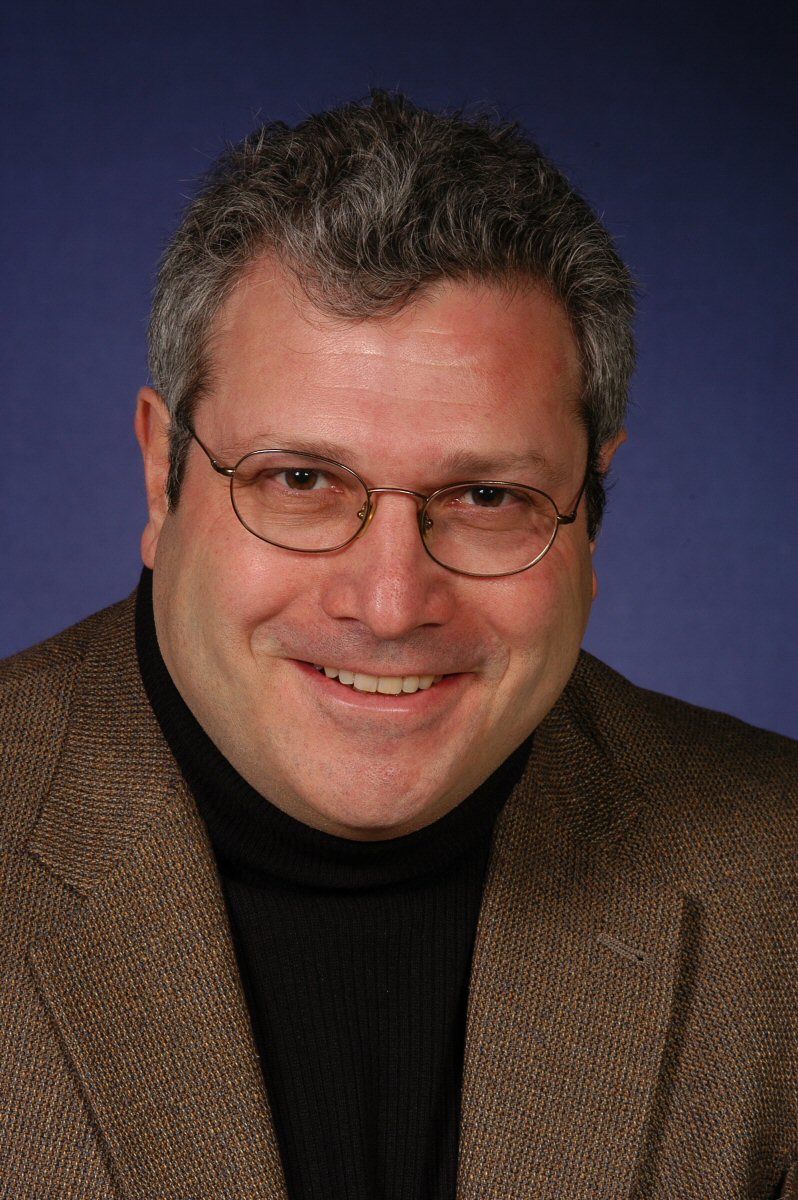
Former Senior Associate
Kagan, author of the recent book, The Return of History and the End of Dreams (Knopf 2008), writes a monthly column on world affairs for the Washington Post and is a contributing editor at both the Weekly Standard and the New Republic.
Recent Work

Michele Dunne, Robert Kagan
Robert Kagan, Michele Dunne
Carnegie does not take institutional positions on public policy issues; the views represented herein are those of the author(s) and do not necessarily reflect the views of Carnegie, its staff, or its trustees.

Huawei pushed hard to enter the Egyptian data centers market, until the Americans made a better offer.

Angie Omar

Middle Eastern states should welcome an accelerated U.S. disengagement from their region.

Michael Young

In an interview, former ambassador Charles Freeman assesses the Trump administration’s war against Iran.
Michael Young

By failing to address Palestinian representation, the current process is bound to lead to just another temporary arrangement.

Nathan J. Brown

The armed forces champion a form of capitalism that is generating revenue, but its reliance on rent faces diminishing returns, leaving the country with massive sunk costs and deferred returns, deepening dependency on external borrowing.

Yezid Sayigh