

In The Media
Josh Kurlantzick
{
  "authors": [
    "Josh Kurlantzick"
  ],
  "type": "legacyinthemedia",
  "centerAffiliationAll": "dc",
  "centers": [
    "Carnegie Endowment for International Peace"
  ],
  "collections": [],
  "englishNewsletterAll": "democracy",
  "nonEnglishNewsletterAll": "",
  "primaryCenter": "Carnegie Endowment for International Peace",
  "programAffiliation": "DCG",
  "programs": [
    "Democracy, Conflict, and Governance"
  ],
  "projects": [],
  "regions": [
    "Southeast Asia"
  ],
  "topics": [
    "Political Reform",
    "Democracy"
  ]
}
REQUIRED IMAGE
As most Americans were celebrating Independence Day on July 4, the small, ravaged nation of Cambodia celebrated what it hoped would be its independence from one of the most horrific periods in twentieth-century history. In a hall of the royal palace in Phnom Penh, Cambodia's capital, in front of a Buddhist monk, judges for the upcoming tribunal of the Khmer Rouge were sworn into office.
Source: The New Republic Online
As most Americans were celebrating Independence Day on July 4, the small, ravaged nation of Cambodia celebrated what it hoped would be its independence from--or at least its separation from--one of the most horrific periods in twentieth-century history. In a hall of the royal palace in Phnom Penh, Cambodia's capital, in front of a Buddhist monk, judges for the upcoming tribunal of the Khmer Rouge were sworn into office. "The time for justice has finally arrived," United Nations Under-Secretary-General Nicolas Michel told the Daily Telegraph.
Soon, the capital will be transformed into a hive of activity for the long-delayed tribunal of top leaders of the Khmer Rouge, who killed some 1.7 million of their countrymen between 1975 and 1979. There's not much time left: Khmer Rouge supreme leader Pol Pot is dead, and top Khmer Rouge lieutenants, men like Nuon Chea and Khieu Samphan, are aging and unwell. After the United Nations last year gave final approval to the tribunal, organizers chose a site, began training court workers, and started translating documents.
As I found on a recent visit, Cambodians clearly want the tribunal to begin. In a poll taken by the Khmer Institute of Democracy, a Phnom Penh NGO, nearly 97 percent of Cambodians favored a Khmer Rouge trial, and over 70 percent said they would attend its hearings. Yet that 97 percent may wind up 100 percent unsatisfied, a lesson for other tribunals like the ones in Sierra Leone or Iraq, or a potential future tribunal for East Timor. Despite praise from U.N. officials about the tribunal's potential, the major actors needed to create an effective tribunal--in this case, China, the United States, the United Nations, and the Cambodian government itself--all have not truly gotten on board, and Cambodia could wind up with a badly misgoverned trial. And a failed tribunal would be a disaster not only for Pol Pot's survivors, who desire some closure. As could happen in Sierra Leone or East Timor, a failed tribunal would decimate the country's justice system and political culture, which are already on life support.
Though Vietnam forced the Khmer Rouge from power in 1979, for decades realpolitik made a tribunal impossible. The United States and China had made no peace with Vietnam, so Beijing and Washington tacitly, and cravenly, supported the Khmer Rouge, who throughout the 1980s fought a guerilla war against Cambodia's Vietnam-installed government, led by pseudo-authoritarian Prime Minister Hun Sen, who had defected from the Khmer Rouge in the late 1970s. The situation eventually changed: After Cambodia signed a peace agreement in 1991 between its warring parties, and Washington normalized relations with Hanoi, Congress passed legislation committing Washington to pushing for a Khmer Rouge tribunal. In 1999, a group of U.N. scholars advised that an ad hoc Khmer Rouge tribunal be established and run by international legal experts.
Seven years later, Cambodia is on the verge of that tribunal, but the court that finally meets may be extremely weak. Hun Sen, who has dominated Cambodian politics for nearly three decades, has never thrown his full support behind a trial. Since he was only a low-ranking Khmer Rouge officer, Hun Sen could not come before a tribunal, but former Khmer Rouge soldiers comprise a significant bloc of his support. Hun Sen has openly denigrated the idea of a tribunal, saying that Cambodia should "dig a hole and bury the past" instead. Worse, the prime minister has treated former Khmer Rouge leaders, who live freely in Phnom Penh, like dignitaries. Hun Sen has welcomed them at the prime minister's residence even as average Cambodians curse their lavish motorcades rolling through the streets, past beggars with stumps for limbs, victims of years of Cambodian war.
Too many foreign nations, who fund a large percentage of Cambodia's state budget, have not pushed Hun Sen to change his mind. In private, says Craig Etcheson, an expert on the tribunal, Beijing applied major pressure in the opposite direction. "When the Cambodian parliament has debated the tribunal, the Chinese ambassador went into overdrive to get them not to support an international tribunal," he says. "When the time came a number of these MPs just don't show up for their votes" on creating an international tribunal.
Beijing, which supplied the majority of the Khmer Rouge's military and civilian assistance in the 1970s, could back up its threats. If necessary, Beijing could have used its veto power at the U.N. Security Council to stop a foreign-dominated tribunal. The Chinese made this point clear to U.N. officials and Western diplomats, who traveled to Beijing to try to enlist China's support for a tribunal led by foreign judges.
Still, says one person who closely followed tribunal negotiations, the Americans also were not willing to call China out for its veto, publicly condemning Beijing. "Cambodia isn't an issue to that many people in Washington, and some want to bury the past [U.S. involvement]," he says. "The Chinese position made it convenient for the United States to not spend too much diplomatic effort pushing for the tribunal." Meanwhile, other foreign nations, from the European Union to Japan to U.N. agencies, refused to make their aid contingent on Hun Sen accepting a foreign-run tribunal or showing improvements in Cambodia's rule of law. And squabbling within branches of the United Nations responsible for tribunals made it even harder for the United Nations to impose any will on Hun Sen.
Unable to rally enough international support, U.N. negotiators have agreed to form a hybrid tribunal composed of both local and foreign judges. Hun Sen half-heartedly conceded to the formulation, though he continues to denigrate the tribunal. When the tribunal gets underway, it is this combination of judges who will handle proceedings.
There are reasons for serious concern. Hun Sen clearly could influence Cambodian judges sitting on the Khmer Rouge tribunal. But instead of trying to prod the tribunal towards fairness and attempting to get international rights groups to monitor the proceedings, foreign countries have done little. The United States has withheld support for the compromise that emerged, refusing to fund the court. Beijing has said nothing. The United Nations, meanwhile, continues to accede to the Cambodian government's wishes, even allowing the tribunal to be held at the army High Command, so far out of town it will be difficult for average Cambodians to attend tribunal hearings.
Ironically, since the White House prefers ad hoc tribunals to the International Criminal Court, the somewhat ad hoc Cambodian example might have been a model for American aid. After all, notes former tribunal advisor Nathaniel Myers, Cambodia resembles Iraq or, potentially, in East Timor, other countries where tribunals might cause worries about judicial independence, and portions of the political class also want to bury the past.
As in a place like Iraq, a flawed tribunal in Cambodia would have severe repercussions. Already, 20 years without a trial helped establish a culture of impunity in which average Cambodians assume criminals don't face consequences. "Impunity is a gangrene that undermines the fabric of Cambodian society," said Peter Leuprecht, U.N. special representative for human rights in Cambodia. "As a result, the rule of law remains elusive." Indeed, assault and murder have become common means of settling disagreements there, and average Cambodians demonstrate high degrees of mistrust of even their closest neighbors.
A flawed tribunal also would be a missed opportunity to educate young Cambodians, just as a bungled Iraq tribunal would ignore the chance to create a culture of law in Baghdad. After 1979, the Cambodian government attempted to erase the Khmer Rouge period, promoting school textbooks that ignored the late 1970s. As a result, says Youk Chhang, head of the Documentation Center of Cambodia, a group that collects forensic evidence and narratives about the Khmer Rouge period, much of Cambodia, which has one of the youngest populations in the region, knows little about 1975-79. Indeed, when I drove out to Tuol Sleng, the former Khmer Rouge detention center where dried blood, grainy photos of victims, and signs warning inmates not to scream when being tortured to death still cover the walls, I saw only foreign tourists.
Worst of all, without enough legal expertise, the tribunal's prosecutors and judges could botch the job, letting men like Nuon Chea, who created perhaps the most murderous regime in history, off the hook. And while young Cambodians don't remember the Khmer Rouge, their elders clearly do. Mental illness is still endemic within the Cambodian population. Phnom Penh is one of the few world capitals where sophisticated businesspeople and officials I meet break down almost without warning. "We're still like a sick patient, struggling to walk," said Mean Sophea, a Cambodian official in the Ministry of Commerce. He shakes his head. "I don't know if we will."
Joshua Kurlantzick is the New Republic's special correspondent.
This article originally appeared in The New Republic Online, and is available here.
Former Visiting Scholar, China Program
A special correspondent for The New Republic, a columnist for Time, and a senior correspondent for The American Prospect, Kurlantzick assesses China’s relationship with the developing world, including Southeast Asia, Africa, and Latin America.
Recent Work
Josh Kurlantzick
Carnegie does not take institutional positions on public policy issues; the views represented herein are those of the author(s) and do not necessarily reflect the views of Carnegie, its staff, or its trustees.
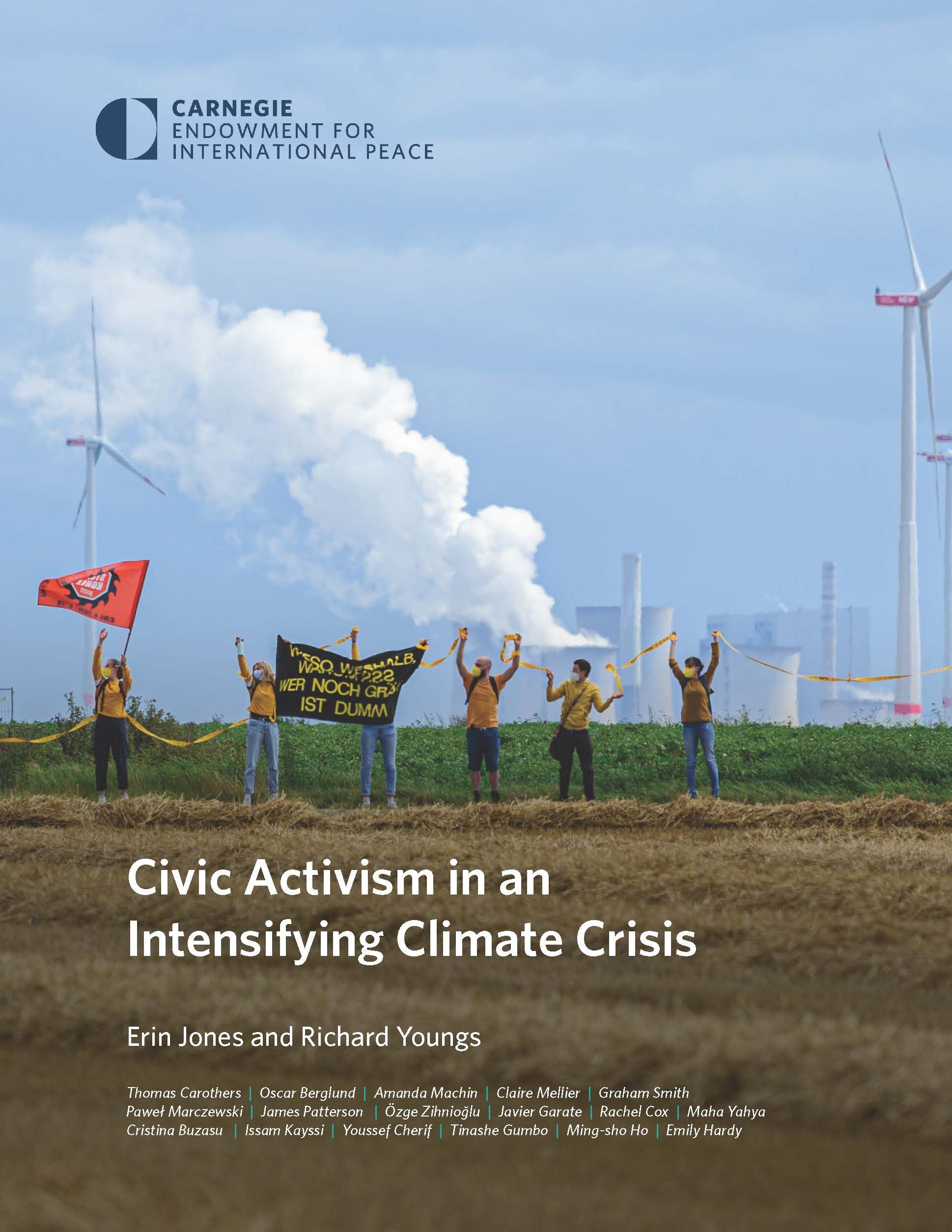
To address the deepening climate crisis, climate activism is employing a wider variety of tactics and aiming at a broader set of goals. In response, the movement faces stronger repression and civic backlash against climate action.

Erin Jones, Richard Youngs
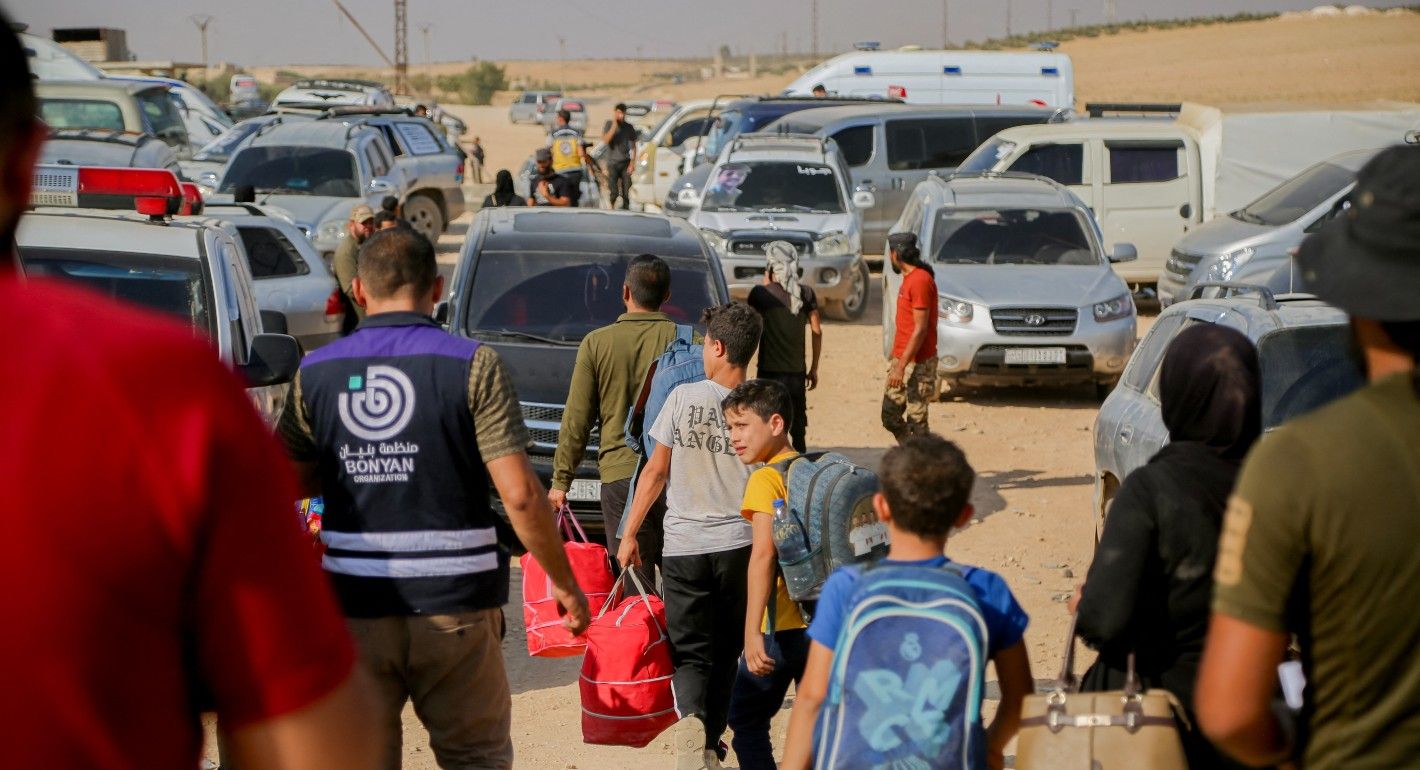
A humanitarian crisis in Lebanon deepens, and Syrian refugees face a perilous choice: remain in a war-torn environment or return to Syria where they risk encountering significant dangers and discrimination. There are significant challenges and risks to their search for safety in Syria.
Haid Haid
In Syria’s border regions, changes in demographics, economics, and security mean that an inter-Syrian peace process will require consensus among main regional powers that Syria must remain united, that no one side can be victorious, and that perennial instability threatens the region.

Kheder Khaddour, Armenak Tokmajyan
The interaction of national armed forces and private business sectors offers a useful lens for viewing the politics of numerous countries of the so-called Global South. A rising trend of military political activism—often accompanied by military commercial activity—underlines the importance of drivers and outcomes in these relationships.

Yezid Sayigh, Hamza Meddeb
For many in the society, the post-Ben Ali years were mainly about successive economic crises and political instability.
Jasmine Khelil