

In The Media
Minxin Pei
{
  "authors": [
    "Minxin Pei"
  ],
  "type": "legacyinthemedia",
  "centerAffiliationAll": "dc",
  "centers": [
    "Carnegie Endowment for International Peace",
    "Carnegie China"
  ],
  "collections": [],
  "englishNewsletterAll": "asia",
  "nonEnglishNewsletterAll": "",
  "primaryCenter": "Carnegie China",
  "programAffiliation": "AP",
  "programs": [
    "Asia"
  ],
  "projects": [],
  "regions": [
    "China"
  ],
  "topics": [
    "Nuclear Policy"
  ]
}
Source: Getty
Source: Straits Times

Even before the talks – involving China, the United States, Japan, Russia, South Korea and North Korea – began in Beijing on Dec 18, Pyongyang had signalled its unwillingness to give up its nuclear capabilities.
As feared, North Korean negotiators refused to discuss denuclearisation, insisting that the US end its financial sanctions first. These sanctions effectively bar Pyongyang from access to the global banking system. Washington, however, refused to lift these unless Pyongyang took concrete steps towards denuclearisation.
The stalemate is a fresh setback for China, which had invested its prestige in hosting the talks and played a critical role in bringing the North Koreans back to the negotiating table after Pyongyang’s nuclear test in October. Now that the new talks have failed to nudge Pyongyang towards disarmament, the best Beijing can hope for is self-restraint on the part of North Korean leader Kim Jung Il.
In the short-term (perhaps three to six months), Beijing may actually get its wish. Mr Kim has no reason to behave recklessly. He must understand that further escalation of his confrontation with the international community will only bring about even more punishing sanctions – which China may have to support at the United Nations Security Council.
New provocations
The US may be losing patience with North Korea but, with the mess in Iraq,
Washington does not have real coercive options to compel Pyongyang to abandon its nuclear programmes.
As far as one can tell, the Bush administration’s strategy is to slowly tighten the screws on Mr Kim’s regime (that is why the US is so loath to lift the financial sanctions) and weaken him further by, among other things, forcing China and South Korea to honour the UN sanctions and reduce their aid to North Korea.
Clearly, this unstable stalemate cannot continue. Unable to extract concessions through nuclear blackmail, Mr Kim is bound to dream up new provocations. This would be a strategic nightmare for Beijing.
For now, the much-feared nuclear domino effect in East Asia following North
Korea’s nuclear test has failed to materialise. The tensions generated by the test have also been successfully managed through diplomacy and cooperation among the region’s major powers, particularly the US, China and Japan.
But if Mr Kim does indeed manage to set off a much more potent nuclear device and/or launch an intercontinental missile the next time, all bets are off.
China will not only lose even more face, but also see its security gravely undermined by the expected military build-up undertaken by the US and Japan in response to the North’s missile-capable nuclear arsenal.
To prevent Pyongyang from engaging in a new round of brinkmanship, Beijing must re-examine its fundamental rationale for continuing to support Mr Kim’s regime. Most observers erroneously believe that Beijing puts Pyongyang on life support because the Chinese leadership fears an influx of millions of North Korean refugees should the Kim regime collapse. That may be an important concern for China, but it is not the most crucial.
For China, North Korea’s greatest geopolitical value is its role as a strategic buffer against the US, which maintains bilateral military alliances with Japan and South Korea, and deploys 100,000 troops in East Asia. As long as the long-term relationship between China and the US is shrouded in strategic uncertainty, Beijing feels that it must sustain Pyongyang, despite its reckless acts. This rationale now appears increasingly questionable for two reasons.
Strategic liability
First, Mr Kim’s regime has become more of a strategic liability than an asset for China. Instead of providing a strategic buffer, North Korea has embarked on a dangerous course of confrontation with the US and Japan that will, in the short term, increase tensions in the region and, in the long-run, hurt China’s national security. Therefore, maintaining its life support for Pyongyang acts against Beijing’s own interests.
Second, the collapse of Mr Kim’s regime is only a matter of time. At 65, Mr Kim may last a further 15 years at most. His rule will progressively weaken as his health deteriorates. Without an heir apparent from his own family, he will have great difficulty in passing power to someone else.
History shows that family-based dynasties, such as the Kim regime, are inherently incapable of arranging smooth successions. The reason is simple. Such dynasties cannot trust anybody outside the family. Indeed, they systematically eliminate strongmen within the regime who are not blood-related. Consequently, such regimes tend to collapse upon the demise of the dictator, especially one without a blood-related heir.
The record of modern totalitarian regimes also shows that brutal regimes are actually far more brittle than popularly assumed. As the dramatic fall of Romanian dictator Nicolae Ceaucescu in 1989 demonstrates, such regimes can be overthrown overnight by a long-suffering population.
Most important, the likelihood of a split between the security force (the principal instrument of repression of the regime) and the military (which the dictator tends to distrust and fear) is relatively high in totalitarian systems. Such a split usually spells doom for regimes facing succession issues.
All this means that North Korea is unlikely to serve as China’s strategic buffer in 10 to 15 years. A regime collapse in North Korea will lead to the reunification of the Korean peninsula, and China will then be faced with a new geopolitical landscape.
Endgame
Either in denial of the inevitable or out of fear of offending the sensitivities of Pyongyang, Beijing has refused to discuss the endgame on the Korean peninsula with the powers with the most at stake – the US, Japan and South Korea.
This is a huge mistake. Beijing must start thinking the unthinkable about Pyongyang. It should understand that it must seize the initiative now so that it will be able to shape the post-Kim strategic landscape on the peninsula.
Specifically, it needs to engage the US in a high-level strategic discussion focused on the endgame in North Korea and reach fundamental understandings about the post-Kim security arrangements on the Korean peninsula that will preserve China’s security interests.
Aside from the long-term benefits this strategic initiative will yield for China, such a bold move will also have a desirable short-term effect on the stalled six-party talks. Beijing will be able to demonstrate to Mr Kim that his regime’s strategic value to China is diminishing, and that he can longer expect the Chinese to write him blank cheques. This may just generate real pressure on Mr Kim to dismantle his nuclear weapons programme.
This article was originally published in the Straits Times, December 28, 2007.

Former Adjunct Senior Associate, Asia Program
Pei is Tom and Margot Pritzker ‘72 Professor of Government and the director of the Keck Center for International and Strategic Studies at Claremont McKenna College.
Recent Work
Minxin Pei
Minxin Pei
Carnegie does not take institutional positions on public policy issues; the views represented herein are those of the author(s) and do not necessarily reflect the views of Carnegie, its staff, or its trustees.
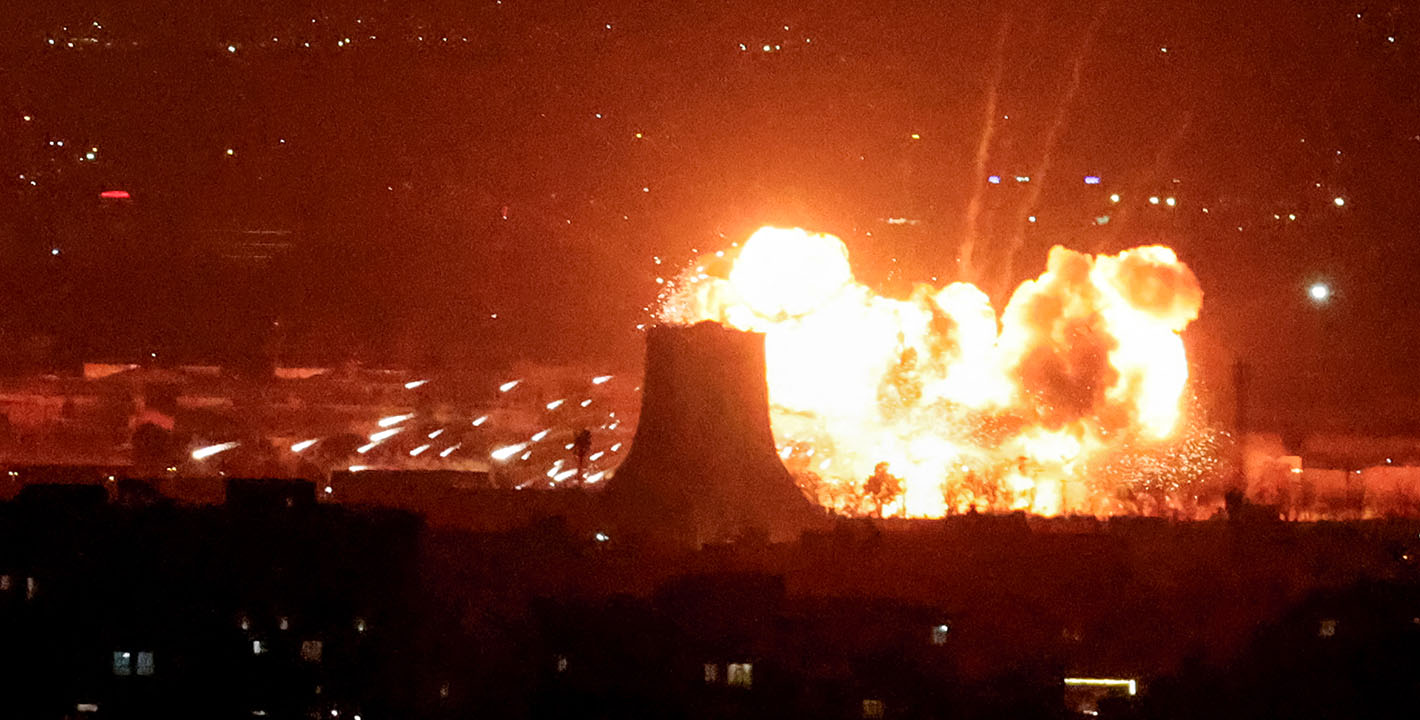
In an interview, Marc Lynch discusses his new book decrying the post-1990 U.S.-dominated order in the Middle East.

Michael Young

China has aligned its cooperation model with Saudi Arabia’s own priorities, most notably since the kingdom unveiled its Vision 2030. Although China announced the Belt and Road Initiative in 2013, the big push in relations happened only after the ascendance of King Salman to the throne in 2015 and Riyadh’s push for Beijing to meet Saudi needs.

Hesham Alghannam

The Gulf Cooperation Council has shifted its energy export focus to Asia, particularly India and China. This is part of a broader shift as GCC members look to expand their geopolitical alliances away from the West.

Alexandre Kateb
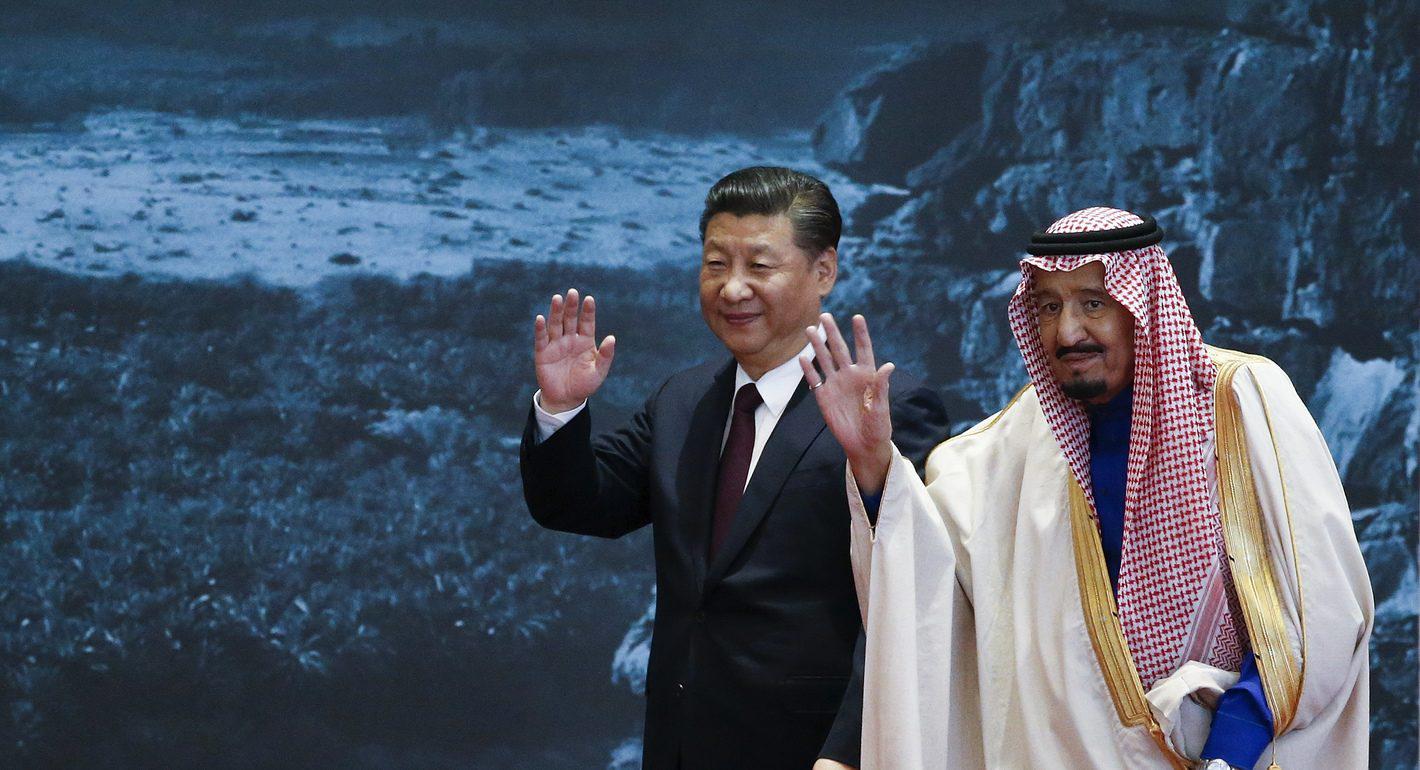
The advantage that China has over other global powers, especially America, is that its foreign policy is closely aligned with those of many of the Middle Eastern countries.

Jin Liangxiang, Maha Yahya, Hesham Alghannam
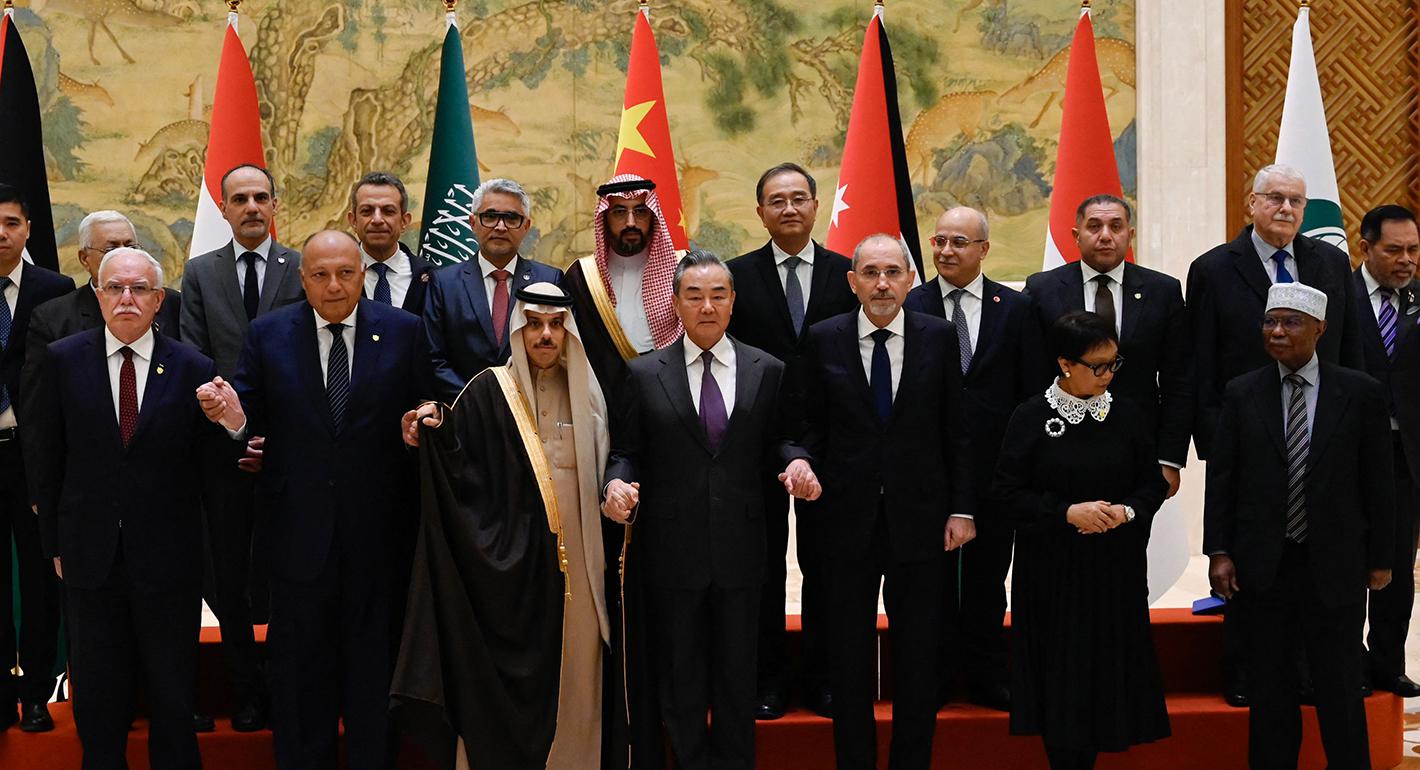
To create an environment more conducive to cooperation and development, U.S. and Chinese efforts should seek the endorsement of neighboring countries and regional organizations. Otherwise, regional and geopolitical rivalries will remain barriers.

Abdullah Baabood