• Research
  • Diwan
  • About
  • Experts
Carnegie Middle East logoCarnegie lettermark logo
LebanonIran
{
  "authors": [],
  "type": "pressRelease",
  "centerAffiliationAll": "dc",
  "centers": [
    "Carnegie Endowment for International Peace"
  ],
  "collections": [],
  "englishNewsletterAll": "asia",
  "nonEnglishNewsletterAll": "",
  "primaryCenter": "Carnegie Endowment for International Peace",
  "programAffiliation": "AP",
  "programs": [
    "Asia"
  ],
  "projects": [],
  "regions": [
    "China"
  ],
  "topics": []
}
REQUIRED IMAGE

REQUIRED IMAGE

Press Release

Press Release: China’s Growth Driven by Domestic Demand, Disadvantages Rural Economy, Says New Carnegie Report

Link Copied
Published on May 31, 2007

FOR IMMEDIATE RELEASE: May 31, 2007


- NEWS RELEASE -


A new report from Carnegie Endowment Senior Associate Albert Keidel finds that China’s rapid growth over the past quarter century has not been export-led but rather is driven by domestic demand, even in recent years when China’s global trade surplus has rapidly expanded. The report also concludes that China’s management of its economic fluctuations since the 1980s has systematically disadvantaged the rural economy.

China’s Economic Fluctuations and Their Implications for its Rural Economy, which analyzes both fast-growth and slow-growth phases of China’s rapid expansion since 1978, shows that shifts in domestic demand, and not shifts in exports, explain growth patterns.

Other key findings include:

  • Because China’s growth has not been export led, the United States should concentrate on improving domestic components of its own international competitiveness rather than focusing on alleged Chinese violations of international commercial norms.
  • China should allow nominal bank deposit rates to rise with inflation, since failure to do so in the past has caused damaging swings in inflation and output growth.
  • China’s reticence to import grain puts pressure on farmers to plant more grain—often a loss-making venture. China should greatly increase its grain imports over time as a way to improve rural standards of living through product diversification and as a way to strengthen overall Chinese domestic consumption demand.

“The report’s analysis points unambiguously to a greater need to consider the rural implications of standard macroeconomic policy making—not just because worsening rural welfare affects poverty levels and the risk of rural social unrest, but also because the rural economy has the potential to emerge as a vast pool supporting macroeconomic stability and sustained growth based on high levels of both domestic consumption and investment,” concludes the report.

This report was produced in collaboration with Dr. Jianxing Liu of the International Cooperation Center in China’s National Development and Reform Commission, with substantial support from the Ford Foundation

Notes:

  1. To read this report, go to www.carnegieendowment.org
    Direct link to the PDF:
    www.carnegieendowment.org/files/keidel_report_final.pdf 
  2. Albert Keidel is a senior associate at the Carnegie Endowment, where he specializes in China economic issues and related U.S. policy.  He formerly served as deputy director and acting director at the U.S. Department of Treasury’s Office of East Asian Nations. Before that, he was senior economist at the World Bank office in Beijing.
  3. Press Contact: Jessica Jennings, 202/939-2265, jjennings@ceip.org   
  4. For more information about the Carnegie Endowment’s China Program, go to www.carnegieendowment.org/programs/China
  5. The Carnegie Endowment for International Peace is a private, nonprofit organization dedicated to advancing cooperation between nations and promoting active international engagement by the United States. Founded in 1910, its work is nonpartisan and dedicated to achieving practical results. 

###

China

Carnegie does not take institutional positions on public policy issues; the views represented herein are those of the author(s) and do not necessarily reflect the views of Carnegie, its staff, or its trustees.

More Work from Malcolm H. Kerr Carnegie Middle East Center

  • Commentary
    How China Aligned Itself with Saudi Arabia’s Vision 2030

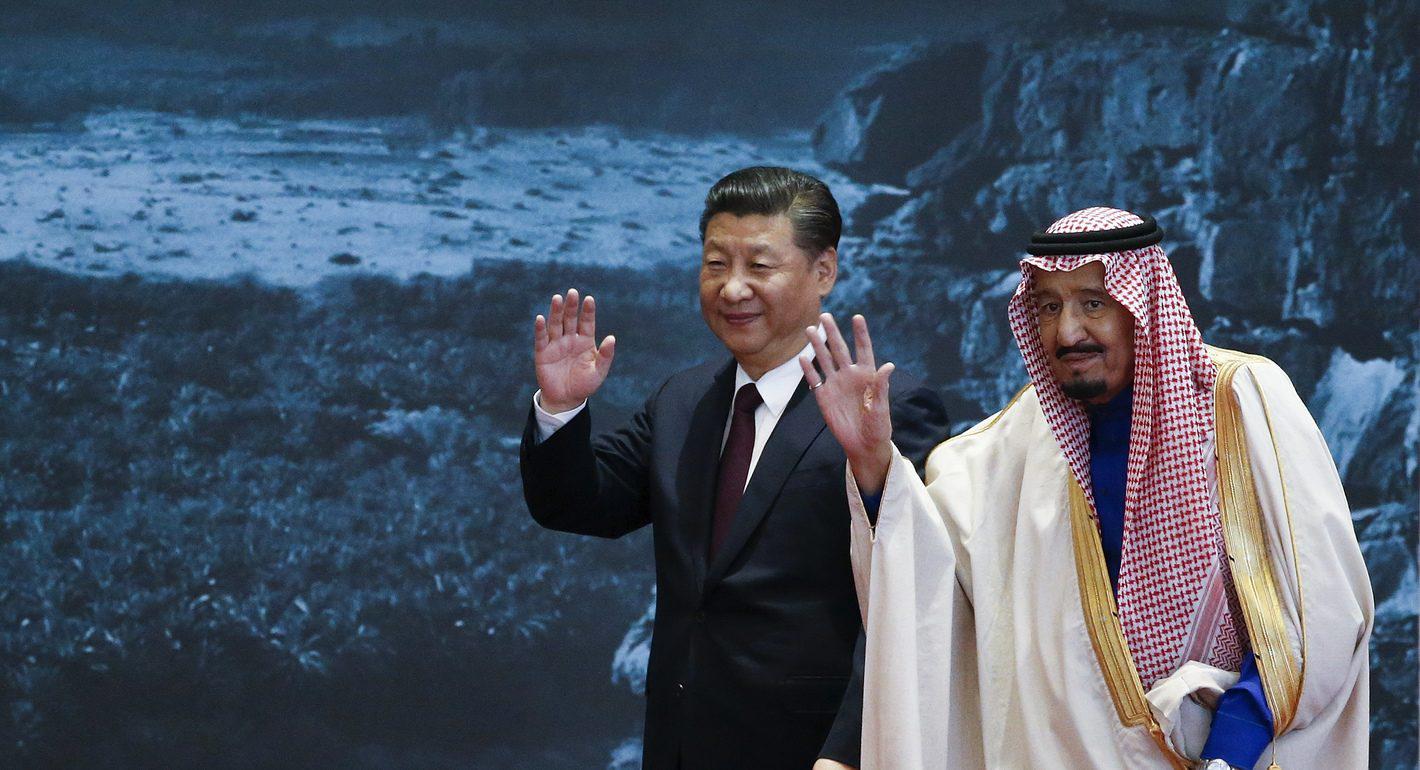
    China has aligned its cooperation model with Saudi Arabia’s own priorities, most notably since the kingdom unveiled its Vision 2030. Although China announced the Belt and Road Initiative in 2013, the big push in relations happened only after the ascendance of King Salman to the throne in 2015 and Riyadh’s push for Beijing to meet Saudi needs.

      Hesham Alghannam

  • Article
    The GCC’s Multipolar Pivot: From Shifting Trade Patterns to New Financial and Diplomatic Alliances

    The Gulf Cooperation Council has shifted its energy export focus to Asia, particularly India and China. This is part of a broader shift as GCC members look to expand their geopolitical alliances away from the West.

      Alexandre Kateb

  • Commentary
    China’s Evolving Economic and Security Role in the Middle East

    The advantage that China has over other global powers, especially America, is that its foreign policy is closely aligned with those of many of the Middle Eastern countries.

      Jin Liangxiang, Maha Yahya, Hesham Alghannam

  • Article
    The Geopolitics of Economic Development in the Middle East

    To create an environment more conducive to cooperation and development, U.S. and Chinese efforts should seek the endorsement of neighboring countries and regional organizations. Otherwise, regional and geopolitical rivalries will remain barriers.

      Abdullah Baabood

  • Commentary
    The Gaza War and the Rest of the World

    Scholars from Carnegie’s global network comment on how the ongoing conflict between Israelis and Palestinians is affecting their areas of interest, and what the implications of this may be.

      • +11

      Maha Yahya, Rosa Balfour, Judy Dempsey, …

Get more news and analysis from
Malcolm H. Kerr Carnegie Middle East Center
Carnegie Middle East logo, white
  • Research
  • Diwan
  • About
  • Experts
  • Projects
  • Events
  • Contact
  • Careers
  • Privacy
  • For Media
Get more news and analysis from
Malcolm H. Kerr Carnegie Middle East Center
© 2026 Carnegie Endowment for International Peace. All rights reserved.