

Q&A
- +2
Judy Dempsey, Alexander Gabuev, Rose Gottemoeller, …
{
  "authors": [
    "Rose Gottemoeller"
  ],
  "type": "legacyinthemedia",
  "centerAffiliationAll": "dc",
  "centers": [
    "Carnegie Endowment for International Peace"
  ],
  "collections": [
    "U.S. Nuclear Policy"
  ],
  "englishNewsletterAll": "ctw",
  "nonEnglishNewsletterAll": "",
  "primaryCenter": "Carnegie Endowment for International Peace",
  "programAffiliation": "russia",
  "programs": [
    "Russia and Eurasia",
    "Nuclear Policy"
  ],
  "projects": [],
  "regions": [
    "North America",
    "United States",
    "Caucasus",
    "Russia"
  ],
  "topics": [
    "Foreign Policy"
  ]
}
Source: Getty
Putin’s role in Russia currently remains unclear. Amidst the transition of the U.S. government, this factor will hinder U.S.-Russia relations. However, a bilateral commission made up of past U.S. and Russian presidents, with Putin serving the role of past president, can alleviate this problem.
Source: Nezavisimaya Gazeta

What is amazing about the Russia exchange, however, is that both men failed to mention even once Russian President Dmitri Medvedev. Medvedev’s absence from the remarks of the U.S. presidential candidates is no accident. Of course, Medvedev’s absence might be explained by the fact that his name is difficult for English speakers to pronounce. More likely, however, the Russian President did not figure prominently in the scripts that the two candidates used for their preparations—but Prime Minister Putin did.
If this is the case, then it does not portend well for the future of the tandem leadership arrangement that Putin and Medvedev have established. The division of labor that was set at the time of Medevedev’s inauguration in May, with the President in charge of foreign and security policy and the Prime Minister in charge of the economy, has clearly been cast into doubt. This is not good news for Russia’s international partners, since they thus are unsure about whom them must deal with. For the new President of the United States, the uncertainty is especially serious, because he will come into office with U.S.-Russian relations at their worst point since the depths of the Cold War.
One of the President’s early foreign policy tasks will be to figure out what to do with Russia—and the Russian leadership will likewise have to decide what to do with the United States. An unclear picture of who is in control of Russian foreign and security policy will seriously complicate these efforts, in both the Russian and U.S. governments.
To help to clarify this picture, perhaps Vladimir Putin could take up a special task, in keeping with his role as a past Russian president. Efforts to right the U.S.-Russian relationship will not succeed without sustained high-level attention. The new U.S. President will have many issues to address, and the economy, Iraq and Afghanistan will certainly head the list. The damage to the U.S.-Russian relationship may deepen in the meantime, just from a lack of a top priority in Washington during the political transition process.
A risky but potentially big pay-off strategy is needed to keep a focus on the relationship with Russia. A bilateral Presidential commission formed at the highest levels would be one way to go about it. The mission of this commission would be two-pronged: First, to examine how to get relations back on track between the United States and Russia; and second, to provide high-level counsel to urgent negotiations, such how to extend the Strategic Arms Reduction Treaty (START), which goes out of force in December 2009, or what to do about the Conventional Forces in Europe Treaty (CFE), which was dealt a severe blow by the Russian incursion into Georgia.
This commission would be of short duration, no more than six months in length. Past presidents would be invited to serve, including Presidents Jimmy Carter, George H.W. Bush and Bill Clinton on the U.S. side. Once President George W. Bush leaves office in January 2009, he may also be willing to join the group. The problem, of course, would be an unbalanced situation on the Russian side, since Presidents Gorbachev and Putin are the only living past presidents of Russia, and Putin is currently serving as Russian Prime Minister. An answer to this problem may be to invite Putin to serve while explicitly recognizing his official status—he would sustain the heft of the Russian premiership without unbalancing the Commission’s deliberations.
Although high-risk, the goal of such a commission would be profound: to avert the tragedy of Russia and the United States deeply at odds, unable to cooperate on critical international issues. If Putin agreed to take up this task, then it would help to clarify his role in the Russian leadership. The commission would be a classic venue for past presidents. They would lend their considerable authority, experience and wisdom to determining the future of the U.S.-Russian relationship, but they would not be partaking of day-to-day government decision-making. This would be a worthy task, and one of monumental importance.
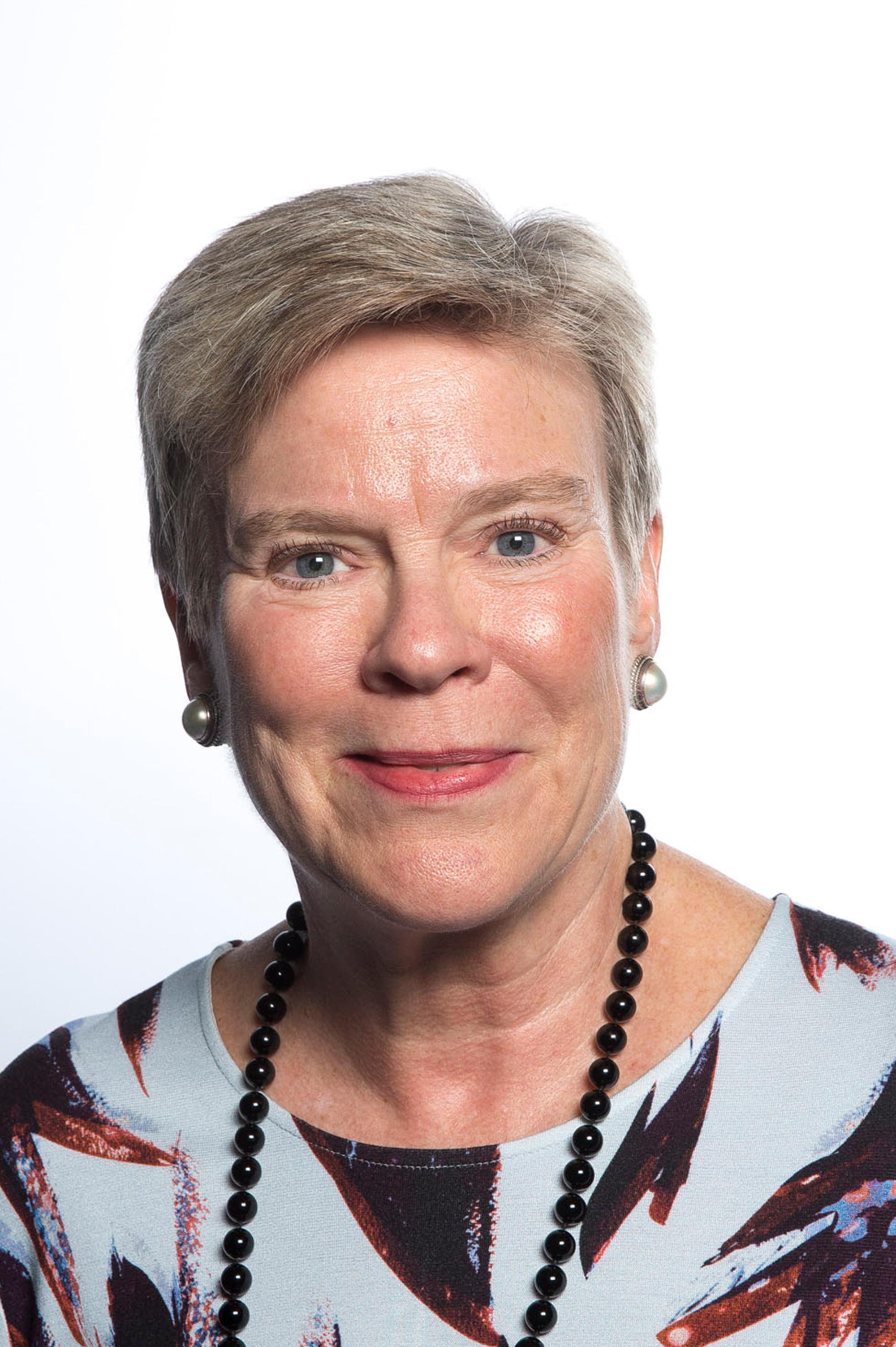
Nonresident Senior Fellow, Nuclear Policy Program
Rose Gottemoeller is a nonresident senior fellow in Carnegie’s Nuclear Policy Program. She also serves as lecturer at Stanford University’s Freeman Spogli Institute for International Studies and is a research fellow at the Hoover Institution. Ambassador Gottemoeller served as the deputy secretary general of NATO from 2016 to 2019.
Recent Work


Judy Dempsey, Alexander Gabuev, Rose Gottemoeller, …
Carnegie does not take institutional positions on public policy issues; the views represented herein are those of the author(s) and do not necessarily reflect the views of Carnegie, its staff, or its trustees.
As talks begin between Washington and Tehran, Beirut has an opening to advance a regional plan for the party’s disarmament.

Michael Young
What is behind Marco Rubio’s announcement that the body is now an international nongovernmental organization?
Zaha Hassan
Policy discussion is ignoring that the Palestinian national project is hollowed out and apartheid is a present danger.

Nathan J. Brown
As negotiations with Iran and Lebanon continue, chaos is at the heart of the Netanyahu government’s calculations.
Michael Young
The party’s domestic and regional roles have changed, so Lebanon should devise a disarmament strategy that encompasses this.
Michael Young