

Commentary
Huawei pushed hard to enter the Egyptian data centers market, until the Americans made a better offer.
Angie Omar
{
  "authors": [
    "George Perkovich",
    "Patricia Lewis"
  ],
  "type": "legacyinthemedia",
  "centerAffiliationAll": "dc",
  "centers": [
    "Carnegie Endowment for International Peace"
  ],
  "collections": [
    "U.S. Nuclear Policy"
  ],
  "englishNewsletterAll": "ctw",
  "nonEnglishNewsletterAll": "",
  "primaryCenter": "Carnegie Endowment for International Peace",
  "programAffiliation": "NPP",
  "programs": [
    "Nuclear Policy"
  ],
  "projects": [],
  "regions": [
    "North America",
    "United States",
    "East Asia",
    "China",
    "Caucasus",
    "Russia"
  ],
  "topics": [
    "Nuclear Policy"
  ]
}
Source: Getty
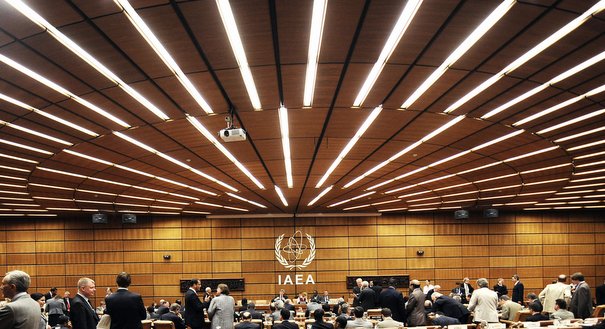
In this paper commissioned by the International Commission on Nuclear Nonproliferation and Disarmament, George Perkovich and Patricia Lewis identify possible nuclear disarmament and nonproliferation steps that could take the world in the mid-term to a position from which the latter steps toward abolition of nuclear weapons could be charted.
Source: ICNND Research Paper

It is also a realistic approach for nuclear disarmament in that a nuclear-weapon-free world would have another set of dangers than the one we now inhabit. In eliminating nuclear weapons, and therefore reducing the likelihood of a nuclear war, we also, at the same time, wish also to reduce the likelihood of war per se. A more stable world, in which conflict resolution mechanisms can be made to work, in which the threat level against states and peoples is reduced, is going to pave the way for nuclear disarmament and war prevention. Power imbalances will have to be addressed as will other types of security assurances—ones that may indeed provide far greater reassurance than the nuclear umbrella—in which faith has been diminishing significantly since the end of the cold war.

Japan Chair for a World Without Nuclear Weapons, Senior Fellow
George Perkovich is the Japan Chair for a World Without Nuclear Weapons and a senior fellow in the Carnegie Endowment for International Peace’s Nuclear Policy Program. He works primarily on nuclear deterrence, nonproliferation, and disarmament issues.
Patricia Lewis
Carnegie does not take institutional positions on public policy issues; the views represented herein are those of the author(s) and do not necessarily reflect the views of Carnegie, its staff, or its trustees.

Huawei pushed hard to enter the Egyptian data centers market, until the Americans made a better offer.

Angie Omar

Middle Eastern states should welcome an accelerated U.S. disengagement from their region.

Michael Young

In an interview, former ambassador Charles Freeman assesses the Trump administration’s war against Iran.
Michael Young

By failing to address Palestinian representation, the current process is bound to lead to just another temporary arrangement.

Nathan J. Brown

Morocco and Algeria, each in its own way, are having to navigate the global economic fallout of the U.S.-Israeli military campaign against Iran.

Yasmine Zarhloule