

Paper
Douglas H. Paal
{
  "authors": [
    "Douglas H. Paal"
  ],
  "type": "legacyinthemedia",
  "centerAffiliationAll": "dc",
  "centers": [
    "Carnegie Endowment for International Peace"
  ],
  "collections": [],
  "englishNewsletterAll": "asia",
  "nonEnglishNewsletterAll": "",
  "primaryCenter": "Carnegie Endowment for International Peace",
  "programAffiliation": "AP",
  "programs": [
    "Asia"
  ],
  "projects": [],
  "regions": [
    "North America",
    "United States",
    "East Asia",
    "South Korea"
  ],
  "topics": [
    "Security",
    "Military",
    "Foreign Policy",
    "Nuclear Policy",
    "Nuclear Energy"
  ]
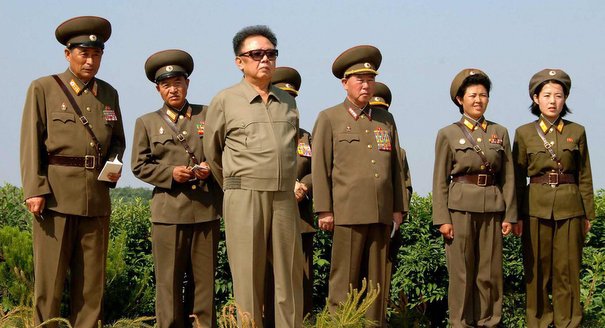
}
Source: Getty
The Obama administration would do well to take time out and think through its longer term approach to Pyongyang.
Source: Korea Times

The five countries which constitute the six-party talks with the North are disunited in how to react, so Pyongyang regards this as a cost-free opportunity to increase leverage on the U.S. and the rest.
Washington appears as frustrated as Tokyo and Seoul in being impotent to stop or sanction the launch. But, rather than spend a great deal of time wringing hands over how to respond immediately, the Obama administration would do well to take time out and think through its longer term approach to Pyongyang.
There are signs that the administration has divisions internally over whether to emphasize negotiating the dispute unilaterally and solving it directly, or continuing to approach it multilaterally.
Whether one, or the other, or both methods are adopted, the Obama Korea team should think through the end game before picking up where the Bush administration left off, frustrated and largely unsuccessful.
The North Korean leadership is generous with threats but sparing with insights into its thinking. Nonetheless, experience gives us some basis to conjecture about the North's intentions.
First, while change comes seldom to the North's elite, elections produce new counterparts regularly in democracies, and Pyongyang has learned to reset the game to enhance its inherently limited leverage with new negotiators.
Obama's arrival after an election in which he criticized Bush's Korean performance is just such an opportunity for the North. The missile test tells Obama that he must come to terms with Pyongyang.
Second, Pyongyang has been unhappy that its ambitions to be rewarded with heavy fuel oil in exchange for beginning to dismantle its nuclear plant in Yongbyon were thwarted by a dispute over verification of its past operating history, experience with highly enriched uranium, and proliferation record.
It wants to create a sense of urgency in the six-party capitals about resuming fuel oil flows and other assistance to the North by heightening a sense of threat to its neighbors.
Third, Pyongyang's leader Kim Jong-il suffered a stroke last August that apparently has not completely incapacitated him, but has set off contention over his succession arrangements, or lack of them.
Officials in Seoul and Beijing take seriously reports of divisions emerging below the surface in Pyongyang that will tend to cause the North to take hard-line policies toward the outside.
Finally, the new government in Seoul since early last year has taken a tougher line toward Pyongyang than its two predecessors.
In retaliation, the North is trying to teach the South lessons in cooperation and appeasement by raising tensions along the Demilitarized Zone (DMZ), the maritime Northern Limit Line (NLL), in the Gaeseong Industrial Complex, and by unilaterally abrogating all past agreements on denuclearization and peace keeping on the peninsula.
There may be other motivations in the mix, as well. In any event, North Korean officials are telling visitors quite bluntly what they want. These include resumed construction of the two expensive light water reactors that were suspended when the 1994 Agreed Framework on nuclear questions collapsed in 2002.
They expect extensive heavy fuel oil and humanitarian assistance, full diplomatic recognition and an end to the alleged American threat to Pyongyang's security.
In exchange they say they are prepared to resume dismantlement of their nuclear facilities, but not to hand over the ``weaponized" plutonium they extracted previously.
If agreement is not reached, they recently threatened to start reconstruction of the partially dismantled facilities and continue to build their nuclear arsenal.
More narrowly, with regard to the upcoming missile launch, Pyongyang has asserted that if the U.S. or Japan attempts to intercept the missile with ballistic missile defenses, it will consider the interception ``an act of war.''
If the issue is taken to the UNSC for action, the North will refuse to take part in the six-party talks, which have already been hibernating for eight months.
So it is time to take stock and decide what is achievable, at what cost, and in what way to deal with Pyongyang's behavior. Pyongyang will not be beaten in a ``talking tough'' contest.
China, which is increasingly focused on the potential for instability in North Korea, will be less help than it was in the aftermath of the North's nuclear test.
Beijing appears embarrassed, if that's possible, in having voted for U.N. Security Council Resolution 1718 sanctioning the test, but being unwilling to enforce it since then. This seems to be why the Chinese have gone out of their way to give validity to the spurious distinction between an illegal missile and a legal satellite launch.
U.S. Secretary of State Hillary Clinton and President Barack Obama have selected an outstanding, experienced hand to be special representative to the North in Ambassador Steven Bosworth.
As he and his colleagues try to sort out an approach to the North, they will need seriously to address the possibility, even probability, that a long, expensive negotiating process will still leave North Korea a nuclear armed state. President Obama should know the risk of ultimate failure before he approves going forward with a plan.
They need to search for new sources of outside leverage on the North, if Pyongyang's intentions to retain nuclear weapons are to be denied. They will need to be creative to find inducements as well.
Due consideration should also be given to the possibility, much criticized by advocates of concessions to Pyongyang, that the regime is on its last legs.
A third communist monarchical succession may be too much for such an isolated and impoverished state, however stern its security forces.
So some contingency planning, including with a reluctant China, international financial institutions, and the other members of the six-party talks, should be part of the review process.

Distinguished Fellow, Asia Program
Paal previously served as vice chairman of JPMorgan Chase International and as unofficial U.S. representative to Taiwan as director of the American Institute in Taiwan.
Recent Work
Douglas H. Paal


Douglas H. Paal, Tong Zhao, Chen Qi, …
Carnegie does not take institutional positions on public policy issues; the views represented herein are those of the author(s) and do not necessarily reflect the views of Carnegie, its staff, or its trustees.

Huawei pushed hard to enter the Egyptian data centers market, until the Americans made a better offer.

Angie Omar

Middle Eastern states should welcome an accelerated U.S. disengagement from their region.

Michael Young

In an interview, former ambassador Charles Freeman assesses the Trump administration’s war against Iran.
Michael Young

By failing to address Palestinian representation, the current process is bound to lead to just another temporary arrangement.

Nathan J. Brown

The armed forces champion a form of capitalism that is generating revenue, but its reliance on rent faces diminishing returns, leaving the country with massive sunk costs and deferred returns, deepening dependency on external borrowing.

Yezid Sayigh