

Paper
Adam Baczko, Gilles Dorronsoro, Arthur Quesnay
{
  "authors": [
    "Gilles Dorronsoro"
  ],
  "type": "legacyinthemedia",
  "centerAffiliationAll": "dc",
  "centers": [
    "Carnegie Endowment for International Peace"
  ],
  "collections": [],
  "englishNewsletterAll": "ctw",
  "nonEnglishNewsletterAll": "",
  "primaryCenter": "Carnegie Endowment for International Peace",
  "programAffiliation": "SAP",
  "programs": [
    "South Asia"
  ],
  "projects": [],
  "regions": [
    "North America",
    "United States",
    "South Asia",
    "Afghanistan",
    "Pakistan",
    "Western Europe"
  ],
  "topics": [
    "Security",
    "Military",
    "Foreign Policy"
  ]
}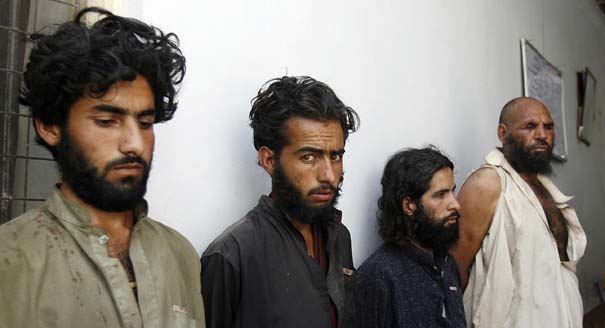
Source: Getty
The idea that success in Afghanistan requires a new focus on Pakistan is misguided. Besides providing money and counterinsurgency training to the Pakistani army, international actors are powerless to influence the state.
Source: France 24

The situation around Kabul is more complex, and there have been a few positive developments. The road to the south is more secure than it was a few months ago and the French had a tactical success in the Sarobi district in March 2009 - unfortunately an isolated win on the national grid.
Most worryingly, the Taliban are increasingly entrenched in the north of Afghanistan, once considered an insurgency-free area. Although they are still few in number, the Taliban operate efficiently in launching targeted attacks against Afghan security forces. The passivity of the international coalition forces in the north, particularly the German troops in face of this building insurgency is worrying, considering that it poses a major strategic threat to the overall success of international efforts in Afghanistan.
There are encouraging elements to be found in the Obama administration’s new strategy for Afghanistan and the surrounding region. The strategy promises more resources, more money, better reinforcements, and the promotion of a civilian surge. The newly-created position of Special Envoy to Afghanistan and Pakistan will allow for an additional dimension of international engagement in the region and redefines what the goals of the war should be.
However, when considered as a whole, this supposedly ‘new’ strategy amounts to little more than recycled policy from the late Bush years; it is a waiting strategy without any credible long-term objectives. Unfortunately, those who have so far a clear, well coordinated, and coherent strategy are the Taliban.
The idea of refocusing attention towards Pakistan is misguided. The Pakistani government has no influence in the Swat valley region and faces the constant threat of destabilisation by armed groups. Besides sending money and training to the Pakistani army to fight counterinsurgency, international actors are powerless to influence the state. It is crucial to focus immediate attention on Afghanistan; Pakistan can be negotiated with once it has been secured, and not vice-versa.
There is a role for the EU and member states in both Afghanistan and Pakistan, but current policy approaches have failed to adequately analyse the situation and devise appropriate responses. Establishing the authority of the Afghan police will bolster the state against the threat of insurgency, provide a crucial sense of security to Afghan people, and it is an area where European states can actively help. Corruption and personal bias are rampant in the judicial system in Afghanistan and any efforts to foster dialogue and cooperation between international actors and the judiciary are to be welcomed.
Ultimately, the EU and member states should focus less upon troop numbers, quotas, and aid, and should instead investigate whether the caveats of those already working on the ground in Afghanistan could be improved to allow for more robust forms of engagement in counterterrorism and reconstruction efforts.
This piece originally appeared in France 24.
Former Nonresident Scholar, South Asia Program
Dorronsoro’s research focuses on security and political development in Afghanistan. He was a professor of political science at the Sorbonne in Paris and the Institute of Political Studies of Rennes.
Recent Work
Adam Baczko, Gilles Dorronsoro, Arthur Quesnay
Gilles Dorronsoro
Carnegie does not take institutional positions on public policy issues; the views represented herein are those of the author(s) and do not necessarily reflect the views of Carnegie, its staff, or its trustees.

In an interview, Rozina Ali discusses her new book on the rise and manifestations of Islamophobia in the United States.

Michael Young

In an interview, Ian Lustick and Eli Clifton discuss their new book on why a prominent ally has so much influence in America.
Michael Young

As the U.S. stumbles in its war with Iran, we are likely to see an acceleration of its disengagement from the region.
Michael Young

Middle Eastern states should welcome an accelerated U.S. disengagement from their region.
Michael Young

In an interview, former ambassador Charles Freeman assesses the Trump administration’s war against Iran.
Michael Young