

Article
Henri J. Barkey
{
  "authors": [
    "Henri J. Barkey"
  ],
  "type": "legacyinthemedia",
  "centerAffiliationAll": "dc",
  "centers": [
    "Carnegie Endowment for International Peace"
  ],
  "collections": [],
  "englishNewsletterAll": "menaTransitions",
  "nonEnglishNewsletterAll": "",
  "primaryCenter": "Carnegie Endowment for International Peace",
  "programAffiliation": "MEP",
  "programs": [
    "Middle East"
  ],
  "projects": [],
  "regions": [
    "North America",
    "United States",
    "Middle East",
    "Türkiye",
    "Iraq"
  ],
  "topics": [
    "Political Reform",
    "Foreign Policy"
  ]
}
Source: Getty
Much of what President Obama promised in his historic speech in Cairo will take a long time to fulfill. But there is one place where his influence could be used for immediate and important results: resolving the Kurdish question in Turkey and northern Iraq.
Source: Wall Street Journal

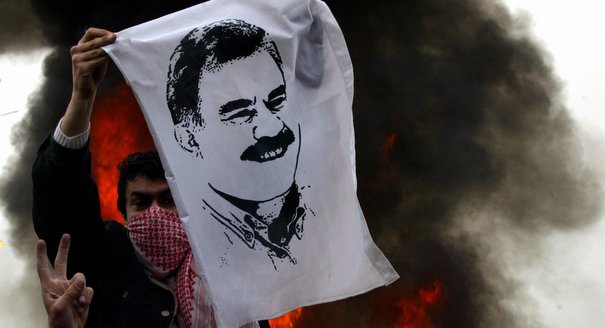
The current insurgency in Turkey is one in a long series of battles Turkish Kurds have waged against Ankara. At times violent and at times political, this struggle has always been about preserving a cultural, if not national, Kurdish identity in the face of a determined effort at eradicating it. In its current manifestation, the Kurdistan Workers' Party (PKK), has based half of its forces in the Iraqi Kurdish controlled northern Iraq, causing significant rifts between the U.S. and Turkey.
The Turks have become embroiled in Iraq by launching counter-attacks against the PKK. Ankara initially even resisted the creation of the Iraqi Kurdish Regional Government (KRG), which they saw as another step toward Kurdish independence and irredentist demands on Turkish territory. But after 25 years of fighting, 30,000 mostly Kurdish deaths, and the capture of PKK leader Abdullah Ocalan in 1999 with U.S. help, the Turkish government and military establishment realize that they have little to show for the counterinsurgency campaign and see no clear end to the bloodletting. The PKK attracts as many recruits today as it did 20 years ago.
Any effort to remove the PKK from its inaccessible strongholds in northern Iraq and ending the enmity of Turks and Kurds would bring about a modicum of stability to that area of Iraq. The more stable and secure northern Iraq is, the easier it is for the U.S. to withdraw.
Now there are signs of a possible resolution. For the first time in its 80-plus years of existence, the Turkish state is addressing the fate of its sizable Kurdish minority. Turkish President Abdullah Gul recently declared the Kurdish question to be the "country's most pressing problem" and said Turkey has "a historical opportunity to resolve it through discussions." Mr. Gul's comments have followed a renewed debate in the Turkish press, academia and politics on how to end the 20-year PKK-led Kurdish insurgency. Turkish diplomats, in a reversal, have extended a hand to Iraqi Kurds by directly engaging the KRG leadership of Masoud Barzani, someone who was often reviled in Turkish media and government. Turkish Kurds were quick to reciprocate by showing a new willingness to pressure the PKK and moderate their opposition to Turkish cross-border raids.
Turkish Kurds and the PKK too are signaling that they are ready for a compromise. The current PKK leader, for instance, in a long set of interviews with a renowned Turkish journalist said that the PKK was ready to abandon the armed struggle in exchange for a process that begins with a cessation of hostilities and discussions between Ankara and Turkish Kurdish political representatives. However, the situation is so complex that Turks and Kurds will need outside help to complete a deal. There are too many extremists on both sides who would love to scuttle this new opening. A U.S. role could be decisive.
Washington is in a strong position to help because of its positive relationships with both Turkey and the Kurds. The U.S. has demonstrated its bona fides with Ankara by extending much-needed logistical support to Turkish counterinsurgency operations, and consistently backing Turkey in international forums on the PKK issue. At the same time, the U.S. is held in high regard by Kurds everywhere for its role in their liberation from Saddam Hussein's rule in Iraq.
Thus, the U.S. can help demobilize the PKK by acting as a trusted go-between. The PKK is unlikely to give up its arms to the Turkish military, but it might to American forces which, in turn, could offer iron-clad verification that both the Turkish government and public would trust. U.S. diplomats can ensure that a few PKK leaders find refuge far from the region, and reassure Ankara that the pro-American KRG will prevent anti-Turkish insurgents who stay in Iraq from engaging in any future mischief. This way many PKK insurgents can also return home to their families and Turks can begin to discuss domestic political reforms to expand the Kurds' cultural rights without the specter of violence hanging over. Finally, the U.S. can propose the establishment of a Qualified Industrial Zone (like that of Israel and its neighbors) that would include Kurdish-inhabited southeastern Turkey and northern Iraq, to promote economic activity and strengthen the ties between Turkey and the KRG. Landlocked KRG relies on Turkey for its economic linkages with the rest of the world and oil from Kurdish-controlled fields has recently begun flowing into Turkey.
For decades, the Kurdish quagmire has impeded Turkish democratization, and weakened Ankara's relations with the U.S. and EU. Mr. Obama probably never thought much about this issue during the campaign, or even as he was crafting his Cairo speech. But it's an issue where he can score a relatively quick -- and important -- foreign policy success in the Muslim world.

Former Visiting Scholar, Middle East Program
Barkey served as a member of the U.S. State Department Policy Planning Staff, working primarily on issues related to the Middle East, the Eastern Mediterranean, and intelligence from 1998 to 2000.
Recent Work
Henri J. Barkey
Henri J. Barkey
Carnegie does not take institutional positions on public policy issues; the views represented herein are those of the author(s) and do not necessarily reflect the views of Carnegie, its staff, or its trustees.
As the U.S.-led Coalition withdraws, the Kurds’ reliance on Baghdad, and on themselves, will only increase.
Wladimir van Wilgenburg

In an interview, Ian Lustick and Eli Clifton discuss their new book on why a prominent ally has so much influence in America.

Michael Young

As the U.S. stumbles in its war with Iran, we are likely to see an acceleration of its disengagement from the region.
Michael Young
The Zaidi government’s objective to collect weapons is constrained by regional conflict, but it can take certain measures at home.
Ali Al-Mawlawi

Huawei pushed hard to enter the Egyptian data centers market, until the Americans made a better offer.

Angie Omar