

Commentary
Middle Eastern states should welcome an accelerated U.S. disengagement from their region.
Michael Young
{
  "authors": [
    "Kimberly Misher"
  ],
  "type": "other",
  "centerAffiliationAll": "dc",
  "centers": [
    "Carnegie Endowment for International Peace"
  ],
  "collections": [
    "U.S. Nuclear Policy"
  ],
  "englishNewsletterAll": "ctw",
  "nonEnglishNewsletterAll": "",
  "primaryCenter": "Carnegie Endowment for International Peace",
  "programAffiliation": "NPP",
  "programs": [
    "Nuclear Policy"
  ],
  "projects": [],
  "regions": [
    "North America",
    "United States",
    "Caucasus",
    "Russia"
  ],
  "topics": [
    "Foreign Policy",
    "Nuclear Policy",
    "Nuclear Energy"
  ]
}
Source: Getty
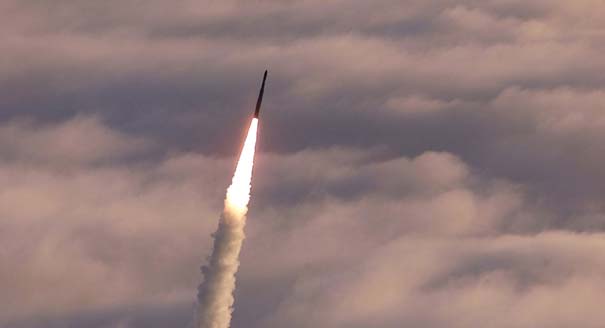
President Obama's decision to reconfigure the proposed missile shield in Eastern Europe was the right one, based on technical, financial, political, and security considerations.
Critics of President Obama’s move to reconfigure the proposed missile shield in Europe have accused the administration of kowtowing to Russia in the naïve hope of increased pressure from Moscow on Iran. In a new policy outlook, Kimberly Misher contends that the president’s decision was the right one based on technical, financial, political, and security considerations.
Key Conclusions
“The Obama administration was right to evaluate planned missile defense deployments against tough standards of feasibility, affordability, and desirability,” writes Misher. “Its decision to reconfigure European missile defenses to meet a short- and medium-range Iranian missile threat demonstrates a commitment to European defenses, not an abandonment of its allies.”
Kimberly Misher
Former Program Manager, Nuclear Policy Program
Carnegie does not take institutional positions on public policy issues; the views represented herein are those of the author(s) and do not necessarily reflect the views of Carnegie, its staff, or its trustees.

Middle Eastern states should welcome an accelerated U.S. disengagement from their region.

Michael Young

In an interview, former ambassador Charles Freeman assesses the Trump administration’s war against Iran.
Michael Young

By failing to address Palestinian representation, the current process is bound to lead to just another temporary arrangement.

Nathan J. Brown

Morocco and Algeria, each in its own way, are having to navigate the global economic fallout of the U.S.-Israeli military campaign against Iran.

Yasmine Zarhloule
Any move by the United States to make good on Trump’s suggestion that Washington persuade Damascus to confront Hezbollah militarily would have catastrophic consequences.

Kheder Khaddour