

Commentary
In Egypt’s dense cities, the disappearance of foliage has health implications and punishes daily commuters.
Angie Omar
{
  "authors": [
    "Kimberly Misher"
  ],
  "type": "other",
  "centerAffiliationAll": "dc",
  "centers": [
    "Carnegie Endowment for International Peace"
  ],
  "collections": [],
  "englishNewsletterAll": "ctw",
  "nonEnglishNewsletterAll": "",
  "primaryCenter": "Carnegie Endowment for International Peace",
  "programAffiliation": "NPP",
  "programs": [
    "Nuclear Policy"
  ],
  "projects": [],
  "regions": [
    "North Africa",
    "Egypt"
  ],
  "topics": [
    "Nuclear Policy",
    "Nuclear Energy"
  ]
}
Source: Getty
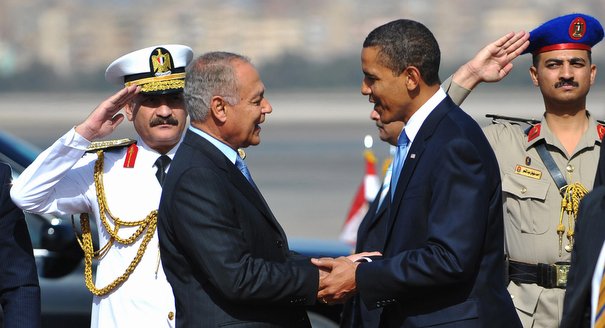
Egypt's role in preventing a nuclear arms race in the Middle East is especially urgent and the 2010 NPT Review Conference is the next best chance to advance its disarmament agenda.
Recognizing Egypt’s critical role in the Arab world, President Obama selected Cairo for a landmark speech in June. To continue to lead the Middle East and enhance regional security, Egypt should work to strengthen the nonproliferation regime. The 2010 Non-Proliferation Treaty (NPT) Review Conference is Egypt's next best chance to advance its disarmament goals, contends a new paper by Kimberly Misher.
Key Conclusions
"Egypt's role in preventing a nuclear arms race in the Middle East is especially urgent. As Iran advances its nuclear capability, Egypt increasingly faces the prospect of being politically sandwiched between two nuclear-armed states," says Misher. "By pressing for security and disarmament within the framework of the Non-Proliferation Treaty (NPT), Egypt may be able to solidify Arab perspectives on arms control and strengthen its regional leadership."
Kimberly Misher
Former Program Manager, Nuclear Policy Program
Carnegie does not take institutional positions on public policy issues; the views represented herein are those of the author(s) and do not necessarily reflect the views of Carnegie, its staff, or its trustees.

In Egypt’s dense cities, the disappearance of foliage has health implications and punishes daily commuters.

Angie Omar

Huawei pushed hard to enter the Egyptian data centers market, until the Americans made a better offer.
Angie Omar

The armed forces champion a form of capitalism that is generating revenue, but its reliance on rent faces diminishing returns, leaving the country with massive sunk costs and deferred returns, deepening dependency on external borrowing.

Yezid Sayigh
There is a disturbing structural parallel between the old global energy economy and the new green transition.
Angie Omar

This will be the region’s most representative tournament, amid broad changes in its footballing landscape.

Issam Kayssi