• Research
  • Diwan
  • About
  • Experts
Carnegie Middle East logoCarnegie lettermark logo
LebanonIran
{
  "authors": [
    "Sharon Squassoni"
  ],
  "type": "legacyinthemedia",
  "centerAffiliationAll": "dc",
  "centers": [
    "Carnegie Endowment for International Peace"
  ],
  "collections": [
    "U.S. Nuclear Policy"
  ],
  "englishNewsletterAll": "ctw",
  "nonEnglishNewsletterAll": "",
  "primaryCenter": "Carnegie Endowment for International Peace",
  "programAffiliation": "NPP",
  "programs": [
    "Nuclear Policy"
  ],
  "projects": [],
  "regions": [
    "North America",
    "United States"
  ],
  "topics": [
    "Nuclear Policy",
    "Nuclear Energy"
  ]
}
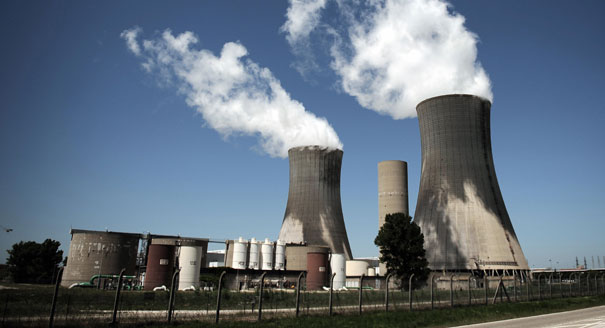
Source: Getty

In The Media

The US Nuclear Industry: Current Status and Prospects under the Obama Administration

Expectations of a nuclear energy renaissance are particularly high in the United States, but government programs to jump start new reactor construction will likely not be enough to spark more than a handful of reactors by 2015.

Link Copied
By Sharon Squassoni
Published on Nov 30, 2009

Source: CIGI Nuclear Energy Futures Paper No. 7

The US Nuclear Industry: Current Status and ProspeExpectations of a nuclear energy renaissance are particularly high in the United States, which hasn't had a new reactor order in 30 years. Government programs to jump start new reactor construction have contributed to the optimism, but these are not likely enough to spark more than a handful of reactors by 2015. Aggressive government support would be needed, including subsidies, a carbon pricing mechanism, and an acceptable waste management solution. This paper, published by the Centre for International Governance Innovation (CIGI), discusses the history, current status and prospects for US nuclear power under the Obama administration.

About the Author

Sharon Squassoni

Former Senior Associate, Nuclear Policy Program

Squassoni came to Carnegie from the Congressional Research Service. She also served for nine years in the executive branch. Her last position at the State Department was director of Policy Coordination in the Nonproliferation Bureau.

    Recent Work

  • Other
    Grading Progress on 13 Steps Toward Nuclear Disarmament

      Sharon Squassoni

  • Report
    Nuclear Energy: Rebirth or Resuscitation?

      Sharon Squassoni

Sharon Squassoni
Former Senior Associate, Nuclear Policy Program
Sharon Squassoni
Nuclear PolicyNuclear EnergyNorth AmericaUnited States

Carnegie does not take institutional positions on public policy issues; the views represented herein are those of the author(s) and do not necessarily reflect the views of Carnegie, its staff, or its trustees.

More Work from Malcolm H. Kerr Carnegie Middle East Center

  • Commentary
    Diwan
    Iran Rewrites Its War Strategy

    In an interview, Hamidreza Azizi discusses how Tehran has adapted in real time to the conflict with the United States and Israel.

      Michael Young

  • Commentary
    Diwan
    Trump’s Plan for Gaza Is Not Irrelevant. It’s Worse.

    The simple conclusion is that the scheme will bring neither peace nor prosperity, but will institutionalize devastation.

      Nathan J. Brown

  • Commentary
    Diwan
    What Does the Strait of Hormuz’s Closure Mean?

    In an interview, Roger Diwan discusses where the global economy may be going in the third week of the U.S.-Israeli war with Iran.

      Nur Arafeh

  • Commentary
    Diwan
    Tehran’s Easy Targets

    In an interview, Andrew Leber discusses the impact the U.S. and Israeli war against Iran is having on Arab Gulf states.

      Michael Young

  • Commentary
    Diwan
    The Gulf Conflict and the South Caucasus

    In an interview, Sergei Melkonian discusses Armenia’s and Azerbaijan’s careful balancing act among the United States, Israel, and Iran.

      Armenak Tokmajyan

Get more news and analysis from
Malcolm H. Kerr Carnegie Middle East Center
Carnegie Middle East logo, white
  • Research
  • Diwan
  • About
  • Experts
  • Projects
  • Events
  • Contact
  • Careers
  • Privacy
  • For Media
Get more news and analysis from
Malcolm H. Kerr Carnegie Middle East Center
© 2026 Carnegie Endowment for International Peace. All rights reserved.