

Paper
George Perkovich
{
  "authors": [
    "George Perkovich"
  ],
  "type": "legacyinthemedia",
  "centerAffiliationAll": "dc",
  "centers": [
    "Carnegie Endowment for International Peace"
  ],
  "collections": [
    "U.S. Nuclear Policy"
  ],
  "englishNewsletterAll": "ctw",
  "nonEnglishNewsletterAll": "",
  "primaryCenter": "Carnegie Endowment for International Peace",
  "programAffiliation": "NPP",
  "programs": [
    "Nuclear Policy"
  ],
  "projects": [],
  "regions": [
    "North America",
    "United States",
    "South Asia",
    "India"
  ],
  "topics": [
    "Nuclear Policy",
    "Nuclear Energy"
  ]
}
Source: Getty
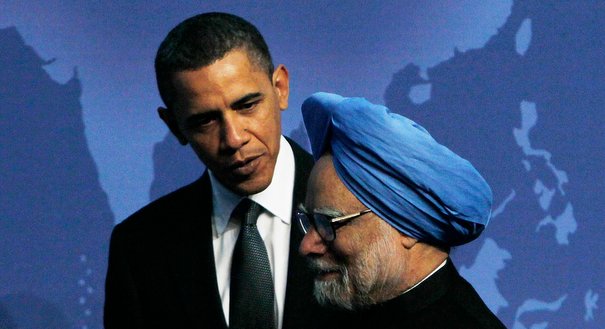
By exempting India from nonproliferation rules, all 45 members of the Nuclear Suppliers Group are complicit in the U.S.-India nuclear deal, and they should all feel compelled to cooperate to ensure that the India deal does not turn into a dangerous precedent.
Source: Daedalus

The making and enforcing of international rules is frequently quixotic. Making rules is often tedious and compromising, while their enforcement is often absent or feckless. The nuclear nonproliferation regime has suffered these afflictions. However, considering that the ambition is to regulate the most powerful technology and material known to humankind, the rules that have grown around the NPT since 1968 have been remarkably successful. The nonproliferation regime is a key structure of the nuclear order that most people in the world would rather not live without. Some wish that this nuclear order would more strongly incline toward the abolition of nuclear weapons, or would more actively promote distribution of nuclear energy. Others wish that it would concentrate more effectively on stopping proliferation. Few want the disorder that would follow a collapse of the bargains on which the current system of rules depends. Thus many observers and governments fear that the NSG-India nuclear deal is a bad portent: it may signal corrosion of the rules-based nuclear order.

Japan Chair for a World Without Nuclear Weapons, Senior Fellow
George Perkovich is the Japan Chair for a World Without Nuclear Weapons and a senior fellow in the Carnegie Endowment for International Peace’s Nuclear Policy Program. He works primarily on nuclear deterrence, nonproliferation, and disarmament issues.
Recent Work
George Perkovich
George Perkovich
Carnegie does not take institutional positions on public policy issues; the views represented herein are those of the author(s) and do not necessarily reflect the views of Carnegie, its staff, or its trustees.

In an interview, Rozina Ali discusses her new book on the rise and manifestations of Islamophobia in the United States.

Michael Young

In an interview, Ian Lustick and Eli Clifton discuss their new book on why a prominent ally has so much influence in America.
Michael Young

As the U.S. stumbles in its war with Iran, we are likely to see an acceleration of its disengagement from the region.
Michael Young

Middle Eastern states should welcome an accelerated U.S. disengagement from their region.
Michael Young

In an interview, former ambassador Charles Freeman assesses the Trump administration’s war against Iran.
Michael Young