As the Iranian regime continues to crackdown on the opposition movement, the Obama administration must consider how to deal with the looming Iranian nuclear threat without turning its back on the Iranian opposition.
FREDRICKA WHITFIELD, CNN ANCHOR: A warning to millions by the example of one. On the eve of the 31st anniversary of the Islamic Revolution, Iran's courts sentenced one person to death and eight others to prison for their alleged involvement in anti-government demonstrations late last year. Iran has already executed two suspected protesters. Ten others are appealing their death sentences. The move comes as Iran tries tamping down opposition to its government after the controversial re-election of President Mahmoud Ahmadinejad.
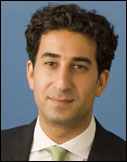
Well, given the recent protests, this year's anniversary celebrations may be very different than in years past. Also looming is the on-going nuclear issue. The U.S. again warning Iran over promises to enrich more uranium. Joining us to talk about Iran is Karim Sadjapour. He is an expert on Iran from the Carnegie Endowment for International Peace. Good to see you.
KARIM SADJAPOUR, CARNEGIE ENDOWMENT FOR INTERNATIONAL PEACE: Thank you.
WHITFIELD: So Iran says it is increasing enrichment of uranium to 20 percent. What does this mean to you? What is this country doing?
SADJAPOUR: It's concerning because Iran is essentially inching its way towards a nuclear weapons capability. I think there's still plenty of time for diplomacy but this move by Iran, I think this further erodes the trust of many in the international community that Iran's nuclear ambitions are purely peaceful.
WHITFIELD: Well, Iran has said that this is really to help in the manufacture of medical isotopes. In fact this is what Iran's ambassador to the IAEA said recently about this move.
(BEGIN VIDEO CLIP)
ALI-ASGHAR SOLTANIE, IRANIAN AMBASSADOR TO IAEA: We can make the fuel. We can increase to 20 percent in fuel fabrication, we can do it. But for nine months we have hesitated to do so because we wanted to give the opportunity for the others within the framework of IAEA to have some sort of international cooperation to open a new chapter of cooperation rather than confrontation. Now since we are disappointed, we have to choose another option, of course.
(END VIDEO CLIP)
WHITFIELD: What's your response to what the ambassador says?
SADJAPOUR: A couple of things. I think first it undermines Iran's credibility when it claims its nuclear ambitions are solely for civilian use and clandestine programs are uncovered. Second, Iran has been offered low enriched uranium, even 20 percent enriched uranium from abroad which will be far more cost efficient for them to import than to enrich domestically. It's about 10 times higher price for them to insist on enriching it domestically.
WHITFIELD: Well, what's interesting too, because the U.S. has said and Jill Dougherty was reporting this earlier, the U.S. has said that, you know, we can arrange for you, Iran, to get these medical isotopes on the open market and at the same time President Obama said, that and I'm paraphrasing, we'll be working on the next several weeks on a regime of sanctions to indicate just how isolated they are.
This sending a strong message to Iran. Might sanctions make any difference, because have we seen this country respond favorably toward sanctions before?
SADJAPOUR: Historically, Fred, sanctions don't really have a positive track record in Iran. They don't have a positive track record of either altering Iran's external policies or its internal behavior.
But I think in the aftermath of the June elections, we really reached kind of unchartered waters and many Iranians I speak to, especially Democratic activists in Tehran, argue that they wouldn't mind some very targeted sanctions against the repressive security apparatus of the regime, the Revolutionary Guards. Because the Revolutionary Guards have become at the same time a mafia of sorts.
So if you can make the Revolutionary Guards an international pariah, deprive them of the ability to sign billion dollar contracts, that would be in the interests I think of many who are agitating for democratic change.
WHITFIELD: And what are your expectations on this eve of the anniversary, once the anniversary rolls around, what kind of protests might form and what kind of repercussions would come from it?
SADJAPOUR: Fred, I've always been awed with the tremendous courage and bravery of the Iranian people because the regime always creates this atmosphere of fear and terror and yet still hundreds of thousands of people have continued to take to the streets.
And Friday is going to be the eight-month anniversary after the June elections. I think on one hand I do expect a high turnout. On the other hand, I think simply counting heads can be a misleading metric of Iranian popular opinion. I have no doubts that if people were allowed to freely assemble, you could have five, six million people line up in the city of Tehran.
WHITFIELD: Karim Sadjapour of the Carnegie Endowment for International Peace, thanks so much for your time, appreciate it.
Karim Sadjadpour is a senior fellow at the Carnegie Endowment for International Peace, where he focuses on Iran and U.S. foreign policy toward the Middle East.
Carnegie does not take institutional positions on public policy issues; the views represented herein are those of the author(s) and do not necessarily reflect the views of Carnegie, its staff, or its trustees.
More Work from Malcolm H. Kerr Carnegie Middle East Center