

In The Media
Minxin Pei
{
  "authors": [
    "Minxin Pei"
  ],
  "type": "legacyinthemedia",
  "centerAffiliationAll": "dc",
  "centers": [
    "Carnegie Endowment for International Peace"
  ],
  "collections": [],
  "englishNewsletterAll": "asia",
  "nonEnglishNewsletterAll": "",
  "primaryCenter": "Carnegie Endowment for International Peace",
  "programAffiliation": "AP",
  "programs": [
    "Asia"
  ],
  "projects": [],
  "regions": [
    "East Asia",
    "China"
  ],
  "topics": [
    "Political Reform"
  ]
}
Source: Getty
Although China's National People's Congress functions more as a political theater than a policymaking body, it still forces the ruling party to account for its actions and thus represents the best hope for future political liberalization.
Source: The Diplomat

Yet it would be a mistake to believe that the convening of the NPC each March should not be taken seriously. After all, the Chinese government expends enormous manpower and resources to ensure that the NPC’s annual sessions are flawlessly staged. The capital gets a scrubbing, the censors work overtime to ensure that no bad news or controversy spoils the occasion and the secret police haul in dissidents to prevent them from disrupting the congress.
Meanwhile, the venue of the congress, the Great Hall of the People, is a replica of Stalinist architecture that stands out as one of the most glaring incongruities between an increasingly diverse and fast-changing society and a post-totalitarian state frozen in political time. If one compares Chinese society today with three decades ago, it would be hard to find many similarities.
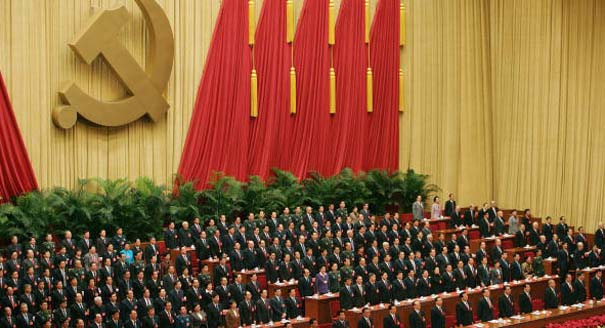
But if you dig up an old photo of the NPC annual session from 1980, you’ll be struck by the remarkable similarities. Of course, Chinese leaders today are much younger and better dressed. But the setting of the congress, with the top leaders seated on the stage and the smiling delegates holding up their hands to rubber stamp legislation proposed by the Communist Party, is essentially the same.
And, in a fundamental sense, the NPC has little connection with real Chinese society. The delegates—2,908 in all—are picked by the Chinese Communist Party. In terms of background, the NPC delegates reflect the Chinese party-state rather than society as a whole, because a majority of them—more than 70 percent—are government officials, CCP functionaries and military officers.
Things would have been quite different had the post-Mao leadership followed through on their pledge to reform China’s political system. Under Deng Xiaoping, the revival of the NPC was accorded top priority. During the 1980s, a decade now considered by Chinese liberals as the golden age of reform, the NPC made real progress in turning itself into a policymaking body with its own institutional identity and interests. However, after the Tiananmen crackdown in June 1989, the liberalizing trends were reversed and the role of the NPC in China’s policymaking process declined.
Today’s meets are a far cry from the 1980s, when the debates during the annual NPC sessions were far more lively, even raucous. Some observers might remember, for example, the highly-publicized debate in the 1988 NPC session over the proposed construction of the Three Gorges Dam, or the heated (but open) discussion on China’s Bankruptcy Law the same year.
Sadly, such openness in policymaking is hard to imagine today. In terms of law-making, the NPC has become virtually irrelevant, with not a single piece of legislation passed in the last 20 years having been proposed by an NPC delegate, even though official Chinese data boasts that each NPC annual session generates several hundred legislative proposals from its delegates (all NPC-approved legislations are proposed by the State Council, the Chinese cabinet.)
So, if the NPC is not part of the policymaking equation, why should the Communist Party bother with an elaborate staging of its annual sessions at all?
Cynics would argue that the party needs to show off its success in managing the economy and pretend that it’s a caring government that responds to the voices of the people. The NPC may not be a genuine forum for deliberating China’s policies, but its annual sessions do provide a convenient platform for senior leaders to rattle off endless statistics on economic growth and rising standards of living. As political theatre, nothing inside China is remotely comparable to the NPC. Here, you can see senior party officials adopt populist notes and angrily denounce corruption, inequality and abuse of power in front of Chinese TV cameras (though nobody expects the NPC to do anything about these vices).
Yet, behind these elaborate political rituals, there could actually be some glimmers of hope that China’s political system could begin to unfreeze itself. At least once a year, China’s ruling elites have to deliver a report card to the Chinese people. Although the Chinese people cannot, in any meaningful sense, grade the party, the NPC sessions are rare opportunities for them to put the all-mighty CCP on the defensive.
And it’s here the experience of the Soviet collapse offers some cause for optimism. Before Mikhail Gorbachev’s glasnost and perestroika, the Soviet equivalent of the Chinese NPC was nothing but a rubber stamp. But once real political reform began, the Soviet people’s congress quickly established itself as an institutional rival to the Soviet communist party. Boris Yelstin rallied the opposition to the party not on the street, but inside the halls of the Soviet people’s congress.
Obviously, such a scenario is not one the current Chinese leadership would like to see repeated in China. But in all likelihood, and to the extent that future political opening in China will be driven by CCP politicians acting like populists (what else can they be?), the NPC will almost certainly be the ideal political platform to exploit if a challenge to the party itself is mounted.
Former Adjunct Senior Associate, Asia Program
Pei is Tom and Margot Pritzker ‘72 Professor of Government and the director of the Keck Center for International and Strategic Studies at Claremont McKenna College.
Recent Work
Minxin Pei
Minxin Pei
Carnegie does not take institutional positions on public policy issues; the views represented herein are those of the author(s) and do not necessarily reflect the views of Carnegie, its staff, or its trustees.
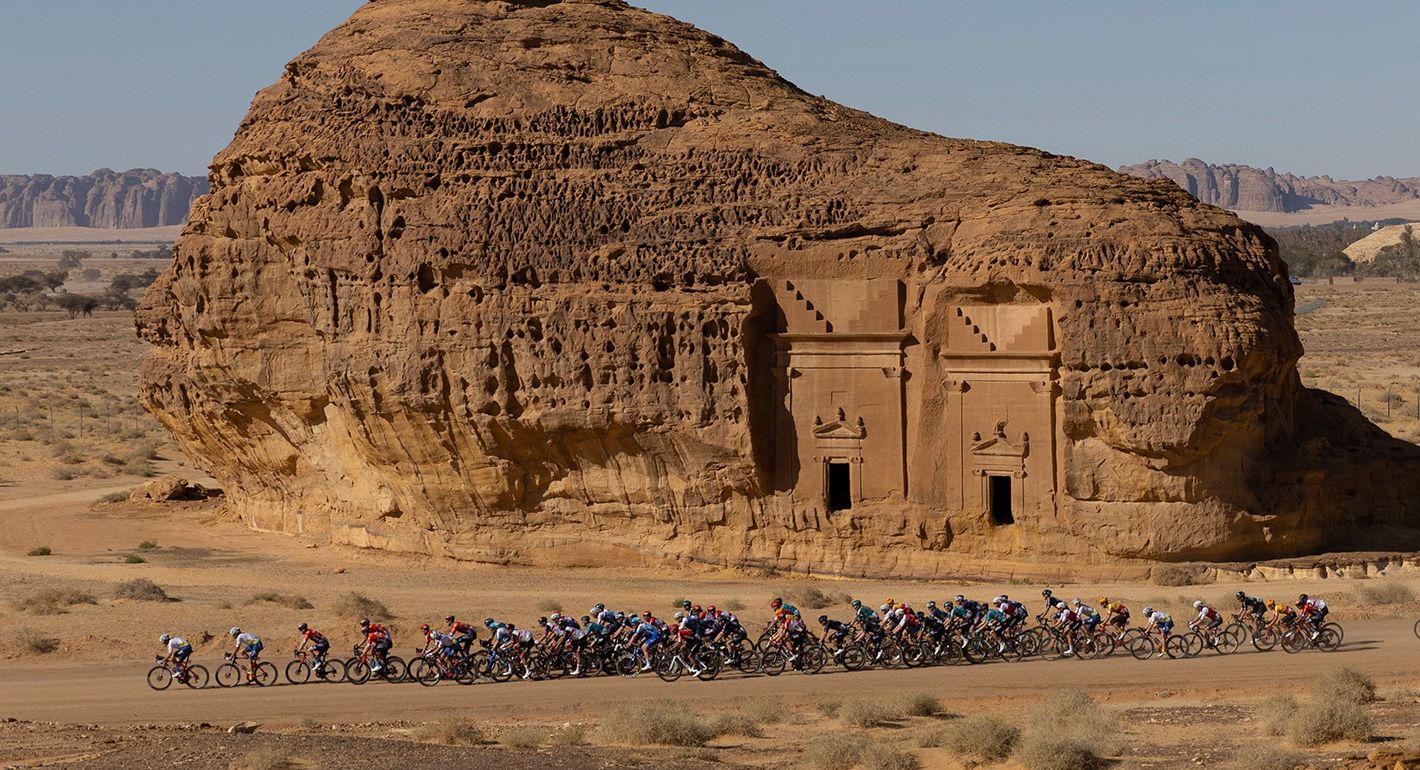
China has aligned its cooperation model with Saudi Arabia’s own priorities, most notably since the kingdom unveiled its Vision 2030. Although China announced the Belt and Road Initiative in 2013, the big push in relations happened only after the ascendance of King Salman to the throne in 2015 and Riyadh’s push for Beijing to meet Saudi needs.

Hesham Alghannam
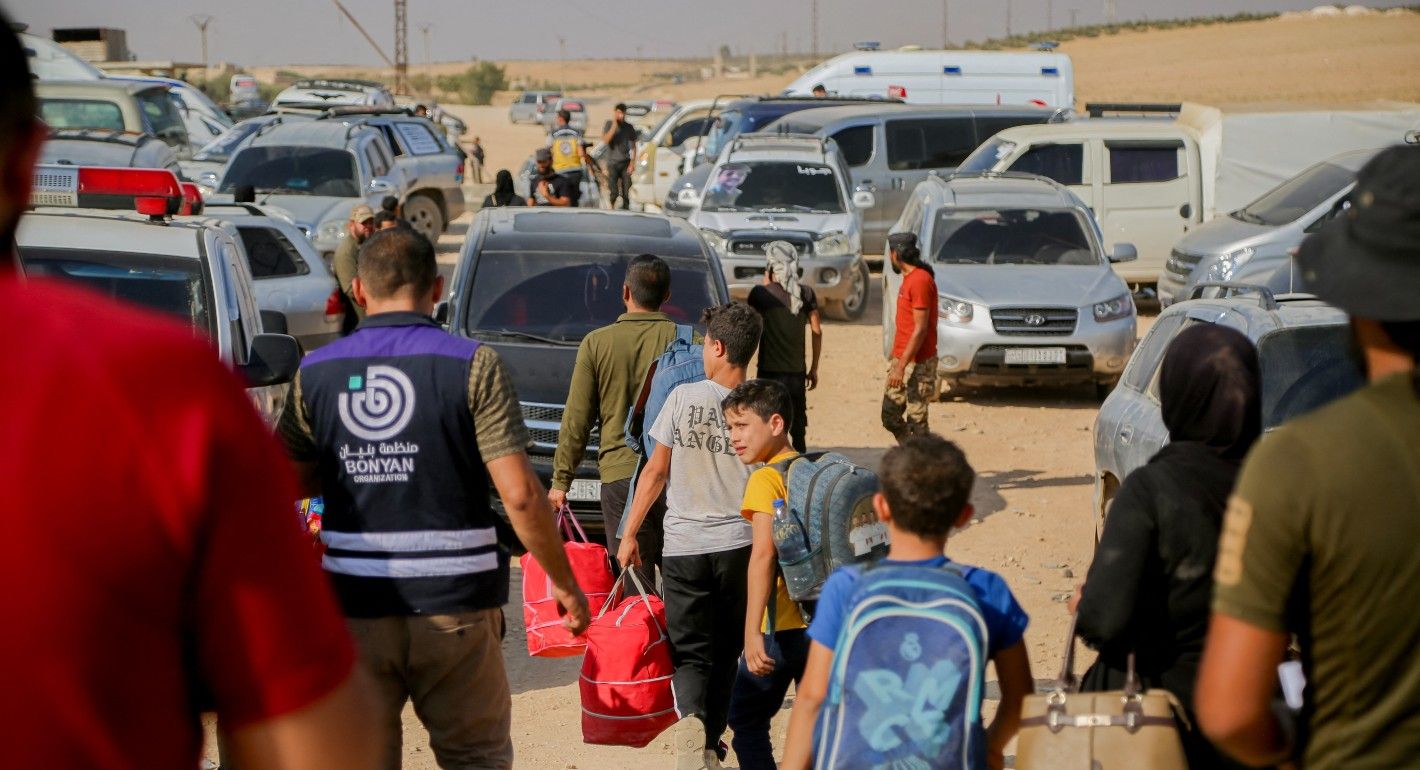
A humanitarian crisis in Lebanon deepens, and Syrian refugees face a perilous choice: remain in a war-torn environment or return to Syria where they risk encountering significant dangers and discrimination. There are significant challenges and risks to their search for safety in Syria.
Haid Haid
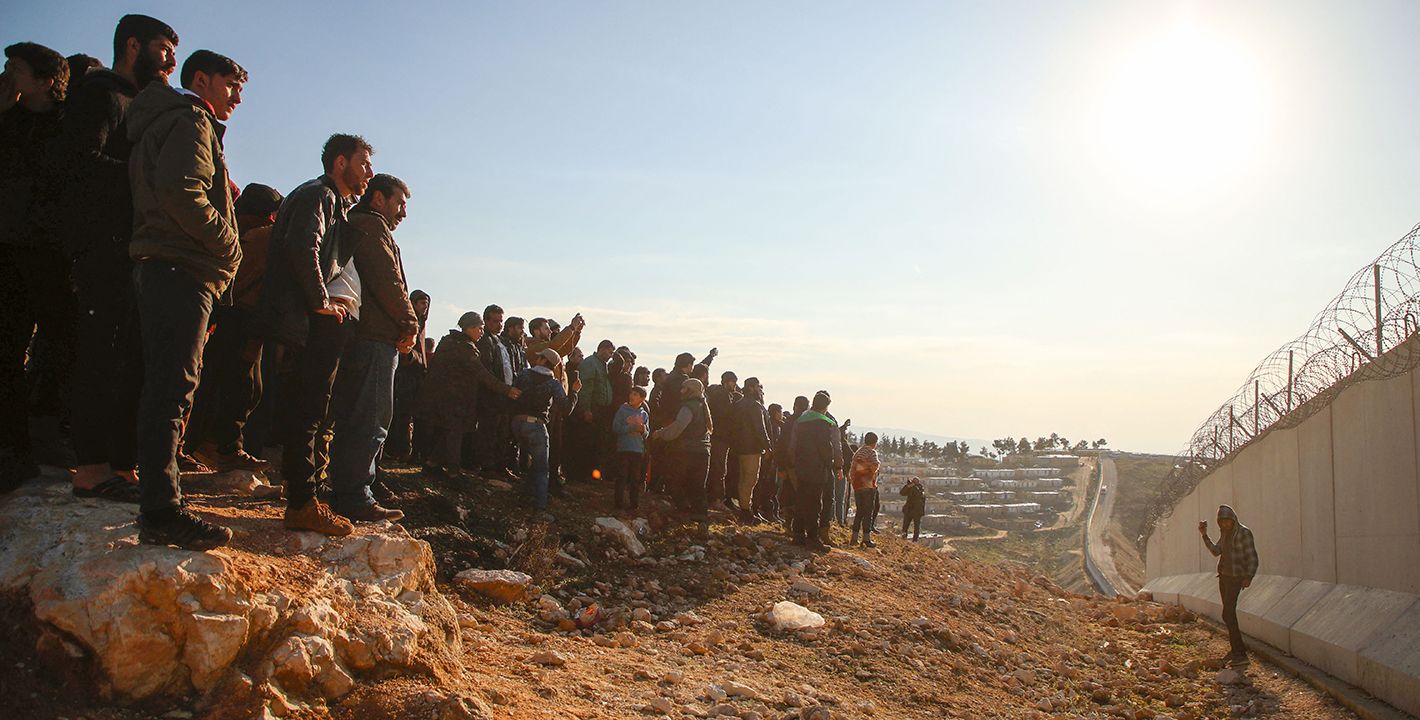
In Syria’s border regions, changes in demographics, economics, and security mean that an inter-Syrian peace process will require consensus among main regional powers that Syria must remain united, that no one side can be victorious, and that perennial instability threatens the region.

Kheder Khaddour, Armenak Tokmajyan
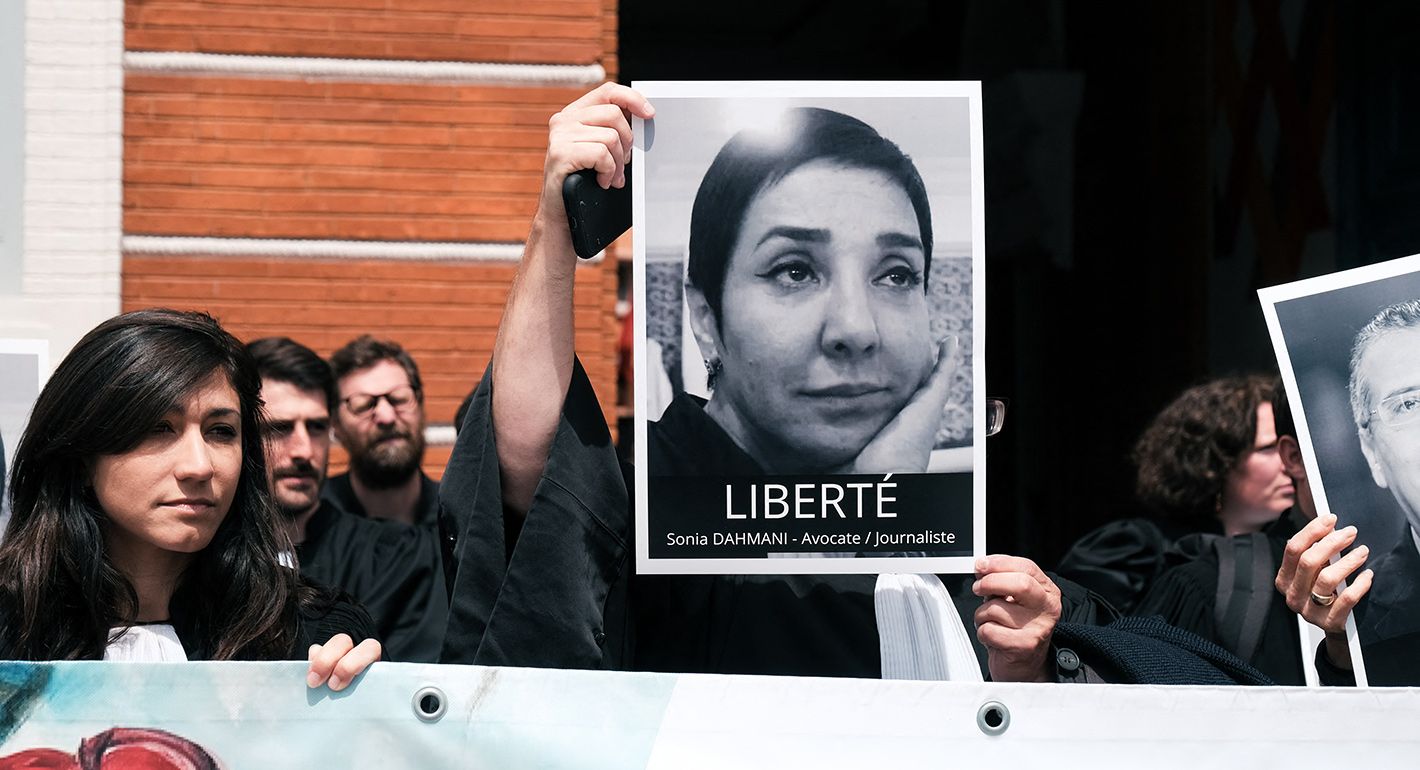
For many in the society, the post-Ben Ali years were mainly about successive economic crises and political instability.
Jasmine Khelil

The Gulf Cooperation Council has shifted its energy export focus to Asia, particularly India and China. This is part of a broader shift as GCC members look to expand their geopolitical alliances away from the West.

Alexandre Kateb