

Paper
David Burwell
{
  "authors": [
    "David Burwell"
  ],
  "type": "legacyinthemedia",
  "centerAffiliationAll": "dc",
  "centers": [
    "Carnegie Endowment for International Peace",
    "Carnegie Europe"
  ],
  "collections": [],
  "englishNewsletterAll": "ctw",
  "nonEnglishNewsletterAll": "",
  "primaryCenter": "Carnegie Endowment for International Peace",
  "programAffiliation": "SCP",
  "programs": [
    "Sustainability, Climate, and Geopolitics"
  ],
  "projects": [],
  "regions": [
    "North America",
    "United States"
  ],
  "topics": [
    "Climate Change"
  ]
}
Source: Getty
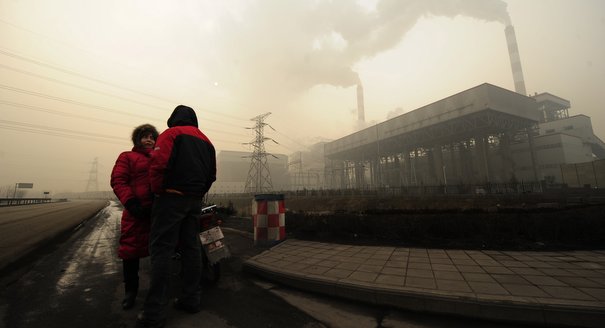
A carbon fee would discourage carbon emissions, encourage the transition to low-carbon fuels, and provide revenue to finance America's transition to a new world order of clean energy.
Source: The Hill

A carbon tax is not a gas tax. Carbon is an element. Gasoline is a fuel. Fuel can be produced with very low — or high — carbon content. The purpose of a carbon tax is to discourage carbon emissions and encourage the transition to low-carbon fuels. The purpose of a gas tax is to finance transportation. A carbon tax has the added benefit of backing out of oil. Over $300 billion of what we pay for oil each year goes overseas to corporations owned by countries, many of which don’t like us very much. And we borrow from other countries to pay them. While good arguments can be made for both gas and carbon taxes, they should not be conflated.
It is true that carbon taxes can have the co-benefit of financing transportation — something the present gas tax does not do. Gas taxes, paid into sequestered trust funds, are supposed to cover the costs of our federal transportation programs. Yet, over the 17 years since the last gas tax increase, inflation has cut its buying power by over 40 percent. The result is that we (1) spend more on transportation than we raise; (2) waste much of what we spend through formula grants to states untethered to goals or performance measures; (3) defer maintenance to build bridges to nowhere; and (4) don’t pay for the externalized costs of our oil dependence. That carbon taxes can help address these issues is an argument for, not against, such taxes.
Carbon taxes also come in many forms. Congestion pricing, emissions-based tolling, transitioning to a vehicle-miles-traveled (VMT) fee, elimination of fossil fuel and employer-provided free parking subsidies, pay-as-you-drive insurance, etc., are all ways to impose a direct or indirect fee on transportation carbon. But the most transparent, most policy-based, and most fiscally responsible way to do so is a direct fee on the carbon content of transportation fuels.
The opportunity to apply this fee is before us. The new energy and climate proposal expected to be announced Monday by Sens. John Kerry (D-Mass.), Lindsey Graham (R-S.C.) and Joe Lieberman (I-Conn.) includes a tax on carbon-based fuels, with revenues either rebated to consumers or used to pay down the deficit (called the “return or reduce” proposal). One simple addition is needed: Use revenues slated for deficit reduction to underwrite the cost of green transportation already paid from the deficit. This will fundamentally reform our transportation programs to be more energy efficient while putting transportation finance back on a pay-as-you-go basis.
From a deficit reduction standpoint it makes no difference whether reductions come from paying more taxes or from offsetting costs through the general fund (the deficit). According to the Center for Clean Air Policy an initial carbon price of $10 per ton would yield about $16 billion in revenues and increase from there. We have plenty of deficit-funded green transport programs to absorb these revenues, including transit, bicycle and pedestrian programs; travel demand management; rail (passenger and freight); programs designed to reduce the carbon footprint of development; commuter choice programs, etc. Each of these expenditures, if paid out of carbon fees, would directly reduce the deficit.
The politics work as well. States, transit agencies, and local governments need the transportation revenues that carbon taxes will provide. Reformers will get the changes they seek as transportation programs are restructured to accelerate the transition to the new energy economy. Automobile manufacturers will get the fuel price point they need to assure a market for plug-in hybrids and electric vehicles. Energy security hawks will see oil imports drop. And the deficit hawks will see borrowing reduced as transportation finance returns to its traditional principle of pay-as-you-go. Most importantly, America wins as the thorny problems of transportation finance, deficit reduction, climate protection and energy security are untangled from mutual checkmate to mutual support
The 20th century was the American Century due to our willingness to act boldly and accomplish big things. One big thing was building the Interstate system, which was financed by a tax on carbon-based fuels. Carbon fees can again finance our continued leadership in the new world order of clean energy.
Yet the average tax on carbon-based fuels in Europe is between $4 amd $5 per gallon. In Uganda and Uruguay, not wealthy nations, it is $2 a gallon. In the United States it is 42 cents, federal and state combined. If we intend to stay on the train of global leadership, we have to buy a ticket.
Former Nonresident Senior Fellow, Energy and Climate Program
Burwell focused on the intersection between energy, transportation, and climate issues, as well as policies and practice reforms to reduce global dependence on fossil fuels.
Recent Work
David Burwell
David Burwell
Carnegie does not take institutional positions on public policy issues; the views represented herein are those of the author(s) and do not necessarily reflect the views of Carnegie, its staff, or its trustees.

In an interview, Rozina Ali discusses her new book on the rise and manifestations of Islamophobia in the United States.

Michael Young

In an interview, Ian Lustick and Eli Clifton discuss their new book on why a prominent ally has so much influence in America.
Michael Young

As the U.S. stumbles in its war with Iran, we are likely to see an acceleration of its disengagement from the region.
Michael Young

Middle Eastern states should welcome an accelerated U.S. disengagement from their region.
Michael Young

In an interview, former ambassador Charles Freeman assesses the Trump administration’s war against Iran.
Michael Young