

Commentary
Michael Pettis
{
  "authors": [
    "Michael Pettis"
  ],
  "type": "legacyinthemedia",
  "centerAffiliationAll": "dc",
  "centers": [
    "Carnegie Endowment for International Peace",
    "Carnegie Europe"
  ],
  "collections": [],
  "englishNewsletterAll": "asia",
  "nonEnglishNewsletterAll": "",
  "primaryCenter": "Carnegie Endowment for International Peace",
  "programAffiliation": "AP",
  "programs": [
    "Asia"
  ],
  "projects": [],
  "regions": [
    "North America",
    "United States",
    "East Asia",
    "China",
    "Asia"
  ],
  "topics": [
    "Economy",
    "Trade"
  ]
}
Source: Getty
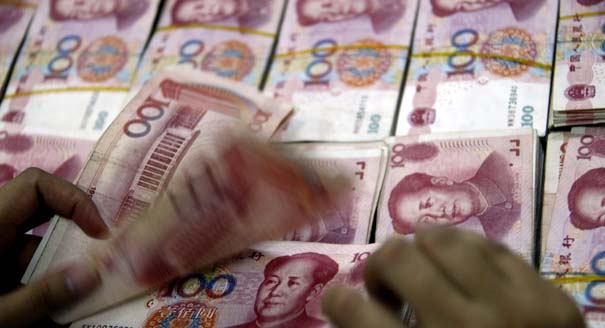
Chinese production continues to rise faster than domestic consumption, and even if China allows the renminbi to appreciate against the dollar, a rising trade surplus could lead to another increase in tensions.
Source: The New York Times

If the renminbi appreciates while real interest rates decline, as currently seems to be happening, the positive impact of a rising renminbi can be more than easily offset by the lower cost of capital for manufacturers. In this case we could easily see a rising renminbi coincide with a rising trade surplus, much as we saw from July 2005 onwards, when a rising renminbi and declining real interest rates, along with a vibrant U.S. consumer financing market, saw a surge in China’s trade surplus.
The recent thaw in trade tensions is likely to be very temporary. Ultimately what drives trade conflict is when the trade surplus country cannot adjust quickly, while high unemployment in the trade deficit country creates impatience for rapid change. China needs several years to make what will be a difficult adjustment toward a more balanced economy, but with high unemployment in the U.S. likely to persist for several more years, it is not clear that the U.S. will be willing to wait.

Nonresident Senior Fellow, Carnegie China
Michael Pettis is a nonresident senior fellow at the Carnegie Endowment for International Peace. An expert on China’s economy, Pettis is professor of finance at Peking University’s Guanghua School of Management, where he specializes in Chinese financial markets.
Recent Work
Michael Pettis
Michael Pettis
Carnegie does not take institutional positions on public policy issues; the views represented herein are those of the author(s) and do not necessarily reflect the views of Carnegie, its staff, or its trustees.

In an interview, Ian Lustick and Eli Clifton discuss their new book on why a prominent ally has so much influence in America.

Michael Young

As the U.S. stumbles in its war with Iran, we are likely to see an acceleration of its disengagement from the region.
Michael Young

Huawei pushed hard to enter the Egyptian data centers market, until the Americans made a better offer.

Angie Omar

Middle Eastern states should welcome an accelerated U.S. disengagement from their region.
Michael Young

In an interview, former ambassador Charles Freeman assesses the Trump administration’s war against Iran.
Michael Young