

Commentary
- +2
Memduh Karakullukçu, Dmitri Trenin, Ümit Pamir, …
{
  "authors": [
    "Adnan Vatansever"
  ],
  "type": "legacyinthemedia",
  "centerAffiliationAll": "dc",
  "centers": [
    "Carnegie Endowment for International Peace",
    "Carnegie Russia Eurasia Center"
  ],
  "collections": [],
  "englishNewsletterAll": "ctw",
  "nonEnglishNewsletterAll": "",
  "primaryCenter": "Carnegie Endowment for International Peace",
  "programAffiliation": "SCP",
  "programs": [
    "Sustainability, Climate, and Geopolitics"
  ],
  "projects": [],
  "regions": [
    "Middle East",
    "Türkiye",
    "Caucasus",
    "Azerbaijan",
    "North America"
  ],
  "topics": [
    "Climate Change"
  ]
}
Source: Getty
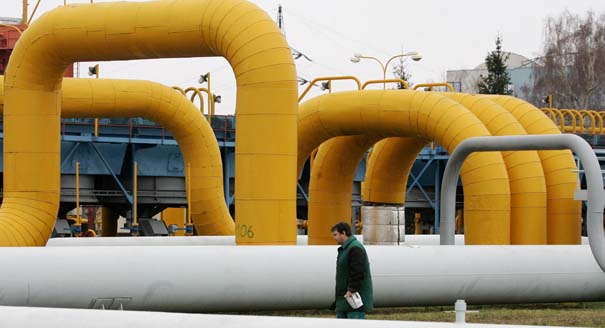
Although Azerbaijan and Turkey have reached an agreement to supply natural gas to Turkey, the Nabucco pipeline project still faces many challenges.
Source: News.Az

Azerbaijan and Turkey have signed a package of agreements on gas supplies to Turkey. How would you comment on this agreement?
The failure to reach an agreement was a major problem in the past two years. So, this must be good news for both sides.
The Nabucco Gas Pipeline consortium has welcomed the agreements signed by Azerbaijan and Turkey on terms for the transit of gas via Turkey to Europe. Do you think that all problems about Nabucco project will be solved?
The disagreements on the details of gas contracts with Azerbaijan was a major obstacle. So, this is a major positive step. But, there are several problems remaining. First, the relations between Ankara and Baku may experience new tensions, if Ankara decides to renew its "rapprochement" with Armenia. Currently, its prospects have been left unclear. Second, realizing Nabucco requires much more efforts than a gas deal between Turkey and Azerbaijan. Questions about filling the full capacity of the pipeline need to be resolved. Also parties will need to work on the details of sales agreements between suppliers and buyers.
Russian Prime-minister Putin commenting this agreement said that there is no competition between the Azerbaijani and Russian supplies to Turkey. Is it really so or Russia may worry about enhancing of Azerbaijan’s role as a gas supplier?
Nabucco and Russian gas are competing for the same market - Europe/Turkey, and demand growth in both markets has become uncertain. One may probably say that there is "space" for both players in these markets, but only in the longer-run. In the short and medium-term, they will compete for the same market.
What consequences could be after Turkey’s decision to freeze energy cooperation with Israel?
It will hardly have any significant consequences. This is because the economic viability of the proposed projects was highly questionable. Moreover, Putin has also indicated that Israel might be able to develop its own gas reserves that will deem the gas export projects via Turkey unnecessary.
Do you think that political and energy problems between Turkey and Israel may harm Azerbaijan, the main Turkish partner in energy delivers to the world market?
Not really, as Turkey hopes to maintain its transit role for Azerbaijani oil and gas.
Former Senior Associate, Energy and Climate Program
Vatansever was a senior associate in the Energy and Climate Program where he specializes in the energy sectors of the former Soviet republics and Eastern Europe.
Recent Work
Memduh Karakullukçu, Dmitri Trenin, Ümit Pamir, …
Adnan Vatansever, Анна Корппоо
Carnegie does not take institutional positions on public policy issues; the views represented herein are those of the author(s) and do not necessarily reflect the views of Carnegie, its staff, or its trustees.

Huawei pushed hard to enter the Egyptian data centers market, until the Americans made a better offer.

Angie Omar

The accord represents a pivotal moment in the region to avert a security vacuum in the Gulf.


Azeema Cheema, Mohanad Hage Ali

In an interview, Jason Burke discusses his sweeping account of the “revolutionists” who so shaped the 1970s and early 1980s.

Michael Young

There is a disturbing structural parallel between the old global energy economy and the new green transition.
Angie Omar
This will be the region’s most representative tournament, amid broad changes in its footballing landscape.

Issam Kayssi