

Article
Henri J. Barkey
{
  "authors": [
    "Henri J. Barkey"
  ],
  "type": "questionAnswer",
  "centerAffiliationAll": "dc",
  "centers": [
    "Carnegie Endowment for International Peace",
    "Malcolm H. Kerr Carnegie Middle East Center"
  ],
  "collections": [],
  "englishNewsletterAll": "menaTransitions",
  "nonEnglishNewsletterAll": "",
  "primaryCenter": "Carnegie Endowment for International Peace",
  "programAffiliation": "MEP",
  "programs": [
    "Middle East"
  ],
  "projects": [],
  "regions": [
    "Middle East",
    "Israel",
    "Türkiye",
    "Palestine",
    "Levant"
  ],
  "topics": [
    "Security"
  ]
}
Source: Getty
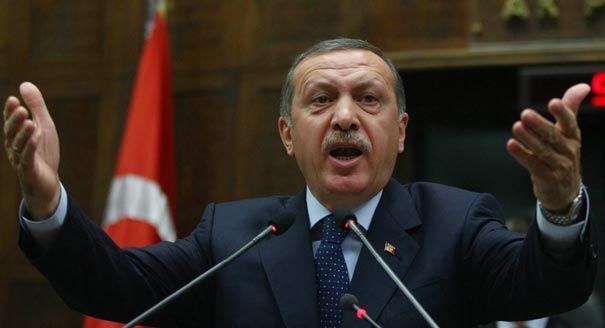
The recent flotilla incident is the culmination of a steep decline in Israeli-Turkish relations that started with the Gaza war in 2008 and 2009.
The recent flotilla incident is the culmination of a steep decline in Israeli-Turkish relations that started with the Gaza war in 2008 and 2009. In a video Q&A, Henri J. Barkey looks at Turkey’s response to the raid and the impact on Turkey relations with United States and Israel. Barkey warns that it will be very hard to restore the relationship. "As long as the AKP government is in power in Turkey, and they will be in power for a long time, the relationship with Israel will be hostile."
Barkey answers:

Former Visiting Scholar, Middle East Program
Barkey served as a member of the U.S. State Department Policy Planning Staff, working primarily on issues related to the Middle East, the Eastern Mediterranean, and intelligence from 1998 to 2000.
Recent Work
Henri J. Barkey
Henri J. Barkey

The accord represents a pivotal moment in the region to avert a security vacuum in the Gulf.


Azeema Cheema, Mohanad Hage Ali

In an interview, Jason Burke discusses his sweeping account of the “revolutionists” who so shaped the 1970s and early 1980s.

Michael Young

By failing to address Palestinian representation, the current process is bound to lead to just another temporary arrangement.

Nathan J. Brown

Morocco and Algeria, each in its own way, are having to navigate the global economic fallout of the U.S.-Israeli military campaign against Iran.

Yasmine Zarhloule
There is a disturbing structural parallel between the old global energy economy and the new green transition.

Angie Omar