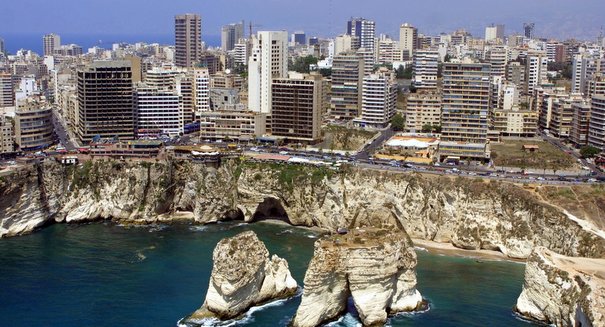
The possibility that Lebanon might benefit from exploiting massive off-shore natural resources in the eastern Mediterranean has provoked a debate about establishing a sovereign wealth fund to manage the accumulated revenues.
A Lebanon Fund: What We Should KnowThe possibility that Lebanon might benefit from exploiting massive natural resources that exist off shore in the eastern Mediterranean has provoked a debate about establishing a sovereign wealth fund (SWF) to manage the accumulated revenues.
If Lebanon chooses to do so, it would follow the example of an increasing number of countries storing their national wealth in a SWF. In recent years, a host of SWFs have been established by governments across the world, either on the back of burgeoning commodity incomes, trade imbalances, or the necessity to cover future pension liabilities facing aging populations.
SWFs today have become one of the world’s most important instruments of investment, together managing around $3 trillion in assets. The largest of them have become household names in the world of international finance, such as the Abu Dhabi Investment Authority (ADIA), the Kuwait Investment Authority (KIA), the Norwegian Government Pension Fund, the Chinese Investment Corporation, or GIC and Temasek from Singapore.
The proliferation of SWFs allows countries seeking to set up a sovereign fund, such as Lebanon, to benefit from best practices and avoid pitfalls. It would be beneficial to have a closer look at those 26 SWFs, which in the summer of 2008 developed the Generally Accepted Principles and Practices for Sovereign Wealth Funds (GAPP), also known as Santiago Principles for guidance. These 26 SWFs committed to implement the Santiago Principles, thereby setting an industry-wide accepted benchmark in theory and practice with regards to legal framework, objectives, and coordination over macroeconomic policies; the institutional framework and governance structure; and the investment and risk management framework of SWFs.
A comparative assessment of the performance of the 26 signatories to the Santiago Principles reveal that SWFs vary tremendously with regard to a number of issues.
One is transparency. Many SWFs, in particular those from emerging economies, have failed to develop appropriate standards that would allow their domestic constituents to understand where the nation’s wealth comes from, what is done with it, and where it goes. Little information is given about the funding arrangements of the fund, the investment management practices, and the withdrawal policy.
Second, is the relationship between the owner, in other words the political leadership of a country that ultimately supervises the fund, and the operational fund management.
The Santiago Principles take great care to put considerable distance between owner and operational management. The owner is limited to setting the objectives of the fund, appointing the members of the governing body, and to exercising oversight over the fund’s operations. The governing body or bodies of the SWF sets the strategy and policies aimed at achieving the SWF’s objectives and is ultimately responsible for the SWF’s performance.
The operational management of the SWF, in turn, should implement the SWF’s strategies in an independent manner and in accordance with clearly defined responsibilities. Most SWFs covered by the Santiago Principles are linked to the Finance Ministry as the political authority supervising the fund. The ministry is ultimately accountable to the representative body of the people, the Parliament. Only in very few cases, such as in Azerbaijan or Singapore, does the president play a more than symbolic role in supervision of the fund.
Operational management is mainly carried out by the Central Bank or a specifically dedicated investment company, wholly owned by the government. In turn, the operational management might decide to outsource fund management functions. ADIA for example outsources up to 80 percent of its assets to outside managers.
Third is the objective of the SWFs. Most commodity based funds have adopted the principle to stretch the benefits of their country’s wealth in natural resources across multiple generations by transforming natural resource assets into financial assets. Their withdrawal policies indicate more precisely who the beneficiaries of the funds revenues are.
Canada’s Alberta Heritage Savings Trust Fund, for example, each year spends its net income on Alberta’s priorities, such as education, health care and infrastructure. A number of funds use their resources to support meeting future pension liabilities, such as Chile’s Pension Reserve Fund, Russia’s National Wealth Fund, or Norway’s Government Pension Fund. Others seek to cushion their economies against the volatilities of global commodity markets, such as the Russian Reserve Fund or the Chilean Economic and Social Stability Fund. Yet others such as the Qatar Investment Authority seek to diversify their national economies away from commodities by acquiring strategic stakes in foreign industrial assets that they believe are important to accomplish their objectives.
These are just a few issues policymakers in Lebanon will be confronted with when discussing setting up a SWF for the country. Time is on their side however, as they can build on the experiences of other countries in finding the right formula to manage their nation’s wealth.
Behrendt is an expert in global issues, international negotiations, conflict resolution, and corporate strategy. He previously served at the World Economic Forum in various management positions.
Carnegie does not take institutional positions on public policy issues; the views represented herein are those of the author(s) and do not necessarily reflect the views of Carnegie, its staff, or its trustees.
More Work from Malcolm H. Kerr Carnegie Middle East Center
The armed forces champion a form of capitalism that is generating revenue, but its reliance on rent faces diminishing returns, leaving the country with massive sunk costs and deferred returns, deepening dependency on external borrowing.
Any move by the United States to make good on Trump’s suggestion that Washington persuade Damascus to confront Hezbollah militarily would have catastrophic consequences.