• Research
  • Diwan
  • About
  • Experts
Carnegie Middle East logoCarnegie lettermark logo
PalestineSyria
{
  "authors": [
    "Francis Fukuyama"
  ],
  "type": "legacyinthemedia",
  "centerAffiliationAll": "",
  "centers": [
    "Carnegie Endowment for International Peace",
    "Malcolm H. Kerr Carnegie Middle East Center"
  ],
  "collections": [
    "Arab Awakening"
  ],
  "englishNewsletterAll": "",
  "nonEnglishNewsletterAll": "",
  "primaryCenter": "Carnegie Endowment for International Peace",
  "programAffiliation": "",
  "programs": [],
  "projects": [],
  "regions": [
    "North Africa",
    "Egypt",
    "Tunisia",
    "Gulf",
    "Levant",
    "Maghreb"
  ],
  "topics": [
    "Political Reform"
  ]
}
Source: Getty

In The Media

Liberals Had Better Get Organized

While recent events in Tunisia and in Egypt demonstrate that Arabs are not a cultural exception to the broad desire for freedom around the world, building democracy will require the creation of organized political parties.

Link Copied
By Francis Fukuyama
Published on Feb 2, 2011

Source: Wall Street Journal

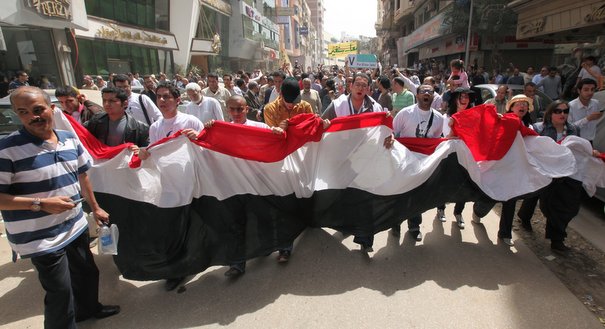
Liberals Had Better Get OrganizedRecent events first in Tunisia and now in Egypt demonstrate that there is no Arab cultural exception to the broad desire for freedom around the world.

The act of self-immolation that set off these dramatic events was that of a Tunisian vegetable seller who had his cart repeatedly confiscated by the government and then was slapped and insulted by a policewoman when he went to complain. People want political rights because they want their governments to treat them with dignity, a wish that obviously reverberates throughout the Arab world.
 
The revolt does not seem to be driven by the poor, the marginalized or the religious, but by the middle-class—technologically savvy Tunisians and Egyptians who don't have opportunities for meaningful work or political participation. They want to join the rest of the world and not cut themselves off from it.
 
But why is the Arab world coming so late to a democracy party that Latin Americans, Eastern Europeans, Asians and Africans first started attending 20 years ago? Part of the answer is the deliberate strategy that authoritarian leaders like Hosni Mubarak have pursued—of gutting liberal opposition and permitting the Islamist Muslim Brotherhood to operate just enough to scare the United States and other Western backers.
 
This strategy worked on a series of American administrations that paid lip service to the need for democracy but were never willing to push their ally, for fear of empowering the Islamist opposition. Those chickens are now coming home to roost.
 
If Mr. Mubarak indeed leaves office and there is a clean break with his regime—meaning that longtime aides like Omar Suleiman, now the vice president, leave power too—then Egyptians' central task will be the unglamorous one of institution-building.
 
Democracy does not magically spring to life once the dictator is gone, or even after the first free and fair election has taken place. The color revolutions in Georgia, Ukraine and Kyrgystan, as well as the U.S. interventions in Afghanistan and Iraq, invariably disappointed their hopeful early backers by not producing effective democratic governance.
 
Facebook and Twitter are great at mobilizing flash mobs to bring down tyrants, but they are less useful in building political parties, forming coalitions, negotiating political programs or making officials honest.
 
At present, the best-organized forces in Egypt are the military and the Muslim Brotherhood. Egyptians who want a free and democratic future had better get busy organizing themselves if those groups are not to inherit the future.

About the Author

Francis Fukuyama

Nonresident Scholar, Democracy, Conflict, and Governance Program

Francis Fukuyama is a nonresident scholar in Carnegie’s Democracy, Conflict, and Governance Program, where his research focuses on democratization and international political economy.

Francis Fukuyama
Nonresident Scholar, Democracy, Conflict, and Governance Program
Francis Fukuyama
Political ReformNorth AfricaEgyptTunisiaGulfLevantMaghreb

Carnegie does not take institutional positions on public policy issues; the views represented herein are those of the author(s) and do not necessarily reflect the views of Carnegie, its staff, or its trustees.

More Work from Malcolm H. Kerr Carnegie Middle East Center

  • Commentary
    Diwan
    Axis of Resistance or Suicide?

    As Iran defends its interests in the region and its regime’s survival, it may push Hezbollah into the abyss.

      Michael Young

  • Commentary
    Diwan
    When Football Is More Than Football

    The recent African Cup of Nations tournament in Morocco touched on issues that largely transcended the sport.

      Issam Kayssi, Yasmine Zarhloule

  • GCC foreign minister meeting in Kuwait City on June 2, 2025
    Article
    Can the Gulf Cooperation Council Transcend Its Divisions?

    Without structural reform, the organization, which is racked by internal rivalries, risks sliding into irrelevance.

      Hesham Alghannam

  • Commentary
    Diwan
    Kurdish Nationalism Rears its Head in Syria

    A recent offensive by Damascus and the Kurds’ abandonment by Arab allies have left a sense of betrayal.

      Wladimir van Wilgenburg

  • Commentary
    Diwan
    All Eyes on Southern Syria

    The government’s gains in the northwest will have an echo nationally, but will they alter Israeli calculations?

      Armenak Tokmajyan

Get more news and analysis from
Malcolm H. Kerr Carnegie Middle East Center
Carnegie Middle East logo, white
  • Research
  • Diwan
  • About
  • Experts
  • Projects
  • Events
  • Contact
  • Careers
  • Privacy
  • For Media
Get more news and analysis from
Malcolm H. Kerr Carnegie Middle East Center
© 2026 Carnegie Endowment for International Peace. All rights reserved.