

Commentary
Jamie Kwong, Toby Dalton
{
  "authors": [
    "Toby Dalton"
  ],
  "type": "legacyinthemedia",
  "centerAffiliationAll": "dc",
  "centers": [
    "Carnegie Endowment for International Peace"
  ],
  "collections": [
    "U.S. Nuclear Policy"
  ],
  "englishNewsletterAll": "ctw",
  "nonEnglishNewsletterAll": "",
  "primaryCenter": "Carnegie Endowment for International Peace",
  "programAffiliation": "NPP",
  "programs": [
    "Nuclear Policy"
  ],
  "projects": [],
  "regions": [
    "North America",
    "United States",
    "East Asia",
    "Japan"
  ],
  "topics": [
    "Nuclear Policy",
    "Nuclear Energy"
  ]
}
Source: Getty
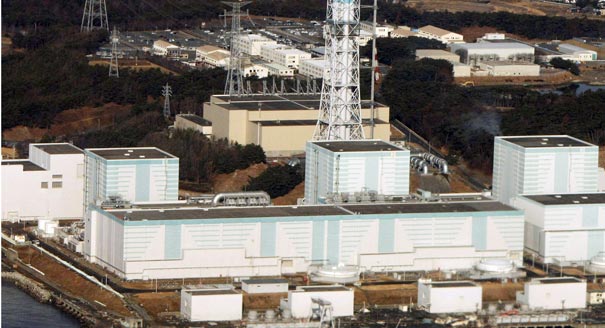
As the U.S. government expands its efforts to trim the federal budget, the devastation and global fears caused by Japan’s nuclear disaster clearly demonstrate the importance of continued funding for nuclear security.
Source: Hill

Though the specter of a global nuclear catastrophe will remain in the public consciousness for years to come, the more surprising reality is how few serious nuclear accidents have occurred relative to how widely nuclear reactors and nuclear warheads have been deployed worldwide.
In the case of Japan, casualties from the earthquake and tsunami will be exponentially greater than those caused by radiation exposure. But we have been lucky. There have been numerous near misses, ranging from a reactor criticality incident in Japan and radiation leaks in India to the U.S. B-52 bomber accident that resulted in the release — but thankfully not detonation — of four nuclear bombs over Palomares, Spain, in 1966.
Continued good fortune is not something policymakers should count on, and it is certainly no substitute for sound and forward-looking nuclear policy.
While reactor safety has returned to the forefront of nuclear concerns, efforts to promote stronger security of nuclear assets worldwide are equally if not more critical. As bad as the Fukushima disaster is, imagine the consequences for public confidence if it had been caused by terrorists rather than nature. Nuclear industry may yet recover from this latest setback, but a future nuclear incident involving terrorism would in all probability be the final nail in the coffin of the recently nascent nuclear renaissance.
The April 2010 Nuclear Security Summit in Washington brought attention to this issue at the highest levels of the 47 governments represented. A second summit will be held next year in Korea. The commitments contained in the summit communiqués are important, but the really critical work is done away from the limelight.
The promotion of sound practices globally falls on the shoulders of a few nuclear security programs managed by the departments of Defense, Energy and State. Through these programs, U.S. experts have trained and equipped counterparts in nearly 100 countries to account for, control and protect nuclear materials at their source and in transit; to detect and interdict attempts to smuggle nuclear materials and technologies, and to develop and implement effective nuclear export controls. These programs also coordinate and sponsor joint exercises through efforts such as the Global Initiative to Combat Nuclear Terrorism.
The probability of nuclear terrorism, like any nuclear accident, is very, very low. But the consequences would be extremely grave. The absence to date of terrorist use of nuclear materials or even sabotage of a nuclear reactor does not prove that U.S. efforts have reduced that probability to zero. Fukushima has raised concerns about whether nuclear power is safe for the world, but the more demanding question is whether the world is safe enough for nuclear power. In this context, nuclear security programs such as these will continue to be vital and are deserving of continued, bipartisan congressional support.
The administration has requested $1.9 billion in fiscal year 2012 for nuclear security programs, including those activities mentioned above. This is an increase of nearly $200 million over the FY 2010-enacted levels, but about $100 million less than the FY11 request. Assessed in the context of an accident like Fukushima, however, this total is a fraction of the remediation costs (early estimates suggest tens of billions of dollars) and a very small percentage of total economic losses (in the hundreds of billions). Considering the potential economic, not to mention the physical and psychological, consequences of a terrorist attack in a major U.S. city involving nuclear materials, the annual price tag for these nuclear security programs is relatively trivial.
If nuclear power is not perceived by the public as safe and secure, no amount of political or financial support will lead to growth in nuclear electricity production. In times of tight budgets, there are tradeoffs to be made. In light of the devastation and global fears caused by Japan’s nuclear disaster, however, nuclear security is one priority that should not be compromised.

Senior Fellow and Co-director, Nuclear Policy Program
Toby Dalton is a senior fellow and co-director of the Nuclear Policy Program at the Carnegie Endowment. An expert on nonproliferation and nuclear energy, his work addresses regional security challenges and the evolution of the global nuclear order.
Recent Work

Jamie Kwong, Toby Dalton

Ariel (Eli) Levite, Toby Dalton
Carnegie does not take institutional positions on public policy issues; the views represented herein are those of the author(s) and do not necessarily reflect the views of Carnegie, its staff, or its trustees.

In an interview, Rozina Ali discusses her new book on the rise and manifestations of Islamophobia in the United States.

Michael Young

In an interview, Ian Lustick and Eli Clifton discuss their new book on why a prominent ally has so much influence in America.
Michael Young

As the U.S. stumbles in its war with Iran, we are likely to see an acceleration of its disengagement from the region.
Michael Young

Middle Eastern states should welcome an accelerated U.S. disengagement from their region.
Michael Young

In an interview, former ambassador Charles Freeman assesses the Trump administration’s war against Iran.
Michael Young