

Commentary
Despite its flop at the box office, the film raises important questions for the climate community to answer.
Leonardo Martinez-Diaz
{
  "authors": [
    "Jamie Kwong",
    "Toby Dalton"
  ],
  "type": "commentary",
  "blog": "Emissary",
  "centerAffiliationAll": "dc",
  "centers": [
    "Carnegie Endowment for International Peace"
  ],
  "englishNewsletterAll": "ctw",
  "nonEnglishNewsletterAll": "",
  "primaryCenter": "Carnegie Endowment for International Peace",
  "programAffiliation": "NPP",
  "programs": [
    "Nuclear Policy"
  ],
  "topics": [
    "Nuclear Policy",
    "Energy",
    "Nuclear Energy"
  ]
}
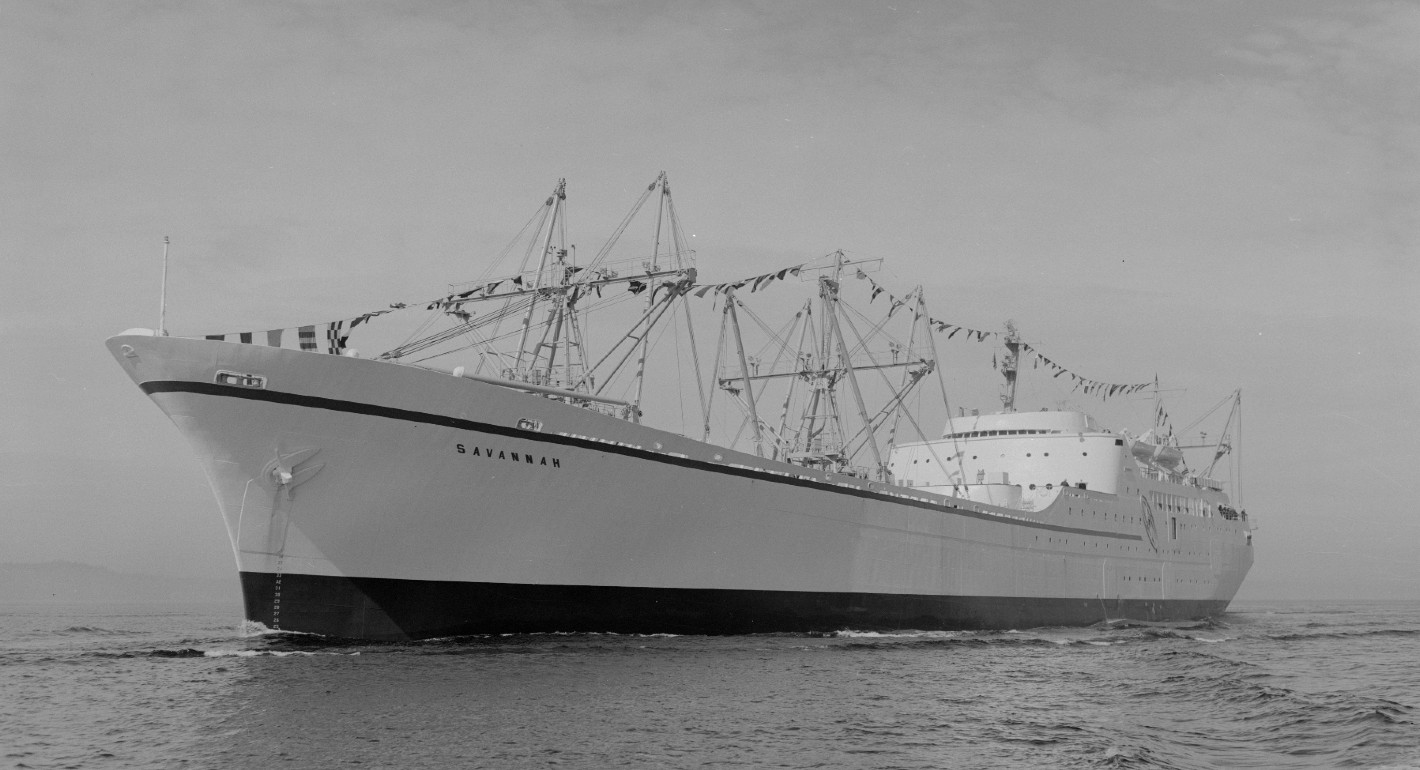
Source: Getty
Nuclear and maritime communities face a long and challenging journey to deploy commercial nuclear applications at sea.
Governments, international organizations, and industry stakeholders are descending on Washington this week for the official launch of ATLAS. The aptly named initiative—Atomic Technologies Licensed for Applications at Sea—aims to create a road map for the deployment of nuclear power in commercial maritime applications, namely floating nuclear power plants (FNPPs) and nuclear-propelled commercial ships. It comes as the shipping industry and other sectors are becoming increasingly interested in the economic, environmental, and technological potential of nuclear energy to usher in a more cost-effective, more fuel-efficient, and more sustainable era of maritime operations.
But before any new nuclear vessels hit the water, the stakeholders now gathering for the ATLAS launch will need to face several epic challenges, including reconciling nuclear and maritime regulatory and governance systems, establishing a clear division of responsibilities among relevant parties, and achieving commercial viability. Long-term success in this journey will require perseverance and careful navigation.
The commercial deployment of nuclear power at sea is inherently both a nuclear and a maritime issue. Yet nuclear and maritime communities continue to prioritize their own interests, perspectives, and approaches, based on their distinct legal mandates, histories, and traditions. In particular, the International Atomic Energy Agency (IAEA) and the International Maritime Organization (IMO) continue to see the issue through the lenses of their own missions. This jurisdictional tension poses a significant challenge for establishing a coordinated system of governance for FNPPs and commercial nuclear-powered ships that effectively accounts for and meets requirements from both sectors. (ATLAS is an IAEA initiative; with luck, it will facilitate narrowing of differences with the IMO rather than exacerbate them.)
Nuclear and maritime communities continue to prioritize their own interests, perspectives, and approaches.
Stakeholders will need to find ways to reconcile the two governance traditions, and doing that will require give and take from both sides. One potentially productive way to proceed could be an exchange aimed at accounting for both sectors’ must-haves. The nuclear community, for instance, might prioritize robust safeguards, while the maritime community might seek efficient licensing. While not perfectly aligned with either sector’s preferred approach, such an exchange could lead to an acceptable, pragmatic way forward. Short of developing consensus around a common vision, a next-best approach could be to find agreement on outcomes that both communities want to avoid.
The sheer number of stakeholders involved, however, makes this an even more gargantuan task. In addition to the IAEA and IMO, relevant actors include multiple entities within national governments seeking to manufacture, export, deploy, or host FNPPs or commercial nuclear-powered ships; regulators, operators, shipbuilders, and port authorities; insurance providers; classification societies; financiers; and legal firms. Each group comes with its own interests and priorities, all of which are relevant to different elements and stages of nuclear power deployed at sea. The number of contending perspectives and interests makes it extremely difficult to establish clear regulatory, legal, technical, financial, and social responsibilities—let alone accountability for upholding those responsibilities.
Here, a key risk lies at the convergence of different stakeholders’ responsibilities, where a lack of sufficient coordination and oversight, or unwillingness to work toward a common governance framework, could mean that key issues may fall through the gaps. Mitigating this risk will require a clear definition of what each stakeholder is responsible for; when that responsibility is relevant, and at which stage of these maritime nuclear deployments; and how each stakeholder will deliver on that role. A layered system that intentionally designs some overlap across stakeholders and seeks to incentivize accountability, protect against the abrogation of responsibilities, and create predictability would help to de-risk both FNPPs and nuclear-propelled ships.
Industry actors will only proceed in adopting nuclear power applications when—and if—they achieve commercial viability.
But even with coordinated governance frameworks in place and stakeholder responsibilities firmly established, industry actors will only proceed in adopting nuclear power applications when—and if—they achieve commercial viability. With significant upfront costs, these nuclear applications must be deemed a worthwhile investment carrying manageable risks. For nuclear-powered shipping, for instance, this means delivering on promised benefits such as the ability to transport more cargo faster and farther compared to diesel-powered ships and to save significantly on refueling costs over a vessel’s lifetime. These ships and FNPPs will also need to be delivered at scale. While that will inevitably require first-of-a-kind deployments (or perhaps second, in the case of FNPPs) to work out design, licensing, and other kinks, the industry will only widely deploy these applications once they are so-called nth-of-a-kind technologies—proven models that can be produced quickly, efficiently, and with regulatory ease. Much more work is needed in all these regards.
Moreover, requirements that drive up costs or extend timelines to deployment may dissuade wide-scale adoption. Of course, commercial applications of nuclear technology at sea will invariably come with significant regulatory, licensing, and other requirements. But industry stakeholders will seek to minimize those obligations where possible to limit their economic impact. For example, requirements for multiple licensed nuclear operators on board a nuclear-powered ship could be seen by industry as too onerous and costly. Serious efforts will thus be needed to find the right balance between ensuring sufficient and effective regulation and fostering economic viability.
Those gathering at the ATLAS launch should recognize the long and difficult journey ahead of them. While this odyssey may be free of lotus-eaters or Cyclopes, there will nevertheless be no easy solutions. Facing these trials head on will be critical to establishing a viable road map for the safe, responsible, and successful use of nuclear power at sea.
This commentary is part of a larger Carnegie project aimed at promoting responsible stewardship of nuclear technology at sea. In addition to our collections on naval nuclear propulsion and its intersection with nuclear-weapon-free zones, a further project publication on commercial maritime applications is forthcoming.

Fellow, Nuclear Policy Program
Jamie Kwong is a fellow in the Nuclear Policy Program at the Carnegie Endowment for International Peace.

Senior Fellow and Co-director, Nuclear Policy Program
Toby Dalton is a senior fellow and co-director of the Nuclear Policy Program at the Carnegie Endowment. An expert on nonproliferation and nuclear energy, his work addresses regional security challenges and the evolution of the global nuclear order.
Carnegie does not take institutional positions on public policy issues; the views represented herein are those of the author(s) and do not necessarily reflect the views of Carnegie, its staff, or its trustees.

Despite its flop at the box office, the film raises important questions for the climate community to answer.

Leonardo Martinez-Diaz

Congress should ask tough questions about the agreement’s more unique features and whether they advance U.S. interests or compromise them.

Jane Darby Menton

The conflict has sent economic and political shock waves through a country with no representation at the negotiating table—and Kenya is not alone.

Georgia Schaefer-Brown, Jane Munga

Over the past decade, China has moved from marginal player to major producer of all things batteries. The United States, Europe, and others are aiming to balance the market.

Milo McBride
Despite the agreement’s uncertainty, it’s still a significant development in regional and nuclear policy.

Andrew Leber, Jane Darby Menton