

Commentary
Jamie Kwong, Toby Dalton
{
  "authors": [
    "Toby Dalton"
  ],
  "type": "legacyinthemedia",
  "centerAffiliationAll": "dc",
  "centers": [
    "Carnegie Endowment for International Peace"
  ],
  "collections": [],
  "englishNewsletterAll": "ctw",
  "nonEnglishNewsletterAll": "",
  "primaryCenter": "Carnegie Endowment for International Peace",
  "programAffiliation": "NPP",
  "programs": [
    "Nuclear Policy"
  ],
  "projects": [],
  "regions": [
    "South Asia",
    "Pakistan"
  ],
  "topics": [
    "Nuclear Policy",
    "Nuclear Energy"
  ]
}
Source: Getty
Pakistan faces a serious energy deficit. While Islamabad is focused on the long-term goal of developing nuclear energy, available electricity could be increased in the short-term by rehabilitating Pakistan’s electricity distribution system and replacing aging turbines.
Source: Foreign Policy

According to figures from the Pakistan Electric Power Company, Pakistan's current electricity supply deficit averages about 3000 megawatts, which is probably enough to power about 3 million households in Pakistan. This shortage exacts a high toll on the Pakistani people, especially in the summer when temperatures can exceed 115 degrees. The more insidious effects of Pakistan's electric shortfalls are economic. The country now finds itself in a catch 22: the moribund economy limits large investments in new or rehabilitated electric generation capacity, but won't register dramatic improvement without more and consistent electricity.
Pakistan's ability to meet its energy requirements indigenously is constrained by the relatively poor quality of its coal, the feast or famine nature of hydroelectric power in a monsoon climate, and the political and security challenges of tapping effectively the natural gas reserves in its Baluchistan province. Pakistan will have to seek energy security through a mixture of external and internal sources. As one element of a long-term plan for energy diversity, nuclear power makes sense for Pakistan, as it does for many states. But it is an ineffective solution to Pakistan's current energy needs.
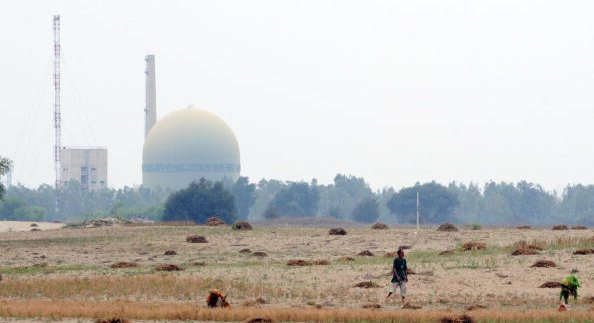
With the addition of 300 MW from Chashma 2 to the grid, Pakistan now produces 725 MW of nuclear power, about 2.4 percent of the total current installed capacity. It plans to increase nuclear power production and to that end Pakistan signed commercial contracts with China in 2009 for the construction of two more nuclear power plants at the Chashma site. Each of these reactors will produce 325 MW, but they will not be completed until about 2016 at the earliest. It is notable that the reactors are first-generation designs that lack modern safety features and which China no longer builds for its own country. Pakistan thus far has a very good nuclear safety record, but a newer design would be preferable.
If Pakistan's electricity deficit remains relatively constant over this period -- a reasonable assumption given Pakistan's stagnant economy -- these two additional reactors will only close the supply deficit by about 20 percent. To make a real and significant dent in Pakistan's electricity shortage, much larger reactors would be needed. Pakistan's pursuit of nuclear power on this scale, however, currently faces very tough political and economic obstacles that make it highly impractical.
The toughest hurdles are political. The United States, France, the United Kingdom and others have balked at Pakistani requests for nuclear cooperation and for good reason. First, such an agreement would be difficult, if not impossible, to sell to their legislatures. In the United States, for instance, there is no support in Congress for a nuclear agreement with Pakistan given negative perceptions of its proliferation record, growing nuclear arsenal, and alleged ongoing support for militant groups that are killing American soldiers in Afghanistan. The killing of Osama bin Laden may make this worse to the extent Americans suspect complicity by Pakistani security forces. Second, an agreement would require the Nuclear Suppliers Group (NSG) -- the 46 nuclear supplier states which set guidelines for nuclear trade -- to make an exemption to its rules, which currently do not permit nuclear supply to Pakistan. (China's 2009 nuclear contract with Pakistan is inconsistent with these rules, but China argues the reactors are grandfathered in because the original contract dates from before China joined the NSG. It is the only state currently willing to sell nuclear reactors to Pakistan.) The NSG participating governments barely supported the U.S. effort to garner an exemption for India, despite the high interest of nuclear industry in India's market. A similar effort for Pakistan, which would have to pass by consensus, at this point would have little support except from China.
The economic arguments against nuclear power are well rehearsed -- nuclear reactors are incomparably expensive, take many years to build, and must operate for long periods in order to be cost effective. Pakistan is short on both cash and credit. Its 2009 agreement with China featured a discounted price for the two reactors and very concessionary loan rates, terms that no other state or reactor vendor would offer. In fact, it is doubtful that any major reactor vendors would be willing to accept the political and financial risk involved with a project in Pakistan given its internal insecurity. And there is simply not a large enough nuclear market in Pakistan to interest international nuclear industries enough to lobby their governments to cut a deal.
Notwithstanding the need for more immediate options to increase electricity generation, Pakistan remains committed to nuclear power. In fact, Fukushima did not seem to dampen Pakistani officials' enthusiasm, despite safety concerns. They remain on the offensive in search of a civil nuclear deal analogous to that negotiated with India beginning in 2005. Given the obstacles to more widespread adoption of nuclear power described here, Pakistan's interest has to be considered more symbolic than practical.
Rehabilitating Pakistan's electricity transmission and distribution system to increase efficiency, rebuilding or replacing aging turbines at hydroelectric facilities, and incorporating combined cycle systems into new thermal electric generation facilities are three ways in which Pakistan could increase available electricity in the short run. None of these potential options face as thorny political and economic obstacles as nuclear power. And, given global nuclear safety concerns, all of these options are inherently safer than operating more first-generation nuclear reactors. Symbolic investment in nuclear power does not serve the near-term interests of the Pakistani people. They need power; it does not have to be nuclear.

Senior Fellow and Co-director, Nuclear Policy Program
Toby Dalton is a senior fellow and co-director of the Nuclear Policy Program at the Carnegie Endowment. An expert on nonproliferation and nuclear energy, his work addresses regional security challenges and the evolution of the global nuclear order.
Recent Work

Jamie Kwong, Toby Dalton

Ariel (Eli) Levite, Toby Dalton
Carnegie does not take institutional positions on public policy issues; the views represented herein are those of the author(s) and do not necessarily reflect the views of Carnegie, its staff, or its trustees.

In an interview, Marc Lynch discusses his new book decrying the post-1990 U.S.-dominated order in the Middle East.

Michael Young
The interaction of national armed forces and private business sectors offers a useful lens for viewing the politics of numerous countries of the so-called Global South. A rising trend of military political activism—often accompanied by military commercial activity—underlines the importance of drivers and outcomes in these relationships.


Yezid Sayigh, Hamza Meddeb
Scholars from Carnegie’s global network comment on how the ongoing conflict between Israelis and Palestinians is affecting their areas of interest, and what the implications of this may be.



Maha Yahya, Rosa Balfour, Judy Dempsey, …

Both events also could force Washington to rethink or revive its Middle East partnerships.

Karim Sadjadpour
Disagreement between the United States and Iran over a revived nuclear accord may anchor volatile competition.

George Perkovich