

Research
- +10
Rosa Balfour, Frances Z. Brown, Yasmine Farouk, …
{
  "authors": [
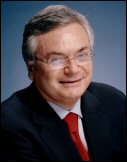
    "Moisés Naím"
  ],
  "type": "legacyinthemedia",
  "centerAffiliationAll": "dc",
  "centers": [
    "Carnegie Endowment for International Peace"
  ],
  "collections": [],
  "englishNewsletterAll": "democracy",
  "nonEnglishNewsletterAll": "",
  "primaryCenter": "Carnegie Endowment for International Peace",
  "programAffiliation": "DCG",
  "programs": [
    "Democracy, Conflict, and Governance"
  ],
  "projects": [],
  "regions": [
    "North America",
    "South America"
  ],
  "topics": [
    "Political Reform",
    "Democracy"
  ]
}
Source: Getty
Although President Hugo Chavez has returned from his stay in Cuba, Venezuelans are beginning to consider what the country might look like without having Chavez at the center of the national life.
Source: PBS NewsHour
For more, we turn to Moises Naim, a senior associate at the Carnegie Endowment for International Peace and a former trade minister of Venezuela, and Michael Shifter, president of the Inter-American Dialogue, a Washington-based think tank.
Well, gentlemen, with much fanfare, Hugo Chavez said, this is the beginning of the return. How does this recent information, Moises, on the health of Hugo Chavez affect his political future?
MOISES NAIM, Carnegie Endowment for International Peace: His health is still a state secret. We know he's very sick. We don't know exactly where or the extent of his illness.
But what that has done is unleash a fierce battle for succession among his supporters. And for the first time in the -- for 12, 15 years that he has been in power, millions of Venezuelans are beginning to think what would the country look like without having Chavez at the center of the national -- of national life.
RAY SUAREZ: Michael, does it necessarily strengthen the hand of the opposition?
MICHAEL SHIFTER, Inter-American Dialogue: Well, it depends, clearly, how sick Chavez actually is. And we really don't know that. There hasn't been any information disclosed.
What we do know is he still has charisma. He still has his following. His -- the faithful are still behind him. But we don't know how ill he is, and we don't know how the opposition is going to respond. The opposition has been united in the last few years, but they are a very heterogeneous grouping. And the risk of splitting and fracturing is high.
So, we will have to see how they respond to this, whether they focus on their electoral strategy, focus on coming up with solutions to the country's problems, because the country is not in good shape, and trying to take advantage of this -- of this moment, and also how they respond to Chavez's illness. I think that's going to be a real test for the opposition.
RAY SUAREZ: Well, as you mentioned, there is an election next year.
Moises, do they have to be careful? And it seems like they are choosing their words very carefully, from the reporting from -- coming from Caracas, not to spark a backlash.
MOISES NAIM: The main political story in Venezuela today is not about the opposition. The main story is about what's happening inside the different factions of the supporters of President Chavez. There are different groups. They are divided by ideology, by economic interests, by links with Cuba or with the military or the oil industry.
And all of these are very powerful forces and very powerful players. Chavez, in a very -- it's very usual for these kinds of leaders not to create strong successors or structures that can replace them. And that's the situation. Without Chavez, there will be a vacuum and there will be a lot of jockeying for power in trying to replace him.
And, in that, the different groups will try to find new alliances and build new coalitions, perhaps including some in the opposition. So, it is a very fluid political situation, where we can be surprised by seeing alliances that were unthinkable when President Chavez was the main factor in the country.
RAY SUAREZ: Michael, you agree with that?
MICHAEL SHIFTER: Well, I think President Chavez is still -- he did rush back from Cuba because I think he was worried that his government was weakening. And the longer he stayed away, the higher risk there was of these kinds of power struggles going on within his own movement.
I think the Cubans, who, after all, rely on a -- on Venezuela for 100,000 barrels of oil a day, are very worried about any change in government. There's no guarantee whoever follows Chavez will continue to provide that to Cuba. And I think they wanted him to get back to Venezuela to show that he's in charge, he's in control.
He's still connected to the -- to most -- to a lot of Venezuelans who still believe in him. And, as a result, for the time being at least -- how long it will last, we will see, but for the time being, I think some of these power struggles have been at least put off or contained for the moment. I think there was real concern on Chavez's part that it would get out of control, which is why he came back. It was almost an emergency return to Venezuela.
RAY SUAREZ: So, Moises, Cubans as interested as Hugo Chavez himself in not having a long recuperation in Havana?
MOISES NAIM: Well, yes. And as Michael said, it is in their interest that Chavez continues at the helm of the country.
Cuba is critically dependent on the supplies of oil and money and all the resources from Venezuela. Cuba is undergoing a very, very difficult transition. That transition will become impossible without Venezuela's support. And it is in the national interest of the Cuban government to ensure that Chavez or someone that thinks like him sustains their relationship in the same way, which is massive support on the part of Venezuela.
RAY SUAREZ: What about Venezuela itself? Upon his return, what's the state of the country?
MOISES NAIM: That is a very controversial question, of course, because supporters will tell you that there is great progress in a variety of areas.
But the objective numbers are that Venezuela is -- has the highest inflation in the world, that is one of the few countries in Latin America, perhaps the only country, together with Haiti, that does not -- is not posting economic growth.
At the time in which oil is reaching record levels and generating record levels of income to the country, there are shortages even of gasoline and electricity and food staples. Crime is soaring. And so there's a long list of things that are not working in the country, and the paradox of a country in which a president that has had a blank check, both financially and politically, after 12 years, what it has -- what he has to show is a very, very weakened society, a highly polarized society, and, as I said, a very bad economic situation.
RAY SUAREZ: So, Michael, that's domestic. What about internationally? Hugo Chavez has worked very hard over the last dozen years to cultivate friends and sympathetic regimes in the region. How has he done on that score?
MICHAEL SHIFTER: Well, he's losing a lot of influence.
And I think the domestic problems, which are getting worse and worse, are related to his capacity to exercise influence in the region. He's not a model. He doesn't have enough money to distribute to his friends. And the best evidence of this, Ray, is that the president-elect of Peru, who is coming to Washington today, Ollanta Humala, five years ago identified with Chavez, received money from Chavez.
And now, in this regent election, he distanced himself very deliberately, very consciously from Chavez, because Chavez's brand of leftism really doesn't work. It relies on one person, arbitrary rule to make all the decisions. And we're seeing the results.
And, so, if you want to be successful politically in the region, don't embrace this leader and this regime, because this type of governance is not viable.
RAY SUAREZ: Well, given what Michael just said, Moises, how important is Hugo Chavez at the Latin America desk at the State Department? Is he still the figure of intense interest that he's been earlier in this century?
MOISES NAIM: They're watching him and what he does carefully because, remember that, even though Michael is absolutely right that his support among leaders in the region has dwindled, he has strong links with Belarus, with Iran and other regions.
And there are all sorts -- he's one of the biggest clients of the Russians' arms industry. He has strong and strange ties with the Iranian government, with the Belarusian government. So, they are watching carefully what's going on. But, again, his new condition, his new illness may change the equation also on that front.
RAY SUAREZ: Could he string out this -- this uncertainty about his future, Michael, well into the election season next year?
MICHAEL SHIFTER: Well, he could, but he will be weakened politically.
I think, right now, there's a lot of compassion, sympathy for him, solidarity, which is understandable. But the election is too far away for that to last very long. So, other factors, like the situation of the country, I think, will really be much more relevant.
And there is an opening for the opposition. I think there is a chance to -- for somebody to come forward and say, I have a different solution to these problems, because crime is out of control, the economic situation is terrible. I don't see any way that that's going to change between now and the election. If anything, it will get worse.
RAY SUAREZ: Is there enough social space for the opposition to speak openly like that?
MICHAEL SHIFTER: There's -- there's enough. I think that there's -- you know, Chavez controls the institutions and he does exert a lot of control, but I think there are also some media where the opposition can express themselves. There's -- there's an openness for that.
Venezuela is not a tightly repressive, controlled society. It's more fluid. And even though Chavez is right -- he has control of the key institutions, I think there is an opportunity. And to its credit, the opposition has decided to play by the electoral rules of the game, democratic rules of the game, and will try to defeat Chavez in the upcoming election.
RAY SUAREZ: Michael Shifter, Moises Naim, thank you both.

Distinguished Fellow
Moisés Naím is a distinguished fellow at the Carnegie Endowment for International Peace, a best-selling author, and an internationally syndicated columnist.
Recent Work



Rosa Balfour, Frances Z. Brown, Yasmine Farouk, …
Moisés Naím
Carnegie does not take institutional positions on public policy issues; the views represented herein are those of the author(s) and do not necessarily reflect the views of Carnegie, its staff, or its trustees.
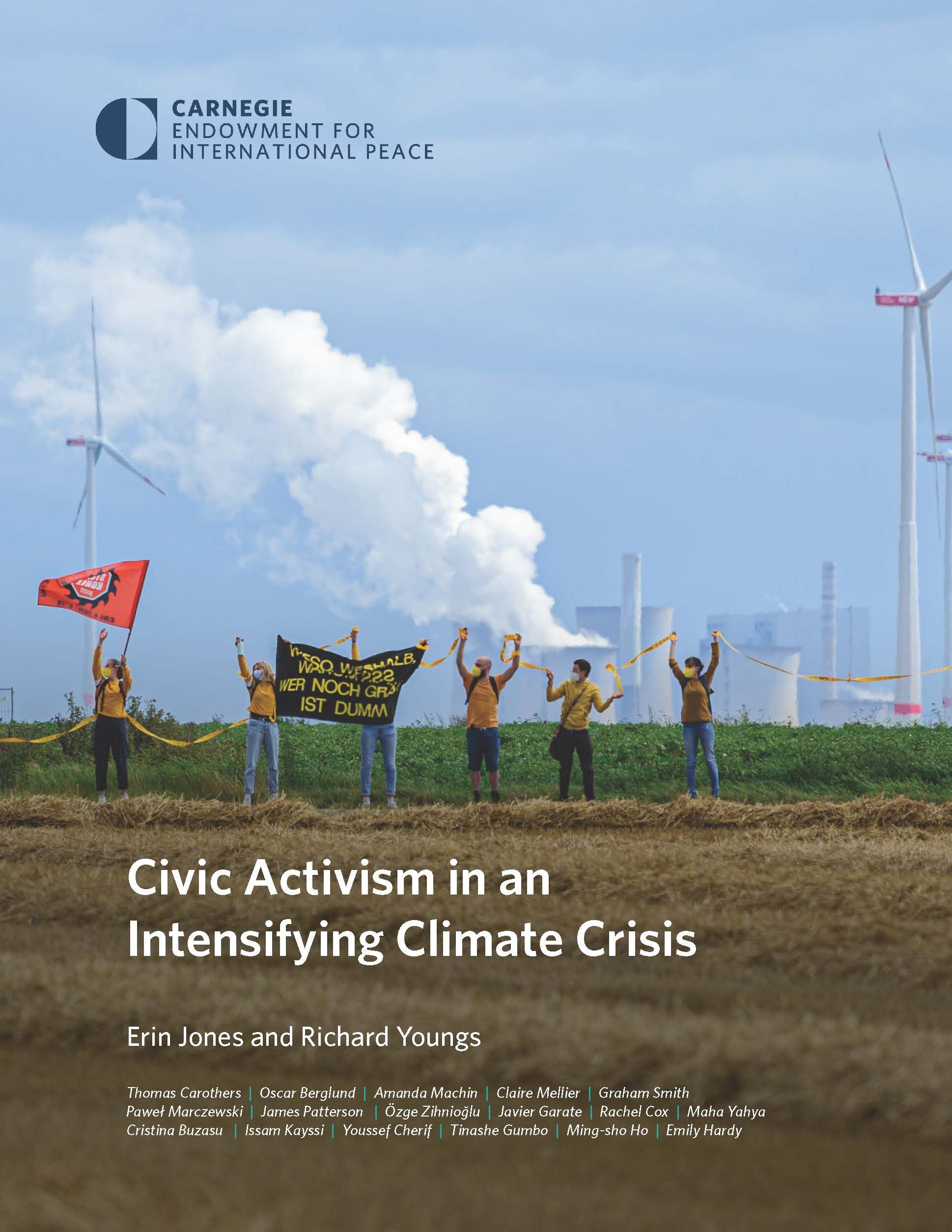
To address the deepening climate crisis, climate activism is employing a wider variety of tactics and aiming at a broader set of goals. In response, the movement faces stronger repression and civic backlash against climate action.

Erin Jones, Richard Youngs
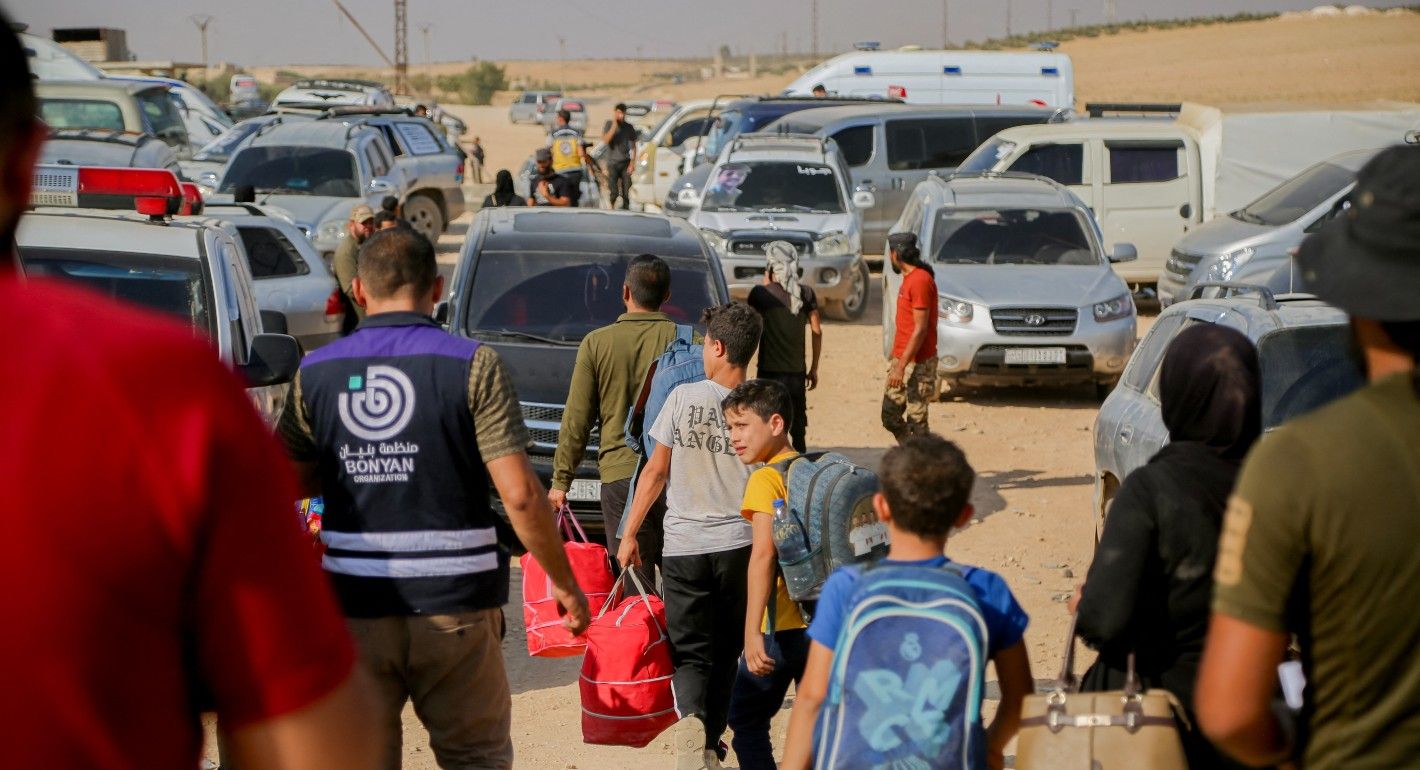
A humanitarian crisis in Lebanon deepens, and Syrian refugees face a perilous choice: remain in a war-torn environment or return to Syria where they risk encountering significant dangers and discrimination. There are significant challenges and risks to their search for safety in Syria.
Haid Haid
In Syria’s border regions, changes in demographics, economics, and security mean that an inter-Syrian peace process will require consensus among main regional powers that Syria must remain united, that no one side can be victorious, and that perennial instability threatens the region.

Kheder Khaddour, Armenak Tokmajyan
The interaction of national armed forces and private business sectors offers a useful lens for viewing the politics of numerous countries of the so-called Global South. A rising trend of military political activism—often accompanied by military commercial activity—underlines the importance of drivers and outcomes in these relationships.

Yezid Sayigh, Hamza Meddeb
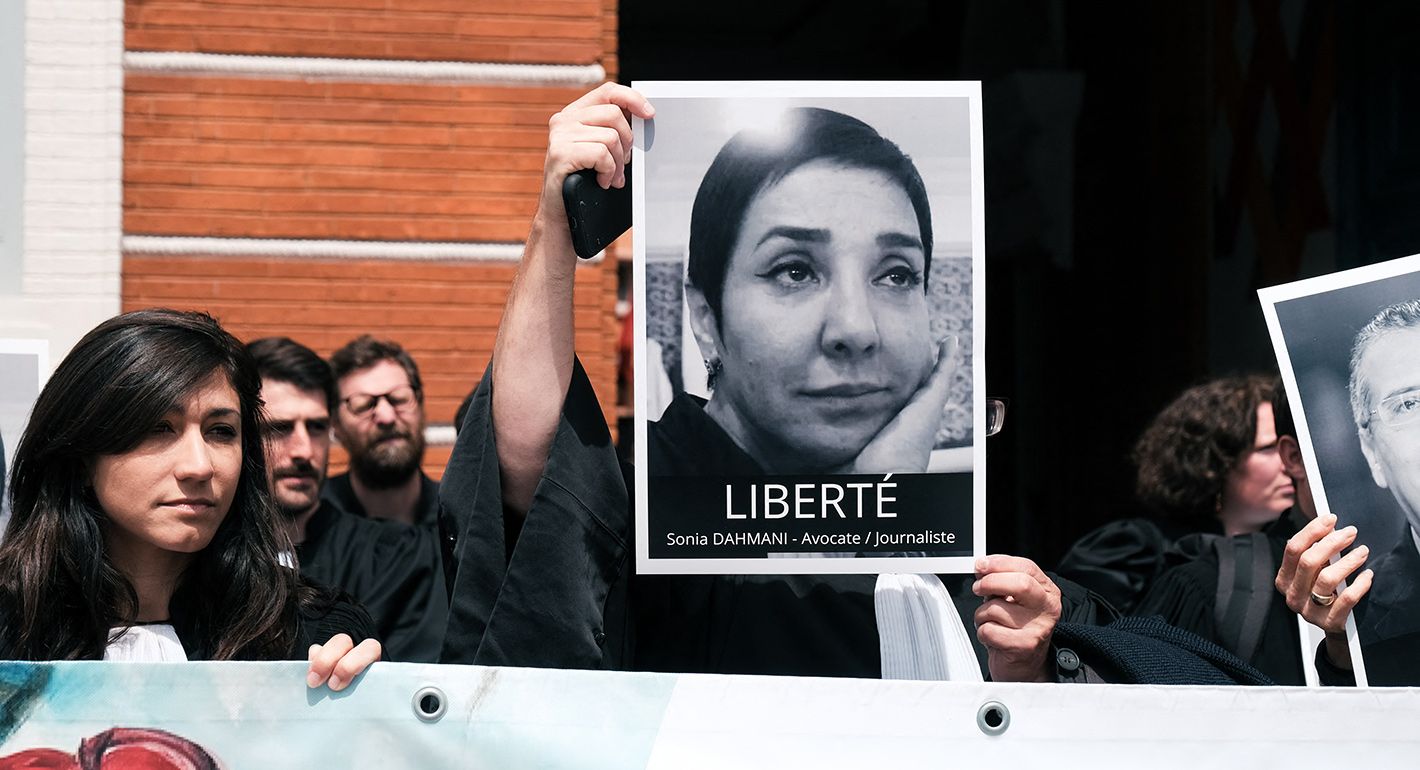
For many in the society, the post-Ben Ali years were mainly about successive economic crises and political instability.
Jasmine Khelil