
• Research
  • Diwan
  • About
  • Experts
Carnegie Middle East logoCarnegie lettermark logo
PalestineSyria
{
  "authors": [],
  "type": "other",
  "centerAffiliationAll": "",
  "centers": [
    "Carnegie Endowment for International Peace"
  ],
  "collections": [],
  "englishNewsletterAll": "",
  "nonEnglishNewsletterAll": "",
  "primaryCenter": "Carnegie Endowment for International Peace",
  "programAffiliation": "",
  "programs": [],
  "projects": [],
  "regions": [
    "North Africa",
    "Egypt"
  ],
  "topics": []
}

Source: Getty

Other

Asala Party

A backgrounder on the Asala Party.

Link Copied
Published on Sep 20, 2011

This resource was published on 09/20/2011 and is not updated to reflect changing circumstances.

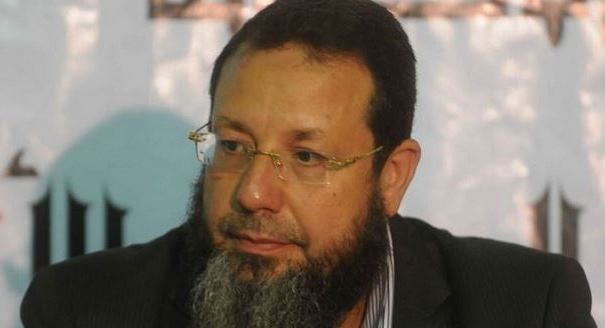
Al-Asala is a Salafi party founded by Adel Abd al-Maqsoud Afify following the January 2011 uprising. It is the second Salafi party after al-Nour to gain official recognition in Egypt. Al-Asala was a member of the Democratic Alliance.

Major Party Figures

General Doctor Adel Abd al-Maqsoud Afify: Founder and President
Mamdouh Ismael: Vice President
Ihab Mohamed Ali Sheeha: Founder
Mohamed Ibrahim Abdel Fattah Sultan: Founder

Background

In July 2011, Adel Abd al-Maqsoud Afify, then president of the al-Fadila Party, announced his resignation and founded al-Asala. A number of prominent Salafi preachers have declared their support for al-Asala, including Sheikh Mohamed Hassan, Mohamed Abd al-Maqsoud, Mohamed Abd al-Salaam, Sheikh Mostafa Mohamed, and Sheikh Mamdouh Gaber. The party’s stated goal is to spread the values of justice and equality, and to restore Egypt’s leading role in the world in conformity with the principles of Islamic law. The al-Asala Party gained official recognition as a political party on August 28, 2011.

Platform

Political Issues

  • Supporting an Islamic religious state in Egypt
  • Supporting reforms that will move the Egyptian state and society toward Islam
  • Treating all Egyptian individuals with justice regardless of their religious or political views
  • Fighting corruption
  • Prosecuting anyone who commits a crime against the Egyptian people
  • Affirming the freedom of the media but only under the restrictions of Islamic law

Socioeconomic Issues

  • Supporting a fair distribution of wealth
  • Working to raise the quality of life through social solidarity and the promotion of investment

Foreign Policy Issues

  • Working to return Egypt to its leading position in the Islamic world through an Islamic renaissance
  • Unifying the ranks of the Islamic world and pushing it to fight against injustice
  • Rejecting the Camp David Accords and peace with or recognition of Israel
North AfricaEgypt

Carnegie does not take institutional positions on public policy issues; the views represented herein are those of the author(s) and do not necessarily reflect the views of Carnegie, its staff, or its trustees.

More Work from Malcolm H. Kerr Carnegie Middle East Center

  • Commentary
    Diwan
    When Football Is More Than Football

    The recent African Cup of Nations tournament in Morocco touched on issues that largely transcended the sport.

      Issam Kayssi, Yasmine Zarhloule

  • Article
    Rethinking Power-Sharing Agreements in Libya

    The UN Support Mission in the country should reassess its approach so that consensus between the warring parties becomes the eventual goal, rather than a procedural matter that dogs the negotiating process at every turn.

      Soraya Rahem

  • Commentary
    Diwan
    Has Sisi Found a Competent Military Entrepreneur?

    Mustaqbal Misr has expanded its portfolio with remarkable speed, but a lack of transparency remains.

      Yezid Sayigh

  • Commentary
    Diwan
    Women, Water, and Adaptation in Ait Khabbash

    The burden of environmental degradation is felt not only through physical labor but also emotional and social loss.

      Yasmine Zarhloule, Ella Williams

  • Article
    Between Marginalization and Climate Change: The Resilience of Morocco’s Ait Khabbash

    For the traditionally nomadic Amazigh pastoralists in the Draa-Tafilalet region, environmental change has exacerbated long-standing inequities, forcing the community to adapt, which has laid bare the blind spots of state-centered climate policy frameworks.

      Yasmine Zarhloule, Ella Williams

Get more news and analysis from
Malcolm H. Kerr Carnegie Middle East Center
Carnegie Middle East logo, white
  • Research
  • Diwan
  • About
  • Experts
  • Projects
  • Events
  • Contact
  • Careers
  • Privacy
  • For Media
Get more news and analysis from
Malcolm H. Kerr Carnegie Middle East Center
© 2026 Carnegie Endowment for International Peace. All rights reserved.