

Commentary
Nikolay Petrov
{
  "authors": [
    "Nikolay Petrov"
  ],
  "type": "legacyinthemedia",
  "centerAffiliationAll": "",
  "centers": [
    "Carnegie Endowment for International Peace",
    "Carnegie Russia Eurasia Center"
  ],
  "collections": [],
  "englishNewsletterAll": "",
  "nonEnglishNewsletterAll": "",
  "primaryCenter": "Carnegie Russia Eurasia Center",
  "programAffiliation": "",
  "programs": [],
  "projects": [],
  "regions": [],
  "topics": []
}
Source: Getty
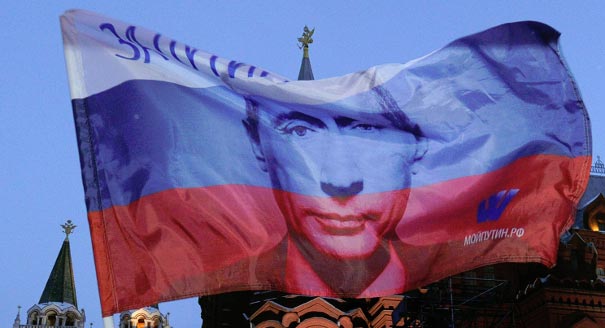
During his annual televised call-in show, Vladimir Putin proposed to reinstate the direct election of governors, which is perhaps the only serious political concession that he is offering.
Source: The Moscow Times

Putin failed in his attempts to explain exactly why he is returning as president. His 4 1/2-hour conversation with "the people," a mixture of concessions and verbal attacks, confirmed the belief that it is hard for a 59-year-old leader to change, especially after 12 years in power. Putin did not put forward a presidential program, only a plan for becoming president.
For the first time, both well-known and lesser-known individuals sang Putin's praises in an effort to demonstrate the national leader's many talents to voters. They included former Prime Minister Yevgeny Primakov, conductor Valery Gergiyev, Zavtra newspaper editor-in-chief Alexander Prokhanov, film directors Nikita Mikhalkov and Fyodor Bondarchuk, doctor Leonid Roshal, television celebrities Vladimir Solovyov and Pavel Astakhov and various pro-Kremlin politicians.
One of Putin's more interesting proposals was to reinstate the direct election of governors — albeit with various provisions and limitations. That is perhaps the only serious political concession that Putin is offering. This is not much of a concession given that only the political parties with seats in parliament would have the right to put forward gubernatorial candidates and the president would retain veto power over them. Putin calls this a "filter," but the best filter, of course, would really be real direct elections.
During his call-in program, Putin fielded calls from fewer regions than usual: Tyumen, Vladivostok, St. Petersburg, Stavropol, Sochi and Nizhny Tagil. It is noteworthy that three cities in which Putin has invested significant time and money — St. Petersburg, Vladivostok and Sochi — did not support United Russia in the elections. The reason for this is clear: Voters know perfectly well that the authorities are only investing in huge projects in those cities to enhance their own status and not for the benefit of local residents. That also means Putin's practice of allocating money for projects in the regions during the past year — in what has essentially been a re-election campaign — might ultimately backfire on him.
Finally, it is important for the Kremlin to convey the idea that citizens voted against United Russia to get rid of unpopular governors. In this regard, it was odd that in a letter ostensibly written by unhappy residents of Ulyanovsk that was read on the program, the authors name a whole laundry list of governors whom they claim were appointed in an "obvious staffing error." The only person conspicuously absent from this list was Ulyanovsk Governor Sergei Morozov. That list includes Governors Dmitry Mezentsev of Irkutsk, Pavel Ipatov of Saratov, Ilya Mikhalchuk of Arkhangelsk, Vasily Yurchenko of Novosibirsk, Andrei Nelidov of Karelia and Anatoly Brovko of Volgograd.
The letter from the "enlightened citizens of Ulyanovsk" didn't not end there. Primorye Governor Sergei Darkin earned a special mention among those charged with corruption. But it is unlikely that the Kremlin will dismiss any of these governors before the presidential election. More likely, the letter was intended as a harsh reminder to governors to not forget their main function: to increase voter support for Putin in the March election.
Former Scholar-in-Residence, Society and Regions Program, Moscow Center
Nikolay Petrov was the chair of the Carnegie Moscow Center’s Society and Regions Program. Until 2006, he also worked at the Institute of Geography at the Russian Academy of Sciences, where he started to work in 1982.
Recent Work
Nikolay Petrov
Nikolay Petrov
Carnegie does not take institutional positions on public policy issues; the views represented herein are those of the author(s) and do not necessarily reflect the views of Carnegie, its staff, or its trustees.