• Research
  • Diwan
  • About
  • Experts
Carnegie Middle East logoCarnegie lettermark logo
LebanonIran
{
  "authors": [
    "Yukon Huang"
  ],
  "type": "legacyinthemedia",
  "centerAffiliationAll": "dc",
  "centers": [
    "Carnegie Endowment for International Peace",
    "Carnegie China"
  ],
  "collections": [],
  "englishNewsletterAll": "asia",
  "nonEnglishNewsletterAll": "",
  "primaryCenter": "Carnegie China",
  "programAffiliation": "AP",
  "programs": [
    "Asia"
  ],
  "projects": [],
  "regions": [
    "East Asia",
    "China"
  ],
  "topics": [
    "Economy",
    "Trade"
  ]
}

Source: Getty

In The Media
Carnegie China

China's New Challenge: Less Frugality

Global trade imbalances would moderate and China’s growth would be more robust if its citizens were less frugal.

Link Copied
By Yukon Huang
Published on Jan 18, 2012

Source: Financial Times

The slowdown in China’s economic growth last year has fostered mixed reactions. Some argue the recently-released 9.2 per cent annual rate exceeds expectations and is consistent with a soft landing. Others see the fall from 10.4 per cent in 2010 as an indication that a sharper drop is still to come.

Surprisingly, domestic consumption has held up well. However, this is partly due to the early arrival of Chinese New Year, which is likely to have shifted activity forward at the current year’s expense. Without actions to support growth, the pace may fall below eight per cent in 2012.

Beijing is likely to lower taxes and consider special incentives to spur consumption. But the real challenge is to encourage less frugality among the Chinese, especially among migrant workers. Policies must be designed to deal directly with the exceptionally high rates of saving by people and corporations. This would have big implications for the trade balance, a contentious issue with the west.
 
Attention has focused on the rapid increase in China’s investment, which now exceeds 45 per cent of gross domestic product – the highest of any major economy. Less attention has been paid to the even faster rise in the savings rate, which exceeds 50 per cent of GDP. Since the trade balance is the difference between savings and investment, China has substantial trade surpluses that exceeded six per cent of GDP several years ago. Clearly, global imbalances would moderate and growth would be more robust if only the Chinese were less frugal.
Over the past decade, there has been a sharp increase in savings rates for all three major sectors – households, enterprises and government. The trend has been nurtured by a combination of good and bad policies, and thus it is possible to reshape savings patterns to improve the quality and equity of China’s growth.
 
The greatest potential lies in moderating household saving rates, which have increased by ten percentage points as a share of disposable income in ten years. Although many factors have contributed, the impact of urbanisation has gone largely unnoticed. The urban population is now larger than the rural with persistent labour inflows. In the major coastal cities, savings rates of migrant workers are much higher than those of established residents. Without formal residency rights to public services, migrants have more incentive to save. And because they now account for the bulk of the labour force in many coastal cities, urban savings rates have soared.
 
The increase in corporate savings comes mainly from a surge in retained earnings. But because enterprises do not pay significant dividends, some of these surpluses have fuelled wasteful investments – including speculation in real estate. If China’s enterprises paid the same share of their retained earnings as dividends as companies in other countries, this could significantly increase consumption.
 
Government savings have also increased significantly over the past decade. Some of this has supported investment, but some has also been used to build up the social security system. Thus higher government consumption is unlikely unless revenues are increased.
 
Overall, providing migrants with more security and encouraging higher corporate dividends could increase consumption by some five percentage points of GDP. This could turn China’s current trade surplus into a deficit. These distinct and politically sensitive reforms would also lessen China’s alarmingly high income disparities. This strategy, with benefits for all, contrasts with that of pressuring China to strengthen the renminbi, perceived by Beijing as benefiting the US at China’s expense.
 

 This article was originally published in the Financial Times.

About the Author

Yukon Huang

Senior Fellow, Asia Program

Huang is a senior fellow in the Carnegie Asia Program where his research focuses on China’s economy and its regional and global impact.

    Recent Work

  • Commentary
    Three Takeaways From the Biden-Xi Meeting

      Yukon Huang, Isaac B. Kardon, Matt Sheehan

  • Commentary
    Europe Narrowly Navigates De-risking Between Washington and Beijing

      Yukon Huang, Genevieve Slosberg

Yukon Huang
Senior Fellow, Asia Program
Yukon Huang
EconomyTradeEast AsiaChina

Carnegie does not take institutional positions on public policy issues; the views represented herein are those of the author(s) and do not necessarily reflect the views of Carnegie, its staff, or its trustees.

More Work from Malcolm H. Kerr Carnegie Middle East Center

  • Commentary
    Diwan
    Unpacking Lebanon’s Gap Law

    In an interview, Ishac Diwan looks at the merits and flaws in the draft legislation distributing losses from the financial collapse.

      Michael Young
  • Commentary
    Diwan
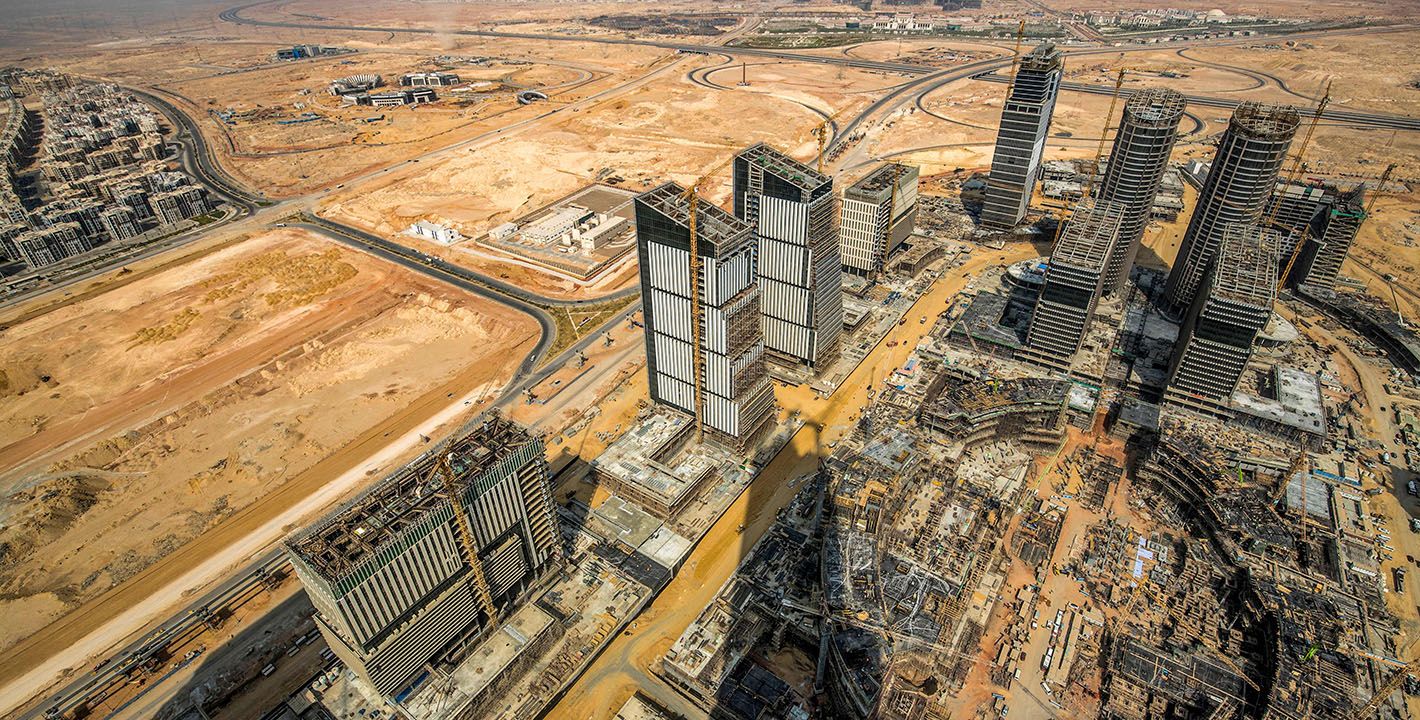
    Has Sisi Found a Competent Military Entrepreneur?

    Mustaqbal Misr has expanded its portfolio with remarkable speed, but a lack of transparency remains.

      Yezid Sayigh

  • Research
    Arab Diaspora Business Communities in Egypt

    Arab diaspora business communities in Egypt often mirror the same systemic challenges facing Egyptian businesses.

      • +4

      Nur Arafeh, Yezid Sayigh, Qaboul al-Absi, …

  • Article
    Saudi Arabia in Africa: Sound Economic and Geopolitical Strategy, or Resource Exploitation?

    Largely characterized thus far by a single-minded focus on extractivism, Riyadh must commit to greater equitability in its approach to investment and development deals with Sudan, Ethiopia, and Eritrea.

      Hesham Alghannam

  • A picture taken from a position at the Israeli border with the Gaza Strip shows the destruction due to Israeli bombardment in the besieged Palestinian territory on May 18, 2025
    Article
    Destruction, Disempowerment, and Dispossession: Disaster Capitalism and the Postwar Plans for Gaza

    Once Israel’s war in the territory is brought to an end, the foundational principles guiding reconstruction should be Palestinian self-determination, local agency, and sovereignty.

      Nur Arafeh, Mandy Turner

Get more news and analysis from
Malcolm H. Kerr Carnegie Middle East Center
Carnegie Middle East logo, white
  • Research
  • Diwan
  • About
  • Experts
  • Projects
  • Events
  • Contact
  • Careers
  • Privacy
  • For Media
Get more news and analysis from
Malcolm H. Kerr Carnegie Middle East Center
© 2026 Carnegie Endowment for International Peace. All rights reserved.