• Research
  • Diwan
  • About
  • Experts
Carnegie Middle East logoCarnegie lettermark logo
LebanonIran
{
  "authors": [
    "Togzhan Kassenova"
  ],
  "type": "other",
  "centerAffiliationAll": "dc",
  "centers": [
    "Carnegie Endowment for International Peace",
    "Carnegie Europe"
  ],
  "collections": [
    "U.S. Nuclear Policy"
  ],
  "englishNewsletterAll": "ctw",
  "nonEnglishNewsletterAll": "",
  "primaryCenter": "Carnegie Endowment for International Peace",
  "programAffiliation": "NPP",
  "programs": [
    "Nuclear Policy"
  ],
  "projects": [],
  "regions": [
    "North America",
    "United States",
    "South Asia",
    "Pakistan",
    "East Asia",
    "Japan"
  ],
  "topics": [
    "Nuclear Policy",
    "Nuclear Energy"
  ]
}
Source: Getty

Other

Preventing WMD Proliferation: Myths and Realities of Strategic Trade Controls

Given that products that rely on the same technologies and materials as weapons of mass destruction are everywhere, the challenge for states is to ensure that trade in dual-use goods and technologies does not contribute to WMD proliferation.

Link Copied
By Togzhan Kassenova
Published on Jan 25, 2012
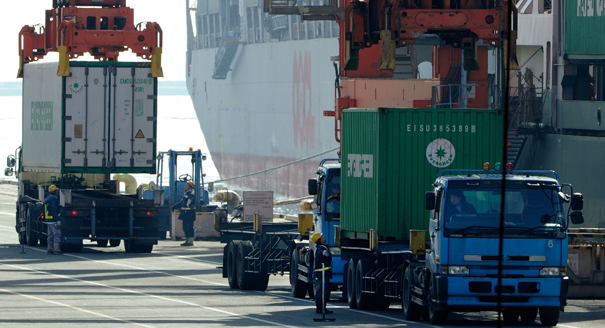
Laptops, radios, instant coffee, train-signaling systems, satellites—we are surrounded by products that rely on the same technologies and materials as weapons of mass destruction (WMD). The international community faces a serious challenge. Trade is globalized, technology is spreading rapidly, and demands for economic development and uninhibited exchange of goods are greater than ever. How can states ensure that trade in dual-use goods and technologies does not contribute to WMD proliferation?
 
One solution is the establishment of national strategic trade control systems, which refers to a set of government policies and practices designed to regulate trade in proliferation-sensitive products for the purposes of preventing the spread of WMD and simultaneously facilitating trade in strategic goods. This relatively new concept emerged from the practice of export controls. A few decades ago, when proliferation-sensitive trade was confined to a few key producers, traditional export controls had political underpinnings and suppliers would choose their customers based on strategic alliances. Today, we live in a world in which goods and technology that can be diverted for WMD programs are much more widespread than ever before. They constitute a significant component of international trade, and the lines between the peaceful and military applications of the same products and technologies are less clearly defined.
 
Though these systems may seem to be the ideal solution for Western and other developed countries, developing countries often question their efficacy and worry about the regimes’ effects on their international competitiveness. They fear that introducing comprehensive controls on strategic trade will put unnecessary burdens on government agencies and industry, inhibit trade, and divert valuable resources from addressing more pressing development needs.
 
The reality, however, is far more nuanced. The WMD threat is not just a concern of Western countries—in a globalized world, even countries without WMD programs or high-tech industries are at risk. What’s more, investing resources into proliferation controls does not have to come at the expense of meeting other national objectives and can, in fact, have positive effects in areas such as trade and competitiveness.
 
Each state must work, to the best of its ability, to prevent WMD proliferation. Governments should have the legal authority and institutional capacity to implement the licensing of sensitive trade, as well as the means to enforce any controls they have in place to prevent intentional illegal activity. They should also compile restricted items into a comprehensive national control list. A successful system requires close working relationships between government and industry, and whenever possible, governments should provide incentives to companies to be especially diligent when it comes to sensitive trade. Finally, for a national strategic trade control system to work, close cooperation between countries at the regional and international level is critical.
 
There will never be enough capacity or expertise to fully implement strategic trade controls. But no contribution to the common goal is too small. Working to limit WMD proliferation will make the world safer for all countries.

About the Author

Togzhan Kassenova
Togzhan Kassenova

Nonresident Fellow, Nuclear Policy Program

Kassenova is a nonresident fellow in the Nuclear Policy Program at the Carnegie Endowment.

    Recent Work

  • Commentary
    How Kazakhstan Fought Back Against Soviet Nuclear Tests
      • Togzhan Kassenova

      Togzhan Kassenova

  • Report
    Perspectives on the Evolving Nuclear Order
      • Togzhan Kassenova

      Toby Dalton, Togzhan Kassenova, Lauryn Williams

Togzhan Kassenova
Nonresident Fellow, Nuclear Policy Program
Togzhan Kassenova
Nuclear PolicyNuclear EnergyNorth AmericaUnited StatesSouth AsiaPakistanEast AsiaJapan

Carnegie does not take institutional positions on public policy issues; the views represented herein are those of the author(s) and do not necessarily reflect the views of Carnegie, its staff, or its trustees.

More Work from Malcolm H. Kerr Carnegie Middle East Center

  • Commentary
    Diwan
    The United States and Iran Have Agreed to a Two-Week Ceasefire

    Spot analysis from Carnegie scholars on events relating to the Middle East and North Africa.

      Michael Young

  • Commentary
    Diwan
    Iran Rewrites Its War Strategy

    In an interview, Hamidreza Azizi discusses how Tehran has adapted in real time to the conflict with the United States and Israel.

      Michael Young

  • Commentary
    Diwan
    Trump’s Plan for Gaza Is Not Irrelevant. It’s Worse.

    The simple conclusion is that the scheme will bring neither peace nor prosperity, but will institutionalize devastation.

      Nathan J. Brown

  • Commentary
    Diwan
    What Does the Strait of Hormuz’s Closure Mean?

    In an interview, Roger Diwan discusses where the global economy may be going in the third week of the U.S.-Israeli war with Iran.

      Nur Arafeh

  • Commentary
    Diwan
    Tehran’s Easy Targets

    In an interview, Andrew Leber discusses the impact the U.S. and Israeli war against Iran is having on Arab Gulf states.

      Michael Young

Get more news and analysis from
Malcolm H. Kerr Carnegie Middle East Center
Carnegie Middle East logo, white
  • Research
  • Diwan
  • About
  • Experts
  • Projects
  • Events
  • Contact
  • Careers
  • Privacy
  • For Media
Get more news and analysis from
Malcolm H. Kerr Carnegie Middle East Center
© 2026 Carnegie Endowment for International Peace. All rights reserved.