

Commentary
In an interview, Ian Lustick and Eli Clifton discuss their new book on why a prominent ally has so much influence in America.
Michael Young
{
  "authors": [
    "Kevin Jianjun Tu",
    "Yuhan Zhang",
    "David Livingston"
  ],
  "type": "legacyinthemedia",
  "centerAffiliationAll": "dc",
  "centers": [
    "Carnegie Endowment for International Peace",
    "Carnegie China"
  ],
  "collections": [],
  "englishNewsletterAll": "ctw",
  "nonEnglishNewsletterAll": "",
  "primaryCenter": "Carnegie Endowment for International Peace",
  "programAffiliation": "SCP",
  "programs": [
    "Sustainability, Climate, and Geopolitics"
  ],
  "projects": [],
  "regions": [
    "North America",
    "United States",
    "East Asia",
    "China"
  ],
  "topics": [
    "Climate Change"
  ]
}
Source: Getty
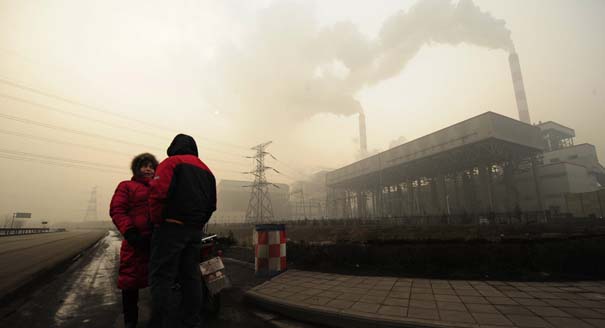
The nature of the climate challenge in the immediate future will be determined by China and the world’s largest carbon emitters—not U.N. summits.
Source: Diplomat

To be sure, a number of symbolic successes were achieved in Durban. The Kyoto Protocol was extended into a second phase that will begin in 2013, the Green Climate Fund was endorsed as the primary vehicle to support low-carbon investment in the developing world, and the “Durban Platform” was created to guide negotiations over a new climate regime that will cover both developed and developing countries by 2020.
Yet while Durban delegates worked diligently to save the process, it’s still uncertain whether the environment will be an equal beneficiary. The parties that will participate in the second Kyoto Protocol commitment period account for only around 15 percent of global emissions. Additionally, the $100 billion Green Climate Fund is still a mostly empty vessel, with the United States insisting on a large role for private sector funding while least developed countries and small island states argue that their vulnerability demands robust funding from developed country governments. The Durban Platform promises an apparent denouement to years of disagreement over the nature of differentiated responsibilities, but the language is too ambiguous and the timeline too remote for the Platform to make any immediate dent in cumulative emissions of carbon dioxide and other greenhouse gases.Multilateralism is a time-intensive affair, but the world’s coal mines, cars, and consumption are unlikely to slow down as the diplomats deliberate. The International Energy Agency estimates that existing energy-related infrastructure is likely to lock the world in on a dangerous climate path unless there’s a serious course correction by 2017. As a new climate governance structure waits to be born, it’s an unlikely candidate to provide such immediate change. Instead, the international community will be watching China – the world’s largest carbon emitter since 2006 – to see how it manages its own domestic energy, economic, and environmental dynamics.
China’s twelfth Five Year Plan, for 2011 to 2015, includes a 17 percent carbon-intensity reduction target to support China’s broader international pledge to reduce emissions intensity by 40 percent to45 percent by 2020 relative to 2005. This goal is hardly ambitious – projections supplied by both the Paris-based International Energy Agency and the Beijing-based Energy Research Institute suggest that this is already the business-as-usual emissions trajectory.
The growth of market-based emissions reduction mechanisms in China will be more significant. The Durban outcomes can encourage central and local governments to innovate with cap-and-trade pilot programs, such as those already underway in seven Chinese cities and provinces. From Beijing to Shanghai to Guangdong, officials and market participants will need to lay the groundwork for credible emissions data collection and verification, activities that will also benefit China’s capacity to participate in whatever global mechanism is brought to fruition by the Durban Platform. More progress has been made on cap-and-trade systems than a straightforward carbon tax, and these systems are likely to maintain their privileged position in the next couple of years due to the socio-economic and administrative obstacles that a carbon tax would encounter.
Many questions remain regarding the future path of China’s energy sector. The 2011 Fukushima Daiichi disaster in Japan cast doubt on how big a role nuclear energy may play in placing the Chinese economy on a less carbon-intensive trajectory. As the country scales back its overly ambitious nuclear plans, it is increasing support for renewable development and will import more gas to substitute carbon-intensive coal. Chinese clean technology enterprises are beginning to assume powerful positions in the global marketplace, particularly in wind, solar and new energy vehicles. The Chinese government may also grow more serious about capping national energy consumption and national coal production. However, these command and control style policy initiatives may have a detrimental impact on the country’s coal statistical reporting if they aren’t appropriately designed to ensure cooperation from local governments.
A major effort will be needed by climate envoys, chiefly those from the world’s largest carbon emitters, to steer the Durban Platform toward a meaningful and robust new climate agreement by 2015. And their leaders back home must be both globally focused and domestically bold – two qualities likely to be in short supply amidst the economic and political upheavals that continue to unfold. If the climate crisis is at its core a crisis of global governance, then the cumulative efficacy of actions undertaken by major carbon emitters, such as those in China’s Twelfth Five Year Plan, is what really matters for the world in the years ahead.

Former Senior Associate , Energy and Climate Program
Tu was a senior associate in Carnegie’s Energy and Climate Program, where he led the organization’s work on China’s energy and climate policies.
Yuhan Zhang
Former Research Assistant, Energy and Climate Program
Former Associate Fellow, Energy and Climate Program
Livingston was an associate fellow in Carnegie’s Energy and Climate Program, where his research focuses on emerging markets, technologies, and risks.
Carnegie does not take institutional positions on public policy issues; the views represented herein are those of the author(s) and do not necessarily reflect the views of Carnegie, its staff, or its trustees.

In an interview, Ian Lustick and Eli Clifton discuss their new book on why a prominent ally has so much influence in America.

Michael Young

As the U.S. stumbles in its war with Iran, we are likely to see an acceleration of its disengagement from the region.
Michael Young

Huawei pushed hard to enter the Egyptian data centers market, until the Americans made a better offer.

Angie Omar

Middle Eastern states should welcome an accelerated U.S. disengagement from their region.
Michael Young

In an interview, former ambassador Charles Freeman assesses the Trump administration’s war against Iran.
Michael Young