

Paper
Matthew Rojansky
{
  "authors": [
    "Matthew Rojansky"
  ],
  "type": "legacyinthemedia",
  "centerAffiliationAll": "dc",
  "centers": [
    "Carnegie Endowment for International Peace",
    "Carnegie Russia Eurasia Center"
  ],
  "collections": [],
  "englishNewsletterAll": "ctw",
  "nonEnglishNewsletterAll": "",
  "primaryCenter": "Carnegie Endowment for International Peace",
  "programAffiliation": "russia",
  "programs": [
    "Russia and Eurasia"
  ],
  "projects": [
    "U.S.-Russia Bilateral Presidential Commission"
  ],
  "regions": [
    "North America",
    "United States",
    "Caucasus",
    "Russia"
  ],
  "topics": [
    "Political Reform",
    "Foreign Policy",
    "Democracy",
    "Domestic Politics"
  ]
}
Source: Getty
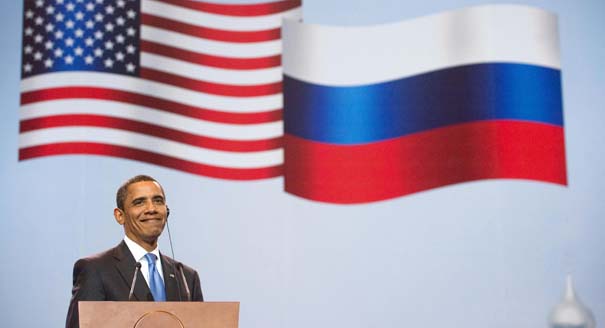
Restoration of a Congress-Duma track can send a clear message to Moscow that further improvements in the bilateral relations require progress on the issues of human rights and the rule of law.
Source: Roll Call

If the Jackson-Vanik amendment, which prohibits permanent normal trading relations, remains in force against Russia, U.S. businesses will lose out on the benefits of rules-based free trade, including much cheaper and more stable access to Russia’s market — the world’s 11th largest.
Yet the recent election campaign and dramatic wave of public protests have been a reminder that Russia is no ordinary trading partner. The Kremlin’s record on human rights remains troubling, and both businesses and ordinary people suffer under the crushing weight of corruption and lawlessness, often at the hands of the very government officials who are charged with protecting them. Americans cannot ignore conduct that runs so dramatically counter to our own cherished values, not to mention the principles enshrined in documents such as the Helsinki Final Act, to which both countries are signatories.
Thus, when Congress takes up the question of “graduating” Russia from Jackson-Vanik, Members will naturally wish to be reassured that the United States still has effective tools to address concerns about human rights and the rule of law in Russia.There have already been proposals to sanction individuals believed to be responsible for the death of lawyer Sergei Magnitsky and other abuses, as well as statements criticizing the Kremlin’s conduct around the recent elections. These steps are very likely to get Russian officials’ attention, but by themselves, they are not likely to deliver the hoped-for changes in behavior from Moscow.
In addition to registering its disapproval of abuses in Russia, Congress should signal that positive change in Russia and in U.S.-Russia relations are long-term U.S. interests and take steps that are likely to bring about such change while strengthening the relationship. In this, Congress should follow the lessons of a half-century of relations with Moscow: First, progress comes when we approach sensitive matters bilaterally, not unilaterally, and second, Congress itself must play an active role in the relationship.
During the Reagan administration, a bilateral dialogue chaired by Secretary of State George Shultz and Foreign Minister Eduard Shevardnadze, in which Members of Congress participated, yielded major progress on security, economic and human rights issues, including expanded freedom of emigration.
In the 1990s, the bilateral relationship included not only an executive branch commission, but a permanent Congress-Duma study group that ensured regular contact between lawmakers and allowed debate and exchange over sensitive issues such as corruption and Russia’s conduct of the war in Chechnya.
Today, Congress can play a critical role in pushing the relationship in the right direction by supporting the work of the Bilateral Presidential Commission, especially those working groups that address issues related to the rule of law and human rights.
With representation from key government agencies on both sides, these groups are in a position to do what unilateral U.S. programs cannot: overcome hostility, skepticism or sheer indifference from Russian officials who feel that they are the targets of a U.S.-backed “regime change” strategy or “color revolution” for Russia.
The BPC’s agenda serves key U.S. interests but has also been endorsed by the Russian side at the highest levels. Priorities include promoting transparency in public contracting to expose corruption; access to justice for vulnerable members of society, especially children and labor migrants; increasing access to information, including freedom of the press and Internet; and supporting job-creating entrepreneurship and innovation through better intellectual property protections.
The BPC is well-regarded in Moscow and Washington, and supporting it will help send the message that Congress does not seek to derail U.S.-Russia cooperation but rather to strengthen its foundations. Moreover, Congressional support will help this important tool endure into the future rather than being tossed out by each new administration as has been the pattern for bilateral commissions in the past.
Successful relations with Russia have also traditionally included direct involvement by Congress. The current House Russia Caucus and the Open World Leadership Center are important U.S. initiatives, but a fully bilateral, bipartisan and bicameral track between U.S. and Russian lawmakers is also needed. Creating a Congress-Duma track parallel to the BPC would restore a valuable line of communication with Russian lawmakers who are likely to become more important if the Russian public continues to challenge Putin’s one-man rule.
Congress already conducts oversight of U.S. foreign operations, but a direct Congress-Duma track can help both sides understand the intentions and interests of lawmakers in supporting assistance programs and other kinds of cooperation.
Combined with Congressional support for the BPC, restoration of a Congress-Duma track can also send a clear message to Moscow that we value recent improvements in our relations but that to go further, progress is essential on the issues of human rights and the rule of law about which Americans care deeply.

Former Deputy Director, Russia and Eurasia Program
Rojansky, formerly executive director of the Partnership for a Secure America, is an expert on U.S. and Russian national security and nuclear-weapon policies.
Recent Work
Matthew Rojansky
Matthew Rojansky
Carnegie does not take institutional positions on public policy issues; the views represented herein are those of the author(s) and do not necessarily reflect the views of Carnegie, its staff, or its trustees.

As the U.S. stumbles in its war with Iran, we are likely to see an acceleration of its disengagement from the region.

Michael Young

Huawei pushed hard to enter the Egyptian data centers market, until the Americans made a better offer.

Angie Omar

Middle Eastern states should welcome an accelerated U.S. disengagement from their region.
Michael Young

In an interview, former ambassador Charles Freeman assesses the Trump administration’s war against Iran.
Michael Young

By failing to address Palestinian representation, the current process is bound to lead to just another temporary arrangement.

Nathan J. Brown