

Article
Frederic Wehrey, Charles H. Johnson
{
  "authors": [
    "Frederic Wehrey"
  ],
  "type": "legacyinthemedia",
  "centerAffiliationAll": "dc",
  "centers": [
    "Carnegie Endowment for International Peace",
    "Malcolm H. Kerr Carnegie Middle East Center"
  ],
  "collections": [
    "Arab Awakening"
  ],
  "englishNewsletterAll": "menaTransitions",
  "nonEnglishNewsletterAll": "",
  "primaryCenter": "Carnegie Endowment for International Peace",
  "programAffiliation": "MEP",
  "programs": [
    "Middle East"
  ],
  "projects": [],
  "regions": [
    "Middle East",
    "Bahrain",
    "Gulf"
  ],
  "topics": [
    "Political Reform"
  ]
}
Source: Getty
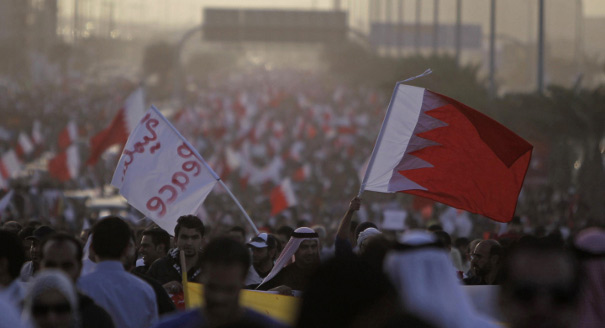
Despite the appointment of a new deputy prime minister, international observers should be under no illusion about the forces still arrayed against compromise in Bahrain.
Source: World Politics Review
On March 8, King Hamad bin Isa al-Khalifa of Bahrain appointed Crown Prince Salman bin Hamad al-Khalifa to serve as deputy prime minister, a move that was widely lauded as injecting new momentum into the national dialogue process between the ruling monarchy and the opposition and sending a positive signal to a long-disheartened opposition. So far the national dialogue has moved forward with high hopes, but much of the discussion has centered on its scope, participation and logistics. The real test of success will be whether the process can resolve the crucial issues of an empowered parliament, electoral gerrymandering and Shiite participation in government.
Senior Fellow, Middle East Program
Frederic Wehrey is a senior fellow in the Middle East Program at the Carnegie Endowment for International Peace, where his research focuses on governance, conflict, and security in Libya, North Africa, and the Persian Gulf.
Recent Work
Frederic Wehrey, Charles H. Johnson
Frederic Wehrey, Charles H. Johnson
Carnegie does not take institutional positions on public policy issues; the views represented herein are those of the author(s) and do not necessarily reflect the views of Carnegie, its staff, or its trustees.

Middle Eastern states should welcome an accelerated U.S. disengagement from their region.

Michael Young

The accord represents a pivotal moment in the region to avert a security vacuum in the Gulf.


Azeema Cheema, Mohanad Hage Ali

In an interview, Jason Burke discusses his sweeping account of the “revolutionists” who so shaped the 1970s and early 1980s.
Michael Young

Morocco and Algeria, each in its own way, are having to navigate the global economic fallout of the U.S.-Israeli military campaign against Iran.

Yasmine Zarhloule
There is a disturbing structural parallel between the old global energy economy and the new green transition.

Angie Omar